 The impact of the coronavirus epidemic on Presbyterian churches is real and just beginning to be understood — with congregations reporting declining giving; with church members and staff becoming ill with COVID-19; with immigrant fellowships and congregations of color being especially challenged; and with Presbyterians working hard to respond to the needs they see in the neighborhoods around them.
The impact of COVID-19 has been one of the themes running through the Presbyterian Mission Agency Board meeting, which is being held via Zoom April 15-17 and featured a session April 16 focused on how the Presbyterian Mission Agency (PMA) is responding.
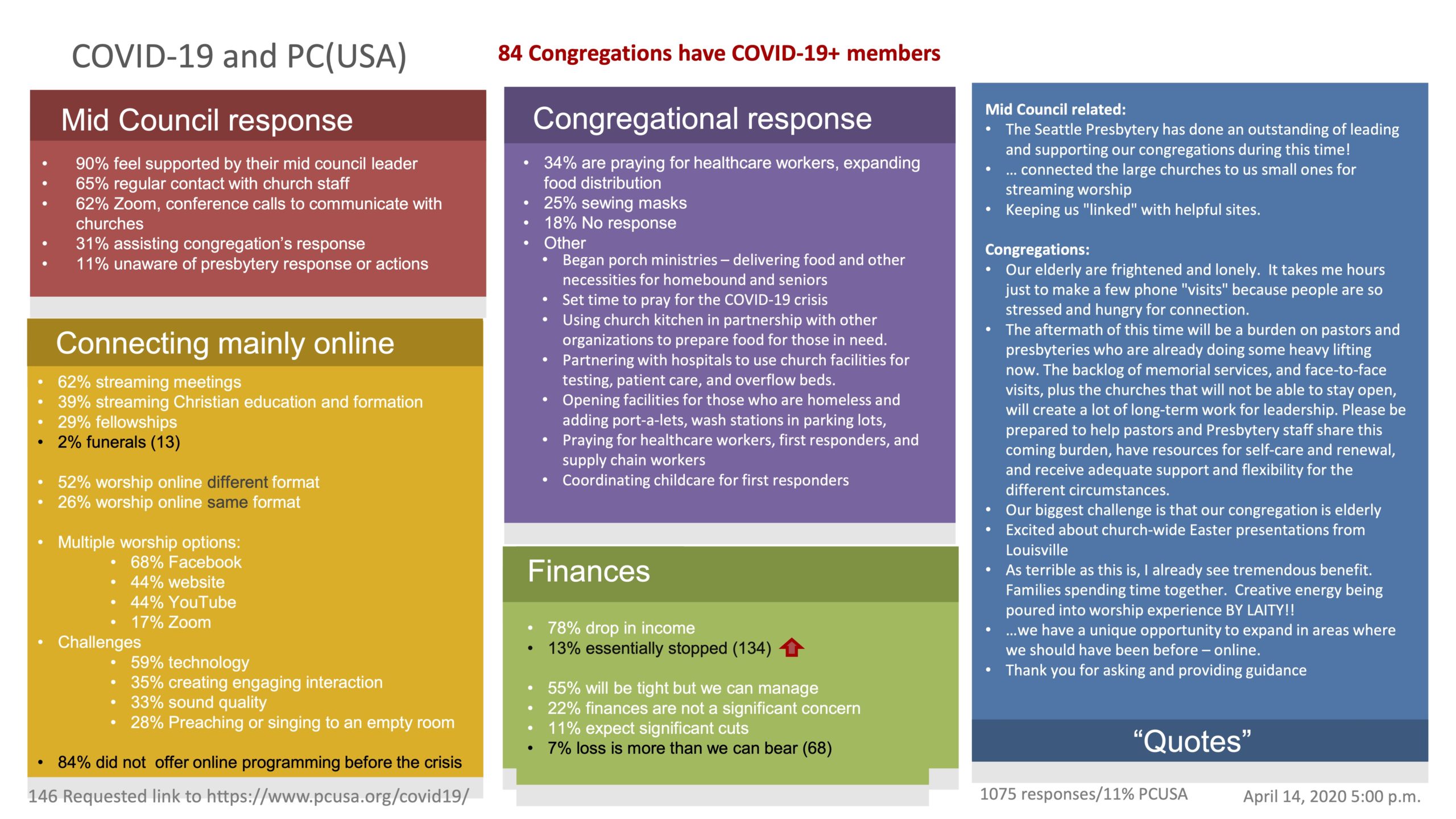
One report (P.204 Research Services COVID-19 Survey) featured the results of a Presbyterian Research Services survey of congregations — a survey producing 1,075 responses as of April 14. Among the findings:
- Nearly four in five congregations (78%) reported a drop in giving. Just over half (55%) said money would be tight, but “we can manage.” But 11% expected significant cuts, and 7% said the loss “is more than we can bear.”
- 84% of the congregations said they did not offer online programming before the pandemic. Now many of them are – using platforms ranging from Facebook to YouTube to Zoom – although nearly six in 10 listed technology as a challenge.
- 90% of congregations felt supported by their mid council leaders, and some congregations are finding new ways to be in ministry: delivering food and supplies to older members or those in quarantine; coordinating child care for first responders; sewing face masks; praying for health care workers and essential employees and families affected by COVID-19.
- Many are concerned about elderly parishioners, with one church leader saying: “Our elderly are frightened and lonely. It takes me hours just to make a few church ‘visits’ because people are so stressed and hungry for connection.”
Diane Moffett, PMA’s president and executive director, said PMA is making $300,000 available in grants to churches involved in the Matthew 25 initiative and that Presbyterian Disaster Assistance is making $2.7 million available in grants: $1.7 million in domestic response and $1 million for international work.
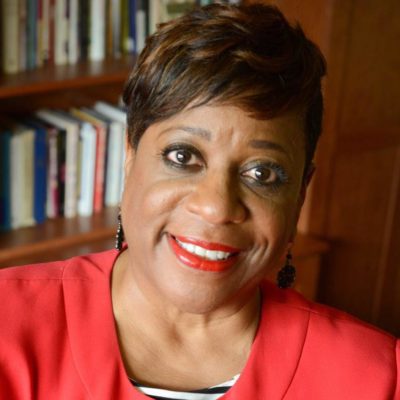
Some of the Matthew 25 congregations serve marginalized communities where money has always been tight, Moffett said. With the pandemic, “they weren’t able to pay the pastor” or needed emergency funding. Many were accustomed to passing the offering plate and not using online giving, she said. “We wanted to make sure we were there for them, as they have been there for so many in the community.”
Along with the suffering the pandemic has brought, Moffett said she’s seen some joyful surprises — with Presbyterians being intentionally connectional in helping one another and a real spirit of collaboration and creativity. “We are one church,” she said. “We can get a whole lot done when we’re working together.”
Laurie Kraus, director of Presbyterian Disaster Assistance, said the PDA grants are intended to help congregations be involved in reaching out during the pandemic to those most in need. PDA is asking congregations, “Where are the vulnerable people in your community?” Kraus said. “Who do you see who is hungry or thirsty or in prison or in need of the end of estrangement?”
Already, PDA has received than 200 grant requests from congregations wanting to respond to food insecurity, working with the elderly and school children, day laborers and the homeless, asking, “How congregations can show up for their neighbors in the midst of this COVID emergency?” she said. “I think the church is responding as the body of Christ.”
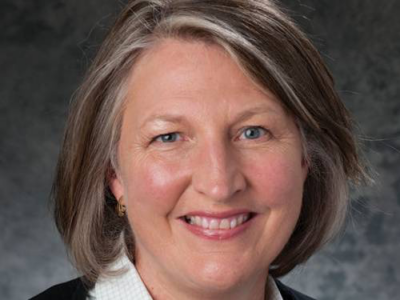
Sara Lisherness, PMA’s director of Compassion, Peace and Justice ministries and the interim director of world mission, said the PC(USA) has been doing other coronavirus work as well, including advocating for fair wages and protections for essential workers and providing training on emotional and spiritual care and resilience to pastoral leaders and others affected by the pandemic.
She also said racism has become evident in the coronavirus response, in attacks and slurs against Asian Americans and also “the extraordinary impact” of the disease on communities of color, “particularly African American communities as the disease has ravaged that community in dramatically different ways.”
For many, the economic impact the pandemic is intense. “We’ve seen the pictures of cars lined up outside food pantries,” Lisherness said. “The need is very real and very serious.”
Board member Kevin Johnson from Detroit said he’s heard the lament of the African American community about the pain that COVID-19 will inflict “on the spiritual vitality at the local level, the street level, the congregational level,” an emerging understanding of the devastation of “losing vital, vibrant leadership, pillars of congregational life.”
Amy Mendez, PMA’s associate director of Racial Equity and Women’s Intercultural Ministries, said “people of color and churches are being hit tremendously” by the coronavirus pandemic — with some not having access to computers or the technology upon which some congregations are relying for online worship.
Shannan Vance-Ocampo, who is the incoming vice chair of the PMA board and a mid council leader from New York state, said an immigrant congregation from her area “is having every struggle available,” and immigrants are saying “as soon as they can travel, they are getting out of here,” because in the United States they feel “they are not welcome, they are not safe, they cannot survive here.”
“It’s hitting immigrant churches very hard,” Mendez said. Many immigrants are losing their jobs, and may have no access to government support or health insurance. “You lose your job, you lose everything.”
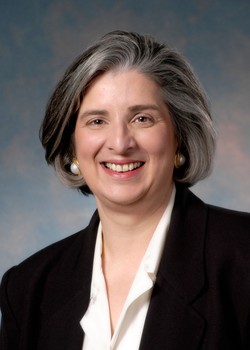
Rosemary Mitchell, senior director of Mission Engagement and Support for PMA, spoke about the challenges and importance of funds development during the pandemic.
In this difficult time, the PC(USA) needs to be clear on “what do we control and what we don’t control,” Mitchell said. Her office is focusing on donor relationships and stewardship, “and we’re not beyond asking for support. … People who have always been faithful and generous will continue as they are able.”
Mitchell also said the PC(USA) is discussing sending out an emergency appeal in response to the coronavirus pandemic in the next three to four weeks, asking for unrestricted funds for the Matthew 25 initiative.
“This kind of crisis also is an opportunity to look at where are our weaknesses in our system,” Mitchell said. For example, as church buildings are closed to maintain social distancing, congregational leaders might not be picking up mail.
“There is not a dedicated email for every congregation,” Mitchell said. “We’ve talked about making that a priority.”
And her office is encouraging congregations that have moved to online worship to be sure to include in those services a request for people to give online. Among the resources: a document called “10 Stewardship ‘Do’s’ during the pandemic and one “DO NOT.’ ” (E.204 Ten Stewardship DOs and One Stewardship Do NOT)