 God grant me the serenity to accept the things I cannot change…
The Serenity Prayer became part of my morning ritual as the coronavirus unfolded, for there were dramatic changes beyond my control as a parent, husband and pastor. In a time when it was challenging to find words for my feelings, this notion of serenity spoke to me.
However, in light of the violence against African Americans, I began to focus on the second part of this prayer:
God grant me courage to change the things I can.
Today, I and other white Americans do not have to accept racially-motivated violence. We do not have to accept that a Black man can be killed for jogging in a neighborhood. We do not have to accept that police can shoot a Black woman in her boyfriend’s apartment. We do not have to accept that a Black man can be suffocated by the knee of a police officer. We do not have to accept that other white police officers would stand by and watch as this Black man pleaded for his life.
But if we are not going to accept such injustices, then we will need the courage to change our country and ourselves.
America has a tragic history of racism that predates the founding of our nation. Racism was institutionalized in the Constitution, then legislated in slavery and segregation.
What’s more, the violence against Black people captured on video highlights the ongoing injustice today. Segregation is prevalent in our public schools and private housing sectors. Prisons are filled with people of color. Police violence is disproportionally directed against black and brown people.
Of course, few white Americans (including police officers) actually perpetuate deadly violence against anyone. Yet, while many white Americans are sympathetic to suffering, too few have acted as though we are able to change such things. Too many of us had accepted that a false sense of serenity would prevail upon our culture.
Until we watched the protests following the murder of George Floyd.
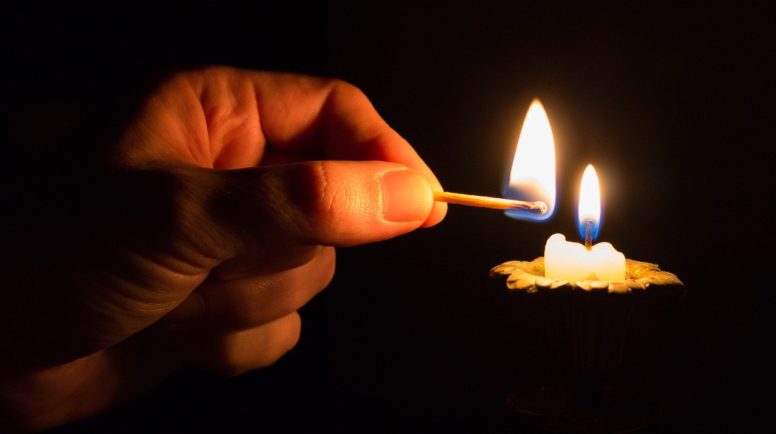
Protests that lit up downtowns across the country coincided with Pentecost, the day when Christians mark the gift of the Holy Spirit that came upon the first disciples like a fire. Long ago, women and men had been hidden behind locked doors in fear of the same authorities who had murdered Jesus of Nazareth. But, inflamed by the message of God’s love for all people, they hit the streets speaking the diverse array of native tongues among the pilgrims that had gathered in Jerusalem. They were hardly serene; they were fired up!
Yet, that first Pentecost, there were bystanders who dismissed the gathering as a drunken spectacle. Certain Americans, including a large number of white people, have likewise dismissed the protests because of the instances of rioting, looting and property damage.
It is true that collateral damage has resulted in undeserved suffering. Citing a news report of an elderly Black woman in tears because the lone grocery store in her neighborhood had been trashed, Barack Obama wrote: “Let’s not excuse violence, or rationalize it, or participate in it. If we want our criminal justice system, and American society at large, to operate on a higher ethical code, then we have to model that code ourselves.”
It is easy for me to agree with that statement by the former president.
Yet, I was convicted by Kareem Abdul-Jabbar who, addressing white Americans who criticized the protests, wrote: “You’re not wrong—but you’re not right, either.”
Abdul-Jabbar explained: “I don’t want to see stores looted or even buildings burn. But African Americans have been living in a burning building for many years, choking on the smoke as the flames burn closer and closer.”
We must not criticize how people of color are protesting to the extent that we fail to appreciate why they are protesting — the ongoing reality of racial inequity. This fire has been burning for a long time. We must kindle the courage to change our society.
I have watched the video of the lynching of George Floyd. Reminiscent of Eric Gardner, yet another Black man murdered by a police officer, Floyd cried out, “I can’t breathe!”
And I continued to watch as Floyd stopped pleading with his attacker and evoked someone else: “Momma! Momma, I’m through!”
When George Floyd called for his momma, the murderers were unmoved. But a bystander called out, “He is a human being!”
This reminds me of another brown-skinned man who spoke to his momma just before he died from an unjust public execution (John 19:26). Long ago, crowds of people witnessed the crucifixion and mocked Jesus. Yet a bystander said, “Surely, this man was the Son of God!” (Mark 15:39).
This Jesus was same man who said he had come to earth to bring the fire (Luke 12:49). It only takes a spark to get a fire going.