Guest commentary by Dwain Lee
I am not a radical. At least, I don’t think I am. What I am is a very mainstream pastor of a very mainstream Presbyterian congregation in Louisville, Kentucky. I know that there are many mainstream, non-radical people who are seeing news of the ongoing protests against racial injustice directed against Blacks and other people of color by police here in Louisville and elsewhere, and who are sincerely wrestling with what to think about it all. So to these news-viewers, I’d like to offer my thoughts about some of the recent events in downtown Louisville, because I was there — I was one of a number of clergy who provided spiritual care to protestors who gathered at First Unitarian Church in downtown Louisville during a curfew imposed by Mayor Greg Fischer.
The curfew was issued to limit people’s activities and movement citywide between the hours of 9:00 p.m. and 6:30 a.m., beginning on the night of Wednesday, September 23, and ending on the morning of Sunday, September 27. It was imposed in advance of the release of the grand jury’s decision regarding whether charges would be filed against police officers involved in the killing of Breonna Taylor, out of fear and in an attempt to curtail possible vandalism and violence if the grand jury did not file charges against the officers.
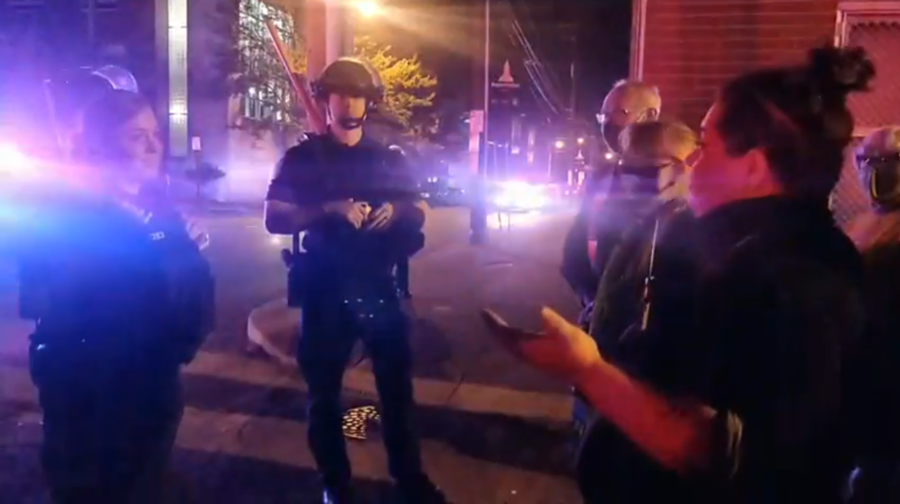
The curfew was ill-conceived and counterproductive. It only further angered people already rightly angry about injustices they’d suffered, by having restrictions placed on how and when they might protest those injustices. To be blunt, imposing the curfew only increased the potential for vandalism and violence instead of decreasing it.
It did include several exemptions: allowing people to be out and freely travel in order to get to work, seek medical attention or to get to and from houses of worship for services. In fact, while announcing the curfew, Fischer encouraged houses of worship to open for prayer during this time. First Unitarian, a church near the downtown square that has become the focal point of the ongoing protests, did just that.
I helped to provide clergy support at the church on Wednesday, Thursday and Saturday nights during that time, as we provided worship and other services to the more than 200 protestors who gathered there each night. Together, we read Scripture and proclaimed the gospel. We lifted up individual and corporate prayers of lament, supplication, intercession, thanks and hope. Some played music, and offered personal witness and testimony. We provided personal spiritual care, shared sacred food, and enjoyed fellowship. I was blessed to have been a part of it, and as I served them, I saw the face of God shining in the faces of so many people. Through it all, I saw remarkable beauty.
I also saw great ugliness. On multiple nights, police surrounded and prevented access to and from the church. They arrested numerous people, even including State Representative Attica Scott as she tried to enter the church grounds. This was contrary to our constitutional rights, the stipulations of the mayor’s own curfew order and his encouragement for churches to open.
That Saturday night, a group of outside troublemakers entered the church grounds. They were promptly removed from the property, and although I’m told they reentered several times, each time they were removed. Apparently, those troublemakers later broke a number of windows at Spalding University and set a car on fire.
In response, police officers surrounded the church once again, detaining everyone there and threatening us with arrest if we left. In negotiations with the police around midnight, we requested safe passage for the people gathered at the church to get home. That request was ultimately denied. Police claimed that the vandals were inside the church, and they continued to tighten their perimeter around the church property.
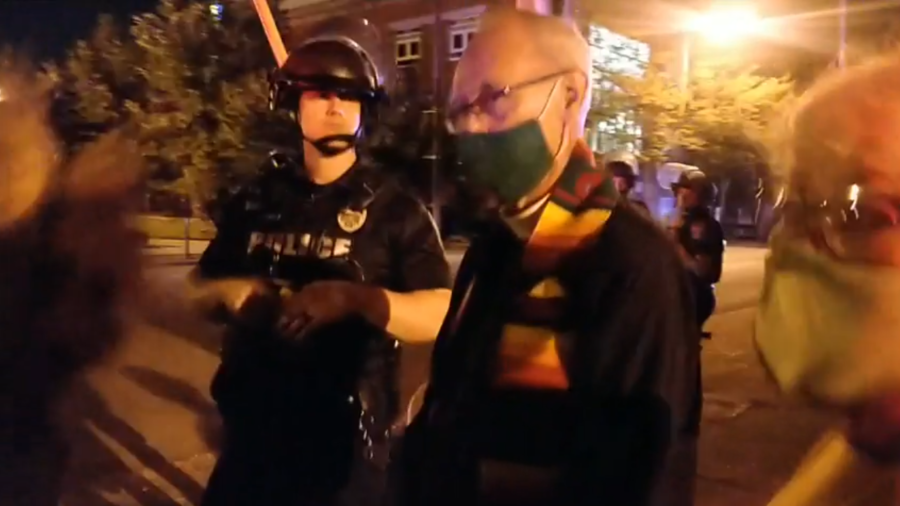
For several hours, as interim chief Rob Schroeder admitted in subsequent testimony to the Louisville Metro Council, police tried to obtain a search warrant to enter the church. They were unsuccessful — apparently, they couldn’t find a judge willing to sign a warrant to storm a church in the midst of worship.
At about 3:30 a.m. that Sunday morning, the police suspicions that the vandals were in the church seem to have vanished. They finally agreed to exactly what we’d asked several hours before: to allow those present safe passage to get home, consistent with the provisions of the curfew, without threat of being detained or arrested. Even after this, I’m told that several people were still detained and arrested despite those assurances. I managed to get home and into bed at 4:00 a.m. — allowing for just a nap before getting back up and leading our congregation’s livestream worship that morning.
The city’s treatment of the church and the people gathered there throughout those days of curfew is inexcusable. The ability to freely worship and peaceably assemble are foundational civil rights.
As a minister, I understand that true faith is seen in what we do rather than what we say — that, as we read in the Book of James in the New Testament, faith without works is dead. That week, what happened at First Unitarian Church was truly a model of putting faith into action.
Once again, I’ll be blunt: The people gathered at the church downtown were primarily Black. In contrast, I don’t know of a single instance of police similarly encircling and locking down a primarily white, suburban church that had gathered during the curfew in accordance with the mayor’s suggestion. The police actions at First Unitarian were further evidence supporting the protestors’ claims of racial targeting.
I said earlier that I don’t consider myself a radical. But if offering love and support to people being treated unjustly makes a person a radical, if upholding our constitutional rights makes them a radical, if expecting the city to abide by its own curfew exemptions makes them a radical, then please, by all means, call me a radical. I do know this: Whatever I am, I know as an eyewitness to these events, the way that the city on multiple nights abused and laid siege to a church and the people gathered there was shameful, and just plain wrong.
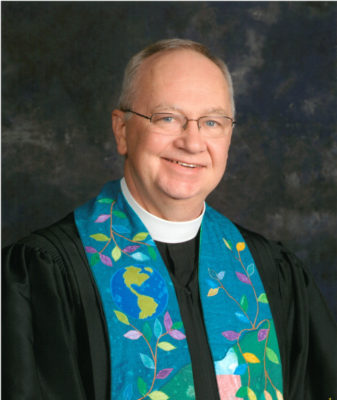 DWAIN LEE is a minister of Word and Sacrament in the Presbyterian Church (U.S.A.). He is the pastor/head of staff at Springdale Presbyterian Church in Louisville, Kentucky.