Guest commentary by Nelson Reveley
John 11:35 reads: “Jesus wept.” Specifically, this is Jesus’s reaction to the death of Lazarus. More broadly, it expresses the sorrow that saturates losing a loved one. And unlike many faithful affirmations about God, which can feel abstract even when faithfully affirmed, John 11:35 offers something more visceral. Jesus’ weeping shares in the grief and care with which we enfold one another in the face of death. It suggests that, even with the eye of eternity, God suffers alongside us losses that cut against the goodness of creation.
2019 was a year of enormous loss for me personally and professionally, as 2020 is shaping up to be for so many amid COVID-19. Last year ended harshly with the loss of my spouse, Jess. She died suddenly the Sunday before Thanksgiving, just as we were preparing to go to worship and our little boys were wrestling playfully, obliviously downstairs in their Sunday best. Although Jess lived unflappably with epilepsy for many years, a seizure took her life right before my eyes. In an instant my best friend, with whom I was supposed to grow wonderfully wrinkly and reminiscent, hand-in-hand into the setting sun, was gone. Jess was a brilliant, beautiful beacon of playfulness, faithfulness, hard work, community service and compassion, performing her final act of care even in death as an organ donor. Her absence still feels extremely unreal, despite the ways it weighs around long days and longer nights.
Jess’ death came hard on the heels of another life-altering loss from the outset of 2019. In this case it was a loss of work, or more specifically, the embarrassing demise of a long-running dream. Since 2008, I had aspired to be a professor of theology at an institution I care about deeply, a role that would have afforded avenues to serve the school as well as the broader community and church. For years I cobbled together academic, community and ecclesial endeavors in preparation, but when this position finally posted, I ultimately lacked the right stuff. I received my rejection email in mid-January and admittedly fell to my knees as reality unraveled the dream and nestled in its ever-paltry replacements, under- and unemployment.

Losses like these are not unique to me. Whether it is work, opportunities, dreams, seasons, semesters, ceremonies, friendships, marriages, loved ones, identities, able bodies, healthy minds or possessions, no one escapes losses that cannot be fixed. Sometimes the loss is sudden and searing. Sometimes it entails long aching decline. Sometimes it comes from injustices that demand every possible individual and institutional redress. Sometimes we just lose — no fault, only finitude. Until recently, I felt if I just read enough, ran enough, wrote enough, raged enough, rearranged furniture enough, remembered enough, I could somehow claw my way out of it all, as if loss were simply something that entangles life, rather than fundamentally marks it. But each small-step “milestone” I reached revealed there is no way out. No matter what I do, there are no time machine shots at opportunities lost, nor any lingering possibility of life on this earth with Jess.
Of late I have found myself having to lean heavily into one recognition and one hope. The recognition is that even amidst loss, life-giving goodness still resides in this world and invites our participation: community, family, music, meals, storytelling, sports, nature, science, art, volunteering, the pursuit of justice, generosity, compassion, healing, constructive work, prayer. However hollow life-giving goods feel at first (and circumscribed they may presently be), they can rekindle the fire in our bones in ways that bless us and enable us to be a blessing to others. And however unclear the way forward lies, we each exude gifts and graces that the world needs, that can brighten the lives of neighbors near and far.
The hope reaches further. It affirms that our loved ones, as well as all life-giving goods, entail and unveil finite expressions of God’s infinite goodness. And any loss we suffer is something love divine not only mourns alongside us, but leads the resurrecting charge against, inviting us to join in life-giving ways en route to the day when every tear is wiped away. Precisely how and when that will happen lie beyond our ken, as does why such suffering was ever allowed entrance in the first place. Ultimately, though, riffing on John’s Gospel, the recognition is that light still shines in the darkness; the hope is that darkness cannot overcome it.
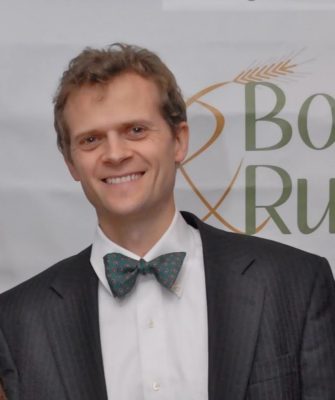 NELSON REVELEY is parish associate at Grace Covenant Presbyterian Church in Richmond, Virginia.