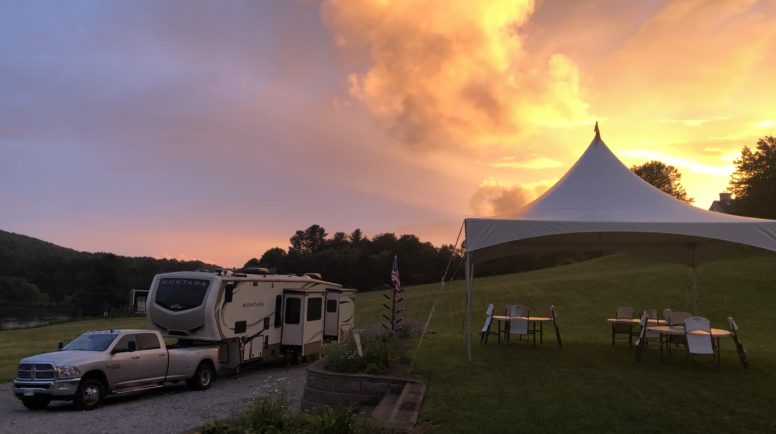
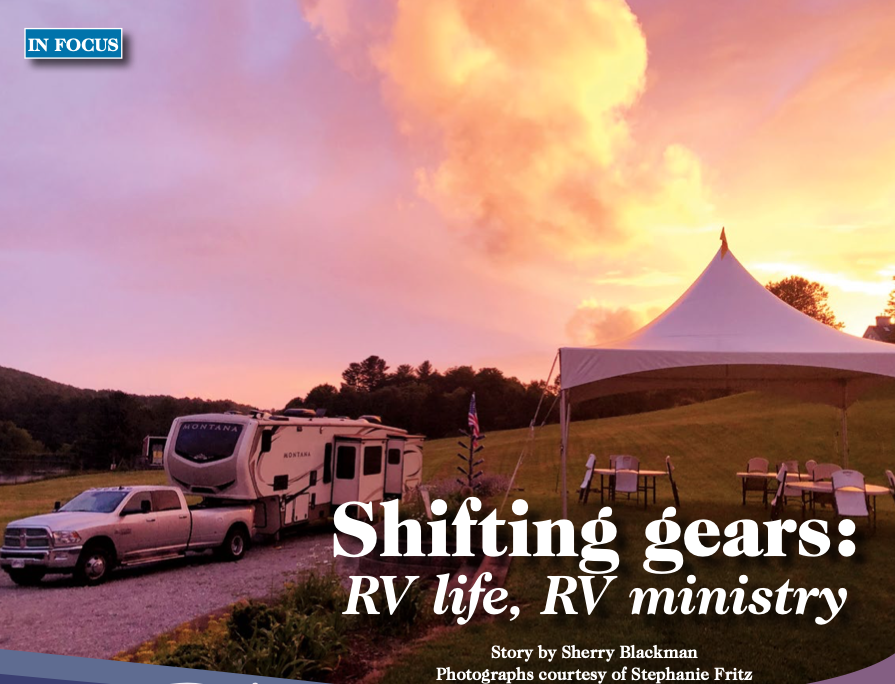
Stephanie and Bryan Fritz, Colorado natives, were a bit ahead of the curve when they sold their home and belongings three years ago. They opted for an alternative lifestyle and purchased a recreation vehicle (RV) to gallivant around the country and work along the way.
“Our children went off to college, and we decided to get rid of all our stuff and shed the suburban culture. We downsized and simplified our lives, while able to remain near family,” says Stephanie, from her 41-foot-long 5th wheel (towed by a pickup truck), with 382 square feet of living space.
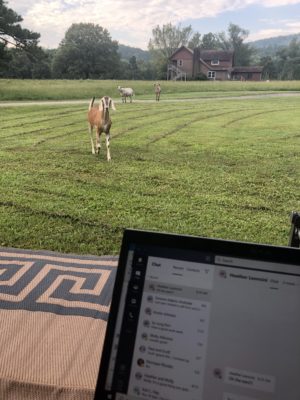
Stephanie and Bryan are both in their mid-40s. Stephanie works as the associate coordinator for Christian formation for the Presbyterian Mission Agency headquartered in Louisville, Kentucky. Bryan is a manager for Life Safety Services, located in Louisville, whose position requires him to travel around the country. Considered an essential worker once the pandemic hit, Bryan was able to drive to work, and has logged over 15,000 miles since May 7, 2020 — rather than fly, which he did 80% of the time previously. Stephanie was required to work remotely, conducting webinars and Zoom meetings from campgrounds, national parks, wineries, farms and truck stops.
RV living means freedom for many, attracting mid-lifers and Generation X-ers who don’t want to be tied down to one location, or who are not yet ready to commit to homeowner responsibility. Entrepreneurs enjoy “rootless living,” documenting their stories on blogs, and writing and publishing nomadic living stories.
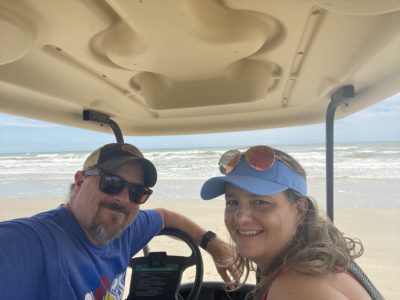
“Young millennials want to work to live, rather than live to work,” adds Stephanie.
Approximately 11 million U.S. households now own an RV, reports The RV Industry Association. Over the last 10 years, the upswing in RV ownership has been driven by strong interest from younger individuals and families who live an active outdoor lifestyle and Baby Boomers who are entering retirement.
But since the pandemic, sales are in overdrive. The Association found that RV shipments were up over 50% when comparing July 2019 with July 2020 figures. Manufacturers are having difficulty keeping up with the demand.
Boomers are deciding to retire earlier than initially planned. Families are taking to the road not just for vacation, but also for real-life education since many schools have turned to remote learning.
The National Association of RV Parks and Campgrounds reports that leisure travelers – including campers and non-campers – rank camping as the safest form of travel to resume once restrictions are lifted. And they will have about 13,000 private RV parks and an estimated 1.23 million individual trailer campsites from around the U.S. to choose from, not counting campsites in state and national parks.
Opportunities for mission gain traction
Family camp is returning, says Joel Winchip, executive director of Presbyterian Church Camp and Conference Association (PCCCA). “We see more and more camps moving toward accommodating RVs and camping sites. The pandemic is reviving what had once been thriving family camp programs, something that had waned over the years.”
 The director of Sound View Camp and Retreat Center, Kurt Sample, agrees. Located in Longbranch, Washington, Sound View was “retooled” to accommodate RV space on its 100-acre site this summer. He describes the effort as “wildly successful.”
“Families loved it. Kids cooped up for months were free to play, roam and ride their bikes. We had over 250 different families come through the camp this summer. Eighty-five percent of them were new. About 10% of the campers came back for multiple dates. Most are hoping to return next summer and are anxious to see our plans,” he says.
Sound View will offer more family-centric educational opportunities and augment school education — and they have a naturalist onsite year-round.
COVID-19 simply accelerated what had already been in the works: expanding the camp’s mission, with a vision for the future to include guest pastors preaching, and offering volunteer service opportunities for those who choose a nomadic lifestyle.
Mound Ridge Retreat and Mission Center in the Missouri Ozarks, near Steelville, also adapted their campgrounds to accommodate more RVers, after deciding against having children’s residential or day camp due to COVID-19. Director Christy Foster and the county health administrator worked together to create a plan where family groups and individuals could isolate and socially distance in cabins, camping areas and RV sites. Cabins were furnished with a microwave, refrigerator, coffee maker and an outdoor barbecue pit so that family groups or individuals could do their own cooking. Also, three more RV sites were created, with a plan to upgrade to 10 more. Since Mound Ridge is a mission center, an overnight stay for RV hookup is made available for $20.
 “This is a time of innovation, to be what we are called to be, and to do so in a timely way as we learn how to live in the here and now, and be a resource to family groups and other people groups,” she says, being true to the Reformed tradition. “We aren’t asked to stand still but to be in movement.”
Mariners in Mission has been on the move for a long time. Adult volunteers, some who travel by RV, work with Presbyterian churches, camps, conference centers and colleges. Over the years, volunteers have worked in 32 states, doing everything from making curtains and quilts, tearing down unused buildings, building, repairing electrical wiring, cleaning and landscaping — all of which saves camps millions of dollars in labor.
NOMADS – Nomads On a Mission Active in Divine Service – is another group that provides volunteer labor for United Methodist organizations. Volunteers engage in new construction, remodeling and repairs for churches, children’s homes, camps, colleges, outreach missions and disaster rebuilding. Team members do maintenance, cleaning, painting, electrical, drywall, sewing and flooring. Volunteers are often retired, looking for a purpose, enjoy RV traveling and want to share their faith and their skills in service to others.
Currently, the NOMADS organization offers about 175 projects each year and has over 900 active members, who donate more than 110,000 volunteer labor hours annually.
Holy rollers
No one knows the lifestyle or the ministry possibilities of RV living and vacationing better than Tamara John, a pastor who has lived in her RV for almost 10 years in the same park. Years ago, she had a vision for RV ministry that would span every state, every RV park, reaching out to the unchurched and the de-churched. She established Hope for Life Chapel RV Ministry in 2011, one of the Presbyterian Church (U.S.A.)’s 1001 New Worshipping Communities, in her own RV in Southern California.
“What I noticed as I have lived this lifestyle is the opportunity to minister to people who live in their RV for a variety of reasons. Some have lost their homes, or who can’t afford to live in an area, but who want their kids to go to better schools,” she said. “They live here as long as they can, and when they can no longer afford the park, they live in their RV on the street until they can afford to come back.”
RV parks have a “you pay, you stay” policy, and typically, management does not run background or credit checks. For many, living in a RV affords people a chance to jump-start their life. Among the vacationers and seasonal visitors there are many that have suffered some downturns in life such as divorce, addiction, foreclosure and joblessness. Originally, John thought she would move around to other parks, but discovered that about every two years she had all new neighbors.
Her ministry focused on developing relationships as she walked around the RV park. “God is in building relationships,” she says. “Church has become too inwardly focused, and we need to have a more outward focus. We need to be action-oriented and reach
our neighbors.”
She conducted a Bible study on Saturday mornings, held a monthly barbecue to build community and a weekly worship service. Partner churches donated welcome gift bags for newcomers to the park, and meals for the Thanksgiving and Christmas holidays for those without family.
John’s vision for RV ministry was to replicate what she was doing, but there wasn’t enough interest to sustain her ministry full time after eight years. She now serves as a pastor of the Christ Presbyterian Church in Lakewood, which has RV ministry as an outreach. The church is geared up to inspire and support other churches and organizations to use John’s ministry model.
Highway to heaven
What’s gained by choosing this “love to wander” lifestyle? For one thing, being immersed in beauty, as there’s freedom to travel to some of the most amazing places on the continent, says Stephanie. One can view the world even while working remotely, unconfined to one place or to one neighborhood.
“A change of location and a change of scenery is good for the heart and soul,” Stephanie says. “It’s like having a mini-vacation every evening in a new place.”
There’s little temptation to accumulate things with such limited space, although it can be challenging to navigate private or separate space when working.
 Selling a home and living on the road can free up finances. Typically, there is less maintenance with an RV — but RVs are not maintenance-free, cautions Stephanie. Although RV parks are not free to stay in, there are National Park lands and camp clubs with no cost to hunker down for a stay.
RVers can also join organizations like Harvest Hosts, an enterprising group of winemakers, farmers, breweries and more, who invite members to visit and park for 24 hours in exchange for supporting their business. The annual fee to join Harvest Hosts is under $100.
“This is a lifestyle choice that is not necessarily easier or cheaper, or less complicated or expensive. Everything is a trade-off of what you want out of life,” she says.
There are a number of other things to consider before selling everything and living on the road, Stephanie cautions. One, not having a faith community to go to, or work with, can leave some feeling disconnected and isolated. Today, however, more churches offer online worship, Bible studies and fellowship opportunities.
It’s not just the loss of a grounded, in-person Christian community, but also the loss of a village. When Stephanie and Bryan sold their home and their belongings, their grown children initially felt they had lost their childhood home and the “village” they grew up in.
Nancy Koch has lived and traveled in her RV full time over the last two years with her husband, who works remotely as a software director. It’s the love of the simple life, the great outdoors and the passion for hiking and exploring that keep them moving slowly across the country.
Koch was a volunteer administrative coordinator with John in the RV ministry, and echoes Stephanie’s sentiment. She loves living on the road, but she misses being part of a faith community.
“Fellowship with people who share your faith tradition and with whom you can share your life with no matter how distant you are from one another is important, especially as you can feel very isolated. There needs to be an online faith community for RVers,” says Koch.
Working on the road can be complicated due to spotty internet connections and cell phone service at campgrounds. Stephanie has three different cell phone plans to ensure she can work remotely and effectively.
Be wise, advises Stephanie, when considering living this alternative lifestyle, and uprooting your life. “There will be trouble, but it’s worth it, being able to travel around, totally free, living a minimalist lifestyle. Friendships gained on the road last a lifetime, and you meet some fascinating people. Traveling around the country does more than expand one’s view on the world,” she adds.
As a person of faith, Stephanie says this a way to get out of her bubble and talk to an enormous number of people with different viewpoints. What she has witnessed is a divided country.
“You have the opportunity to listen to others with whom you may disagree. People on the road tell their stories differently than they would have otherwise,” she says. “It’s hard to be angry at people that you have a relationship with next door. Engaging in relationships humanizes people.”
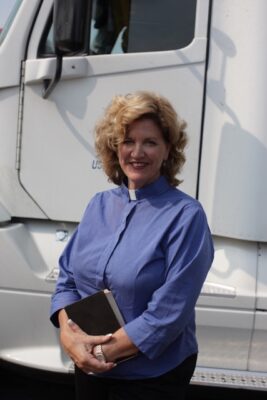 Sherry Blackman, a journalist, poet and author, serves as the pastor of The Presbyterian Church of the Mountain in Delaware Water Gap, Pennsylvania, as well as a truck stop chaplain at the Travel Center of America in Columbia, New Jersey, a validated ministry of Newton Presbytery.