Welcome
Invite various persons to bring a designated item and use this liturgy as a way to begin your time of learning together.
One: The season of Advent is past and the celebration of Christmas is given way to a New Year, but the story of God’s faithful love continues in
All: Jesus the Christ
One: The Magi followed the star to discover the light that overcomes darkness
(Place a candle on a table but don’t light it yet)
All: Jesus the Christ
One: The light of the world is God’s own Son
(Light the candle)
All: Jesus the Christ
One: Baptized by water and the Spirit he was anointed by God as
(Place the bowl of water on the table)
All: Jesus the Christ
One: We give thanks and remember, we too are baptized and made siblings with
(Each person touches the water)
All: Jesus the Christ
One: We are here, Holy Spirit, ready for your leading.
God sightings and prayer offerings
Invite each person to share where they saw or experienced God this week. Invite each person to share something — a person, community, experience, event, etc. – for which they want to offer prayer.
Good and gracious God, we thank you for all the ways you were and are present in our lives and in the world. [Invite each person to say aloud the sighting they named earlier.] We bring our prayers to you, prayers for… [invite each person to say aloud the prayer need they named earlier]. In Christ’s name we pray, Amen.
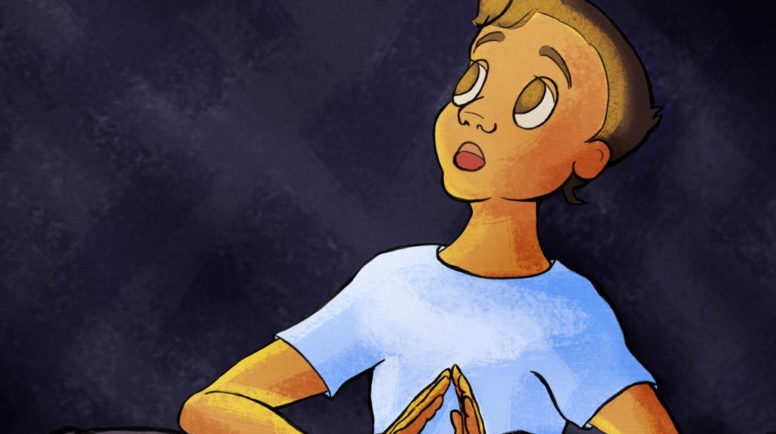
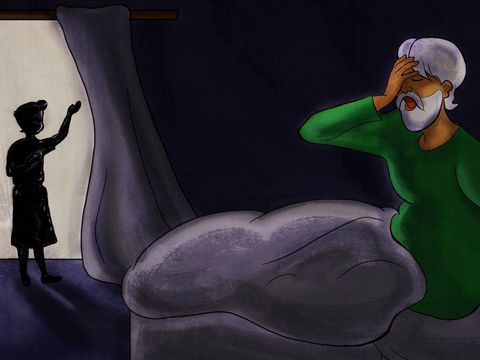
Connecting with Scripture: 1 Samuel 3:1-10
Read the Scripture aloud the first time using the New Revised Standard Version or the Common English Bible.
For the second reading of the text, assign each person a part to read aloud (narrator, Samuel, Eli and God) as you go through the story once again.
Connecting through story
Watch and listen to the story of Harriet Tubman told in the children’s book “Moses: When Harriet Tubman Led Her People to Freedom.”
- What did God tell Harriet to do?
- How did Harriet know what she was supposed to do?
- From where did Harriet get her strength and courage to do what she did?
Connecting with our lives
Engage in dialogue:
- When have you felt God wanted you to do something?
- How did you know God wanted you to do this?
- In what ways do we hear God today?
- What do we need to do to hear God more clearly?
- What do you think God needs you to do?
- How will you know?
- What will give you the courage and strength to do it?
Teaching points that can be incorporated into your discussion:
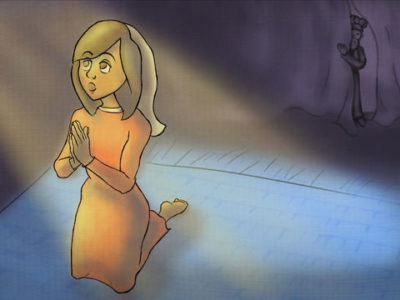
- The broader context of this story begins with Hannah who yearned for a child but did not have any children. She would go to worship and pray deeply asking God for a child of her own. She even promised God that if she were able to have a child with her husband, Elkanah, she would dedicate the child’s life to God. God gave Hannah the gift of a child and Hannah kept her promise. When Samuel was old enough, but still a young boy, he went to live in the house of the Lord with priest Eli.
- Today’s text is considered Samuel’s “call story.” Many people who God chooses to do the work of the Lord in Scripture have call stories. These are stories that tell of when they knew God was asking them to do something important, such as: Moses in the burning bush; Jeremiah was a young boy called to be a prophet; or Samuel who would grow to be a prophet and priest.
- The accompanying New Testament text into today’s lectionary passages includes Jesus’ calling his disciples (John 1:43-51)
- Each of us, in our baptism, is called to do the work and will of God. Our first call is to be a disciple of Jesus Christ. Our secondary call is the particular thing(s) God wants us to do and be. For some people, their secondary call is to be a minister. For others, it is a doctor or a mom or a mechanic. No matter if you are a butcher or a baker or a candlestick maker, God calls us to continue Christ’s ministry on earth.
- Our job is to listen intently for God’s call in our lives. We don’t often hear God’s voice as clearly as Samuel did. We’re more likely to think in terms of the second sentence of 1 Samuel chapter 3, “The word of the Lord was rare in those days; visions were not widespread.” But God still speaks to and calls us into faithful service.
- We can pray as Hannah did. Worship, study Scripture and listen to those whose faith is deep and who live in ways that are consistent with who Christ was and his priorities.
- We can respond as Samuel responded: Here I am. Speak, Lord, for your servant is listening.
- One of the important things to remember, when we’re trying to discern the voice and call of God, is that God never calls us to do something, or be someone, that is inconsistent with the commandment to love God and love neighbor.
Listen to the hymn “Will You Come and Follow Me? (The Summons)” and paying careful attention to the words (or sing along) – in what ways does this song speak to you?
Prayer
Close your time together by praying for one another, your neighbor, community and the world.
 REBECCA DAVIS is the associate professor of Christian education at Union Presbyterian Seminary in Charlotte, North Carolina. A teaching elder and certified educator, she served congregations for over 20 years before moving into academic teaching. In addition to teaching and mentoring students, her passion is child advocacy and ministry.