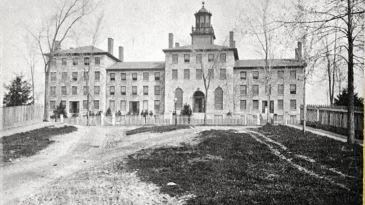
Amid the isolation of COVID-19, morning walks through my neighborhood have become a comforting ritual of contemplation. Each morning holds a new sense of wonder and aliveness. Jumping squirrels, chirping birds and varying schemes of color. Nature is not only a portrait of diversity but a picture of determination, an abiding divinity of grace and mercy. On the path I walk, an empty house – with broken windows, dismembered dolls and a tricycle lying in the front yard – begged the question: For whom had this house been a home? Farther along my walk, I came across an abandoned school. The empty house and abandoned school share a common story: children chasing each other in games of tag like jumping squirrels, laughing in their outside voices like chirping birds. That is, until the cold winds of economic disenfranchisement pick up, leaving a field of dandelions all with their puffy heads blown off, except for a single, lonesome, daisy-like flower.
On another walk, I noticed the first signs of spring in the front yard. Tiny colorful blossoms sprout from a patch of land that only a month before was completely covered in snow. Before the snow, that same plot of earth had been enveloped in orange and yellow leaves, which eventually turned brown and brittle. How did these plants learn to succumb to the winter darkness before the rebirth of spring?
On the way home, I encountered a light blue shotgun house where an older Black man walked back and forth between a rain barrel and a tire bed filled with moss, purple flowers and a small bottle tree. He moaned pieces of a song – something about a storm – until he noticed me staring. He squinted as he took a long puff of his cigar and said, “It’s rude to stare, young man.” With a lighthearted chuckle he eased my embarrassment. “My name is Roy Josephus Lee. Everybody ‘round here calls me Papa Lee, and so should you.”
“Yes sir,” I nodded.
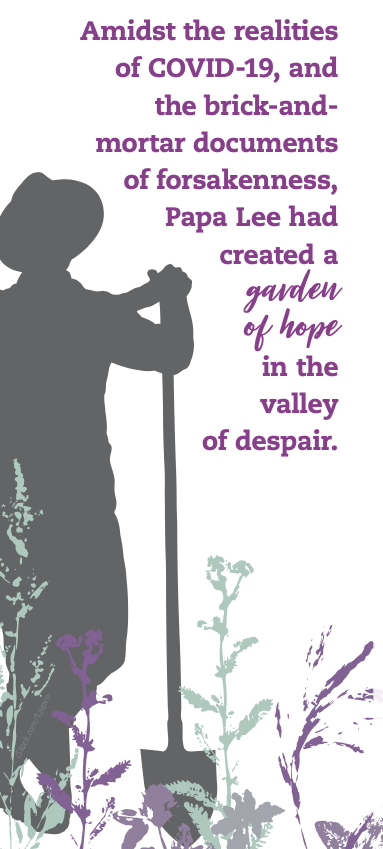 Papa Lee was well preserved, with a caramel complexion and a short, lean frame. His curly silver hair had a wide Mississippi part on the left side. The denim overalls he wore were faded and tattered at the knees, as was the union badge stitched on his white work shirt. A red bandanna dressed his neck, and Red Wing boots his feet. He was the prettiest picture of Black working-class manhood on this side of paradise.
Papa Lee smiled as he walked toward the gate and said, “Come on in.” The welcoming sound of his voice made me blush. Crossing the threshold, I was immediately met with a dark humming sound and the echoes of drums. The flowers and objects of his garden glowed with a lavender light. Amid the realities of COVID-19, and the brick-and-mortar documents of forsakenness, Papa Lee had created a garden of hope in the valley of despair.
He led me to the rain barrel where he placed one hand on the barrel and his other hand in mine. He lifted our hands, looked up to the sky and called out, “Great God Rainmaker!” I felt a thunderous shock of energy rush through my body that closed my eyes shut. He continued, his voice breaking and shaking: “Every breath we take a miracle. Each drop of rain a touch of your mercy. You waste nothing and neither shall we. We are much obliged.” He gave my hand a quick shake and together, we opened our eyes and looked down as he ever-so-slowly turned the valve. The barrel let out a long sigh. A flow of living water made a melodious sound as it lowered itself gently onto the earth. Papa Lee walked around, singing and “piddling,” as the elders called it. I followed him, enraptured by his warm baritone voice. Now that I was within the veil of the garden, I realized he wasn’t just singing a song, but offering a psalm, a lament on behalf of our collective condition. His “I” stood in for “we” as he sang: “I’ve been in the storm too long. I need just a little time to pray.”
At first, I stood in awe at the weight of history and hope coming from the voice of such a small man. Once he set aside the words and began to hum, I left him alone and walked through the garden, inhaling the scents of turmeric, chamomile and ginger, communing with the various purple flower buds. Numberless are God’s affections for color, especially the color purple.
Papa Lee took two stools from the porch, placed them next to the rain barrel and invited me to sit. I sat down and watched him carefully move the rain barrel, pouring the remaining water onto the ground where it made a puddle. He turned the barrel upside down, and gently placed it on the ground a few inches away from our feet.
The barrel that held living water was also a drum, a divination vessel that granted us access to the gods. Carefully bringing the sacred object close to his heart, he flexed the muscles in his back and began to play and sing a new song from the old-time religion: the storm is passing over, hallelujah.
We looked down into the puddle as it grew deep like a river. I joined him in the song, both of us crying, laughing and rocking like we used to do in Zion. After two rounds of the song, he continued to play softly, his shoulders bouncing to the rhythms. He looked into my eyes and said:
“Son, there ain’t but four kinds of people in the world:
Those headed into a storm.
Those in the midst of a storm.
Those coming out of a storm.
Then there’s the fool that thinks they can avoid the storm.”
He rubbed his fingers on the head of the drum, and it made a crying sound as he leaned closer into the puddle. When all was silent, he looked up at me with water in his eyes and whispered: “Storm’s comin’. When it hits, be still and whisper, peace be still.”
And that’s when I saw it: A light I had only seen in my grandfather’s eyes when I crawled into a room. And I wanted so badly to stay in the warmth of that light, to be held in the arms of that radical love, but it was only a flash.
Papa Lee started to play his drum again, this time the beats were faster. He admonished me: “The storm might hover for a while, but it has to pass over. Greet each day with truth, love, justice and mercy.”
He played two final beats to emphasize mer-cy, stood straight up and gave me a nod, signaling the end of our time in the garden. We embraced, and I followed him to the gate where he offered a sacramental benediction, “If you like greens and hot water cornbread, you can stop by again, OK?”
I smiled and nodded, “Sure will.”
Home is such a chronic condition. The yearning to be welcomed, desired and embraced is rarely fulfilled. I cried and giggled for the remainder of my walk home as I pondered the miracle of Papa Lee and me, bonded together forever by the great tribulation of the sea. Thinking about the impending storm, I repeated his final refrain: “Truth, love, justice and mercy.”
Truth
I returned home and, just as Papa Lee forecasted, the tempest was raging: an eruption of riots and mass protests in response to the police killings of Breonna Taylor, Tony McDade and George Floyd — all killed in a three-month span. Then, there are also those whose deaths are not captured on cellphones. Black transgender women and transgender women of color are killed daily with no reports filed; people incarcerated face state-sanctioned murder around the clock.
In a televised photo-op, the nation’s president walked through a path cleared by members of the National Guard armed with tear gas at Lafyette Square. With a Bible raised in his right hand, and a church behind him, President Trump boasted, “We have a great country.”
But such greatness has produced centuries of Black precarity and death. Captured on cellphone video, Derek Chauvin, the white police officer who murdered George Floyd, acted with the weight of this “great country” as he forced the wind out of Floyd’s lungs. But Floyd’s soul is marching on!
Love
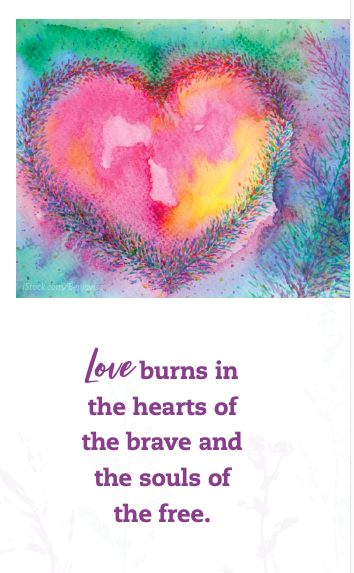 On May 1, 1865, hundreds of Black mothers, wives and sisters marched in memory of Black Union Army soldiers who gave their lives during the Civil War. The women sang, “John Brown’s Body.” Historian David W. Blight argued in the New York Times that this moment marks the earliest Memorial Day observation. In July 2020, U.S. federal troops were ordered to Portland, Oregon, to suppress social protests with military tactics on the pretense of defending a federal courthouse. A “wall of moms” organized against their presence and one of these moms unleashed an eloquent rage of love on behalf of the Black Lives Matter movement: “We’re not here because of some building. I don’t care about the building. I don’t care about your stupid vests. We care about Black lives!” Love burns in the hearts of the brave and the souls of the free.
Justice
For all the darkness brought by COVID-19, it has illuminated some of the deadliest cracks in American society. Nowhere are these cracks more visible than in the institutions charged with caring for our children and the elderly. With the onset of the pandemic, public school teachers, administrators, janitors and cafeteria workers quickly improvised to create an extended system of care for thousands of children whose lives were already compromised by social inequality. Similarly, workers who care for the elderly created alternate forms of community for seniors cut off from traditional familial structures and the broader society. Public school educators and nursing home and healthcare workers have rightly been lauded for their roles as “first responders.” And yet, these are the very workers who suffer gross pay injustices at the hands of American capitalism. Standing arm-in-arm with the nurses at the University of Illinois hospital, veteran civil rights clergy activist Jesse Jackson declared, “We’re striking for adequate equipment, we’re fighting for hours that make sense, we will not give up, we will not surrender, we will fight back!”
Mercy
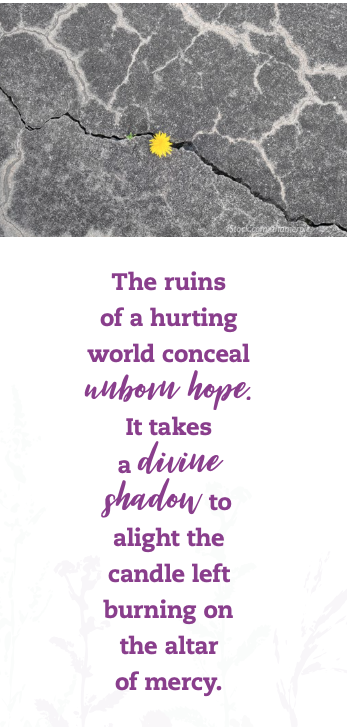
The ruins of a hurting world conceal unborn hope. It takes a divine shadow to alight the candle left burning on the altar of mercy.
 John Lewis, one of the last surviving foot soldiers of the voting rights movement, made the ultimate crossing amid the racial health disparities of COVID-19, urban insurgencies and the efforts to roll back the civil rights gains to which he gave his life. He joins that great cloud of voting rights generals, including Fannie Lou Hamer, Ella Baker and Medgar Evers, and a host of Black saints who descend from the clouds to accompany the march to storm the city gates. Lewis showed America far more mercy than it deserved.
I hear Papa Lee’s voice in my soul: Peace be still. Although we can’t see it, here in this valley of chaos and confusion, where the dark forces of greed make it impossible to breathe, is the truth of redemptive suffering, deathless love and the light of the resurrection. The pulling down of strongholds, toppling the statues of unfreedom, makes way for a nation to be born again, to be liberated from the tyranny of fear that keeps us all bound by hate.
The signs of spring have blossomed into summer.
If this spring awakening causes the institutions of power to tremble and shake: hallelujah!
If this familiar reckoning pushes the paddy rollers over a cliff and into the sea: hallelujah!
If the stock-trading floor crumbles into rubble: hallelujah!
If shaking every state house sets the captives free: hallelujah!
These are the signs: The storm is passing over, hallelujah!
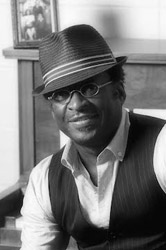 Johari Jabir is a contemplative artist, scholar and educator, whose roots in the Black working class communities of St. Louis inspire his work. He teaches in the department of Black studies at the University of Illinois Chicago, and is the author of “Conjuring Freedom: Music and Masculinity in the Civil War’s ‘Gospel Army.’”