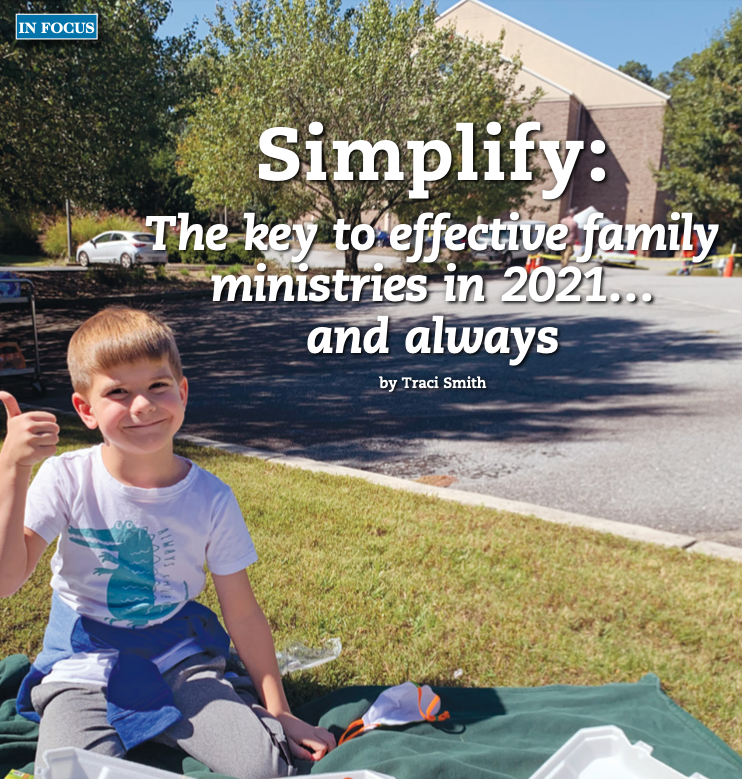
As we gear up for another year of improvising, going with the flow and making the best of less-than-ideal circumstances, many who work in children, youth and family ministries are starting the year exhausted — and with good reason. Ministry professionals have been scrambling for months, learning how to edit videos, preach to empty sanctuaries and try to reach burned-out families through Zoom, text, phone and socially distant personal visits.
Family ministries workers (whether professional or volunteer) are some of the hardest working people in the church, and while they are generally optimistic and energetic, I’ve seen some of their sparkle dim over the past few months. As an author in the children’s ministry space and a curator of resources and trainings for those in family ministries, I hear their stories every week. If I could sum up how they’re feeling in one word, it would be tired. If you’re one of these tired ministry professionals (or if you work with one), I hope you’ll read on for some ideas on how to focus your upcoming year and simplify it.
Give the families you serve – and yourself – permission to let things go
A few weeks ago, someone asked me how to get more of the children in the congregation to watch the YouTube service. I gave some quick ideas — make it interactive, speak directly to children, and encourage community among all ages. But my first and strongest suggestion is this: let it go. Though we are talking about the “new normal,” this pandemic will not last forever. Having to worship via livestream or YouTube is a moment in time, and families are weary and worn. Many don’t have the bandwidth to insist on another moment of attendance in front of a screen during their week, or an additional Zoom call. The worst thing we can do right now is to pile on extra guilt for ourselves and the families we serve.
 Set an inviting tone that all are welcome when they are able to make it. Before the pandemic, families were often attending once per month or less — and the pandemic hasn’t changed this trend. When ministry leaders take a “light” approach to attendance by recognizing that there are competing demands on time, it sets the right tone. Harsher approaches and expectations can backfire. Ministry leaders also need to let go of rigid scheduling and long-range planning right now. Sure, we can try to plan for the future, but our world is changing month to month, week to week, sometimes even day by day.
Spend extra time curating the right resources
My carpenter brother reminds me that carpenters “measure twice, cut once.” When it comes to family ministries, I think the saying should be something like “test five curricula, choose one” or “read five books, recommend one.” I send out weekly resources to ministry leaders in my weekly email called “Treasure Box Tuesday” and for every five books or resources that come across my desk, I recommend one. I am adamant about sharing only my very favorite things.
Ministry leaders ultimately save time when we spend more time on the front end choosing resources that are just right for our communities. No church is the same as another, and so no resource is perfect for all churches. Take advantage of any opportunity to preview a resource or read a sample of it before you buy. Once you find a resource that works for your community, it’s worth its weight in gold!
I believe the best resources are flexible, easy to modify and require little fuss. Sometimes the best resource for a church will be to draw portions from a variety of resources. Though my general rule is to pare down and simplify, I think spending time curating quality resources that work for the congregation you serve is time well spent, even if you have to string something together or write some of your own materials.
Set a focused intention for the year
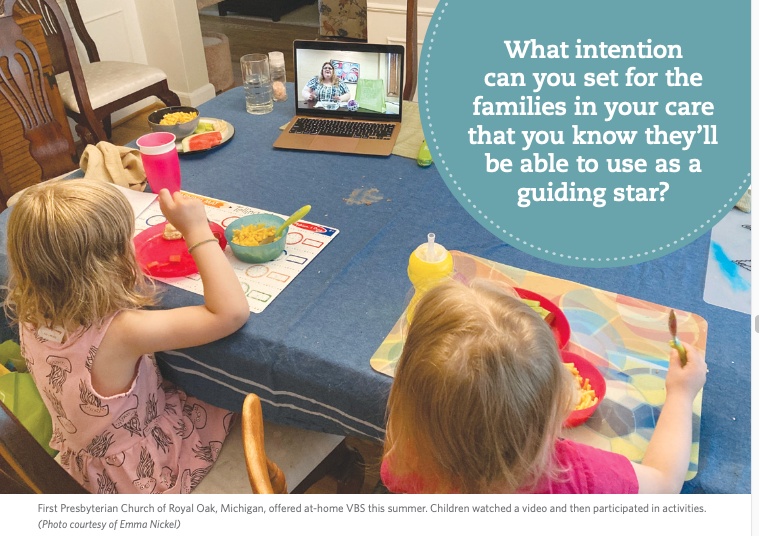
We know this year will be full of changes and surprises as we embark on the next phase of our COVID-19 journey. We have hope that many restrictions will ease and that we will return to our pre-pandemic lives. And yet, we are not certain what the future will bring. We have had so many changes in this past year along with many detours and new traditions. What will tie your community together in 2021 no matter what? What intention can you set for the families in your care that you know they’ll be able to use as a guiding star? Spend a little time thinking about what this might be.
One idea is to focus on faith at home this year. Teaching your families how to pray together and how to foster time for spiritual growth and practice together will serve them, not just for this year to come, but for years (and generations) to come. Perhaps you’ll spend your time in children’s moments and teaching moments showing families practices they can do at home without you and nurture that important part of faith development.
Another intention for this year might be mission and service. With everything going on in the world, it’s important to look outside of ourselves and to the needs of others. Though the church is always called to serve others, a mission focus in 2021 is something that will anchor us all and do real good in our communities, at a time when it’s so needed.
Teach the same lesson or practice for multiple weeks
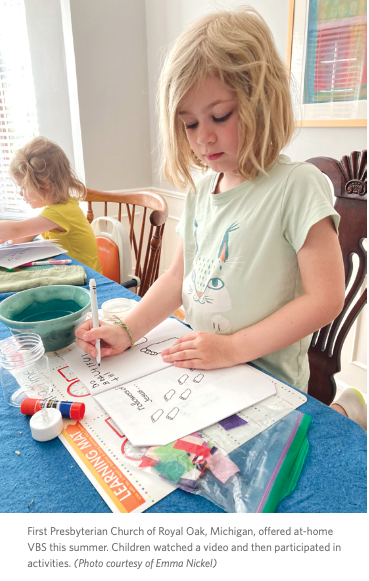 The family ministries professionals I know are always preparing new lessons or teaching new faith practices. Most congregations I’ve worked with have a separate lesson each week — or sometimes multiple times per week. This works at cross purposes in a couple of different ways, I think. Not only do many families not attend every week (and therefore miss a number of the lessons), but most of the things we’re trying to teach our families and young people require reinforcement and practice to be learned well. There’s also the time invested in preparing each lesson anew. I recommend a slower and more repetitive approach to teaching. Plan to teach each concept or lesson over a period of at least two weeks, repeating the core concepts or practice in each lesson. For those who do attend each week, the repetition will help to reinforce the lesson. For those who are sporadic attenders, there’s a greater opportunity for them to learn the material.
I once spent six weeks in a row teaching the Lord’s Prayer as a body prayer during the children’s moment. The children didn’t tire of it. In fact, they looked forward to it and, by the end, were teaching it to each other. When you find a good lesson or curriculum, teach it and practice it over and over again. When you find a prayer you love, pray it every week for a season. This philosophy allows for lessons to burrow deep in the hearts of the learners, and it avoids the constant “preparation mode” ministry leaders often find themselves in.
Look for the hidden opportunities during this at-home time
The death of over 400,000 people in the U.S. alone is a sobering reality. When we talk about the hidden opportunities or lessons to be learned from this pandemic time, it’s important to be clear that we’re not looking for a “silver lining” to this ugly and tragic reality that is to be, above all, lamented. That said, the pandemic has forced all of us to make choices and to learn new things. In the church, one of the hidden opportunities has been to practice our faith at home. We’ve also experienced the great truth that the church is not contained within our sanctuaries or even the walls of the church. The Spirit is on the loose.
It’s a worthy exercise to spend a few minutes in reflection to think on those things the congregation has learned and to find ways to communicate these lessons to your church families. Many congregations have been able to try things we would have never tried if the circumstances were different, and we are stronger and more resilient for them. How might you lead the families in the congregation to acknowledge these things and to share the lessons you’ve learned with one another?
Make simplicity your word for the year
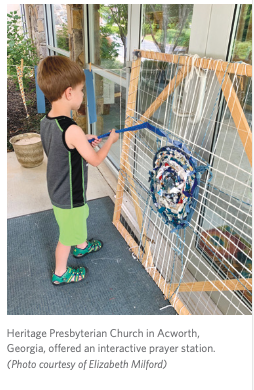 There is a true art to simplicity. When we edit, remove or take away, we are stripping down to essentials. Some of my favorite recipes are fresh ingredients, expertly prepared with little fuss. Hotel rooms are an escape because they are free of the clutter of daily living. Likewise, effective ministry is often stripped down to its bare building blocks. It’s not easy to make things simple. This is a guiding principle for effective family ministry, not just during a pandemic, but all the time.
Family ministers are known for their offices clogged with handouts and pipe cleaners, paint buckets and recyclables waiting to be repurposed. This year make it simple by letting go, curating, focusing, repeating and reflecting. No one can predict what 2021 will hold, but by taking a little bit of time to plan and prepare, you can bring new energy and life to ministry in the new year. Remember to keep it simple.
 Traci Smith is a PC(USA) pastor in Elmhurst, Illinois, mother of three and author of several books on faith practices in the home, including “Faithful Families: Creating Sacred Moments at Home.” She curates a weekly email of ministry resources called Treasure Box Tuesday. Learn more at tracismith.substack.com.