God is experiential. This might be more easily embraced by Pentecostals than Presbyterians (and I’ve been both), but Scripture affirms this claim. From the waters of creation, to the fire that called Moses, to the belly of the fish Jonah was well acquainted with, to the wind at Pentecost, we know that God speaks to God’s people in methods that we understand. Our God is a sensory-full God who reaches us through a variety of sensations.
Many teachers these days recognize that every person has a different learning style. Some are auditory learners, meaning they comprehend information best by listening. Some are visual learners and are best at processing information through seeing. Some people are verbal processors and learn by repeating the information and talking it through. Many people are kinesthetic learners, and enjoy hands-on projects. The best classrooms encourage a combination of these styles to accommodate all people. Often art – not just paintings or sculptures, but also the process of interactive creating – encompasses this theory and can create worship as an encounter with God rather than a passive experience.
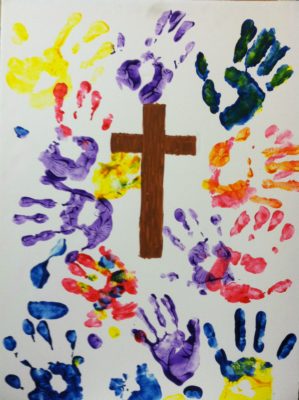
If schools recognize this diversity, why don’t more churches? Faith communities are often set up for auditory learners. Even our buildings tend to reflect this, as rows of pews point to the direction of the preacher, who speaks for 20 minutes or so while everyone listens and reflects, not responding within the service. There is some participation in liturgy and singing, but when it comes to the Scripture and sermon, it is usually only heard. This means other kinds of processors are left to work out how to understand or they just stop listening, maybe stop participating and maybe stop attending.
I have recently come to realize that I learn best with visuals. I need to see questions written down in order to process them in the time frame most people assume is normal. I truly didn’t understand the importance of learning styles and sensory approaches until I met more neurodiverse people, which include most of my family. Every member of my immediate family has a different learning style and processes differently. Neurodiversity encompasses many ways the brain process information and can include people who have autism, dyslexia or ADHD, and others who learn and think differently. Neurodiversity is more common than many realize; brains do not all consume information the same way.
As I learned more about neurodiversity and variations in learning styles, I began to wonder how worship could become more inclusive. I thought back to my seminary days and the worship professor who taught us to make the worship service more embodied. If we are expected to embody the Word in the world, wouldn’t it help if we interacted with it more in worship first? Worship is an opportunity for us to praise God and meditate and learn, and also to experience God in God’s full diversity.
Interactive, sensory worship
In the church I serve, creating more interactive worship opportunities meant finding artists in the congregation and encouraging them to use their gifts. The worship experiences deepened when those with artistic talent were included.
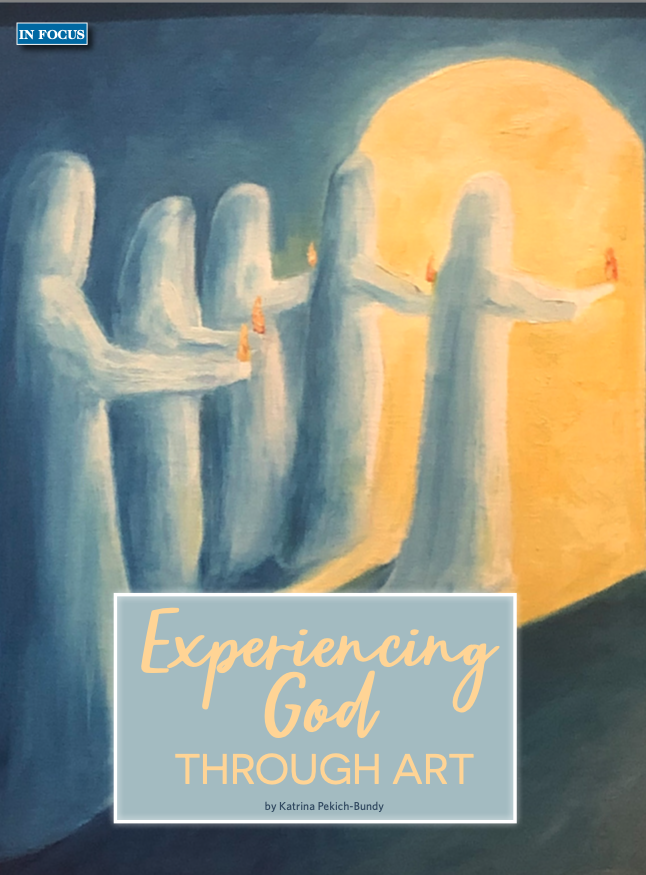
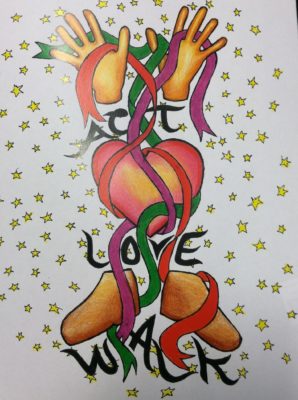
Different pieces are requested for different services. One artist (a member of the church) created a painting of their interpretation of the 10 bridesmaids that was displayed in worship. Another artist created four pieces of art that represent each liturgical color; it hangs in the fellowship hall with a description of each season. While I would guarantee that you have talented people in your congregation, you might have to draw them out, encourage them and teach them the importance and value of art in worship. This might be as simple as inviting someone to draw a piece for the bulletin cover.
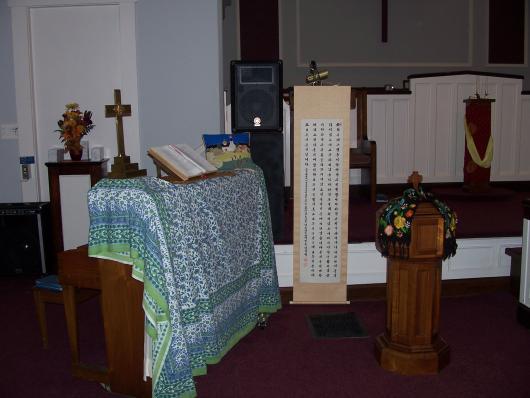
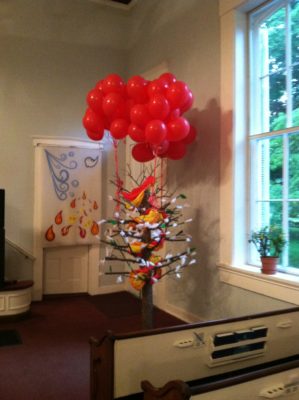
Perhaps adding some color to the sanctuary is a way to introduce art. In my context, this has been the easiest and most visible way to bring art into the space. For Lent and Advent, I drape the same purple cloth, but I place it somewhere different each time. In Advent I have a solid purple cloth and a sparkling purple tulle that I wrap in a twist on the Communion Table as a reminder of how divinity and humanity are intertwined. For Easter I bring out golds and whites. One year an artist created a tree that stood in the sanctuary throughout Lent. Small, crafted leaves decorated it and as Lent went on, the youth in the congregation pulled the leaves out until the tree was completely bare on Good Friday. For Easter Sunday the tree was decorated with paper flowers.
Once upon a lifetime ago I was a dancer and I incorporated dance in worship — a moving visual. This was a gift I shared with others, teaching youth and adults into their 80s how to move in worship. The youth eventually choreographed their own dances.
There have been times I have baked bread in a bread maker during Communion Sunday, because the smells of the baking bread can connect us to the table. Eating the bread and drinking the wine are always sensory ways to experience God in a sacrament that nourishes us so that we can embody God’s Word in the world. Incense and essential oils can also enhance the service. Smells connect us to time and space. Remembering Christ’s story of life and death is important, and smells can help us remember.
Prayer stations
Creating worship services that encourage interaction is practicing what we are learning in a safe space. For some worship services I have used prayer stations or interactive spirituality stations in place of the sermon. The action takes just as much time as a sermon (and sometimes just as much preparation, when done well) and becomes interactive and intergenerational. Many families have commented on how these prayer stations have been more accessible for their children than a verbalized sermon, and also gives them a chance to talk through theology as they participate together.
My first foray into offering interactive prayer stations came from a Lenten idea shared by Theresa Cho, pastor at St. John’s Presbyterian Church in San Francisco (theresaecho.com/interactive-prayer-stations). I eventually became comfortable creating my own interactive stations for any time of the church year.
For example, one time I set up different tables on which I offered printed prayers from different authors and traditions, with smaller printed versions for worshippers to carry in their pockets for times they needed a prayer. The most popular prayer station that day was one where I had cut out paper leaves and encouraged people to “leave” a prayer.
When preaching on the Genesis passage where Jacob wrestles with God and leaves a stack of rocks to show the place is holy, I have rocks ready in the church for people to take and stack in a place they call sacred.
It has been important to me that interactive worship is inclusive for all people. If someone is physically unable to go to the stations, I will put together a packet for them or bring each station to them. I have especially appreciated when other members of the congregation have taken this initiative and interact with them.
Art and our whole selves
I believe art in worship works because it engages our entire beings — our heart, our mind, our soul, our body, our whole self. I also believe that art has the power of changing and being changed that our theology boldly claims — as we remember that we are reformed and always being reformed, according to the word of God. Art is not static. Theology is not static. As humans grow and develop and learn, we see that God shapes us and reshapes us — and some of the best art is temporary.
Andy Goldsworthy, one of my favorite artists, works mostly with natural elements like rocks and driftwood and water. I was introduced to his work in seminary when we watched “Rivers and Streams,” a documentary on his art. At the time I remember thinking his art was futile. He would spend hours placing rocks, watching them collapse sometimes, and then placing them again, trying to not only create this beautiful art, but also beat the tide coming in. I watched as he would complete the art, and then the waves would wash it away slowly. It seemed so silly to me, but for him it was a gift to the earth. When I watched it again this past year, I was able to see the beauty of it with new eyes. Watching this during the COVID-19 pandemic reminded me of the temporary nature of humanity and all that we build on earth. We try so hard to erect statues and art that will live forever, but sometimes, as our understanding of God and ourselves continue to develop, we have to break down bad theologies and idols. Art helps us remember this and to create something new. If we are constantly creating, we are constantly examining ourselves and taking a deep look at our theologies.
God, the ultimate and original Artist, continues to create, and delights in that creation. We are shaped and reshaped over time. God created us to be different and to learn differently, and art is one way we can honor those differences and honor God.