
Guest commentary by Glenn Burkland
In leading and attending Bible studies over the years, I have noticed one topic that eventually makes an appearance in every discussion: the difficulty of forgiveness. It arises because something under consideration triggers a memory of a deep hurt, generally by a family member or close friend. The reality is that many of us who are striving to follow Jesus – and who perhaps can even quote verbatim, chapter and verse about his views on the need to practice forgiveness – are challenged by his teaching on the topic.
We know the Scriptures from Genesis onward tell of God’s great love, mercy and forgiveness. We are grateful for the words of Jeremiah 31:34 and Isaiah 43:25 that speak of God’s decision not to remember our sins. We may even daily pray “Forgive us our debts as we forgive our debtors.” Yet we push aside Jesus’ words in Matthew 6:15 that warn us that those who do not forgive others will not themselves be forgiven by our Father. As humans, we remember the hurt. We may accept the truth of Romans 3:23 that we all are sinners who fall short of the glory of God, but we find it easier to see and remember the sins of others than our own.
Why is it so difficult to forgive? Of course, there are many possible reasons. I am neither psychologist nor theologian. I can only offer my opinions based on my own experiences and those of friends who journey with me.
One major reason I have noticed is that we do not want to surrender our will to that of God. Following our own will, we find rationalization for our desire to get even, take revenge or inflict punishment for the wrong done to us. There certainly are some offenses that are criminal acts (sexual abuse, for one example), which require punishment. However, I believe what generally afflicts us most deeply are the harsh and demeaning words, the moments of deceit, the broken trust and unkept promises.
Another reason we fail to open up and forgive may be the fear of rejection by the offender, which leads to even more hurt. Perhaps we feel the one who wronged us needs to ask for forgiveness before we offer it. We are told in Matthew 18:15 the hurt party is told to take the first step. Perhaps the act of withholding forgiveness gives us some control over the relationship. And perhaps we just enjoy sitting in judgement of the other person. In Matthew 7:1, we read “Do not judge, so that you may not be judged.” We may worry that forgiving may limit our future ability to set safe boundaries for that relationship following our forgiving. Finally, if we find it difficult to accept the Lord’s forgiveness and forgive ourselves, we likely will have difficulty extending such love in forgiving to others.
It is human nature, not God’s nature, to be self-centered. Our false god here is self-worship. We also may feel the offending person doesn’t see or understand their “violation” and feel the need to be forgiven. In “Mere Christianity,” C.S. Lewis remarked, “Everyone thinks forgiveness is a lovely idea, until they have something to forgive.” We need to ask if not forgiving really hurts the other person, and down deep, we acknowledge the answer is clearly “No!” Most of us have something to forgive. We certainly have something to be forgiven for! If we want the standard of seventy times seven referred to in Matthew 18:21-22 to be applied to the forgiveness of our wrongs, we need to offer such mercy to others. We have complicated a rather straightforward principle.
Our siblings in the early church also needed encouragement to practice forgiveness. Colossians 3:13 says: “Bear with one another and, if anyone has a complaint against another, forgive each other; just as the Lord has forgiven you, so that you also must forgive.” In Ephesians 4:32, we are told: “Be kind to one another, tenderhearted, forgiving one another as God in Christ has forgiven you.”
Jesus knew that practicing forgiveness would be difficult and he incorporated the necessity for our practicing forgiveness in the Lord’s Prayer. Perhaps the Lord’s greatest lesson on forgiveness was given on the day of his crucifixion. He forgave in the midst of his pain those who had caused the pain. With a back raw from scourging thorns piercing his scalp and nails in his hands and feet, Jesus asked his heavenly Father to forgive. Could his call to deny ourselves and take up our cross daily and follow him (Luke 9:23) be a call to follow his example of extending forgiveness? Our lives and the lives of churches would be transformed if we took this challenge. May God give us the courage to try!
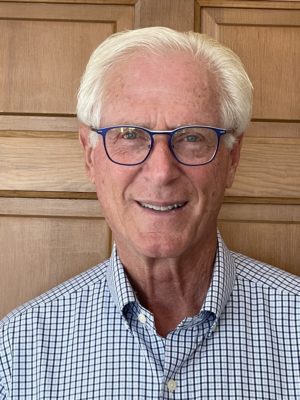 GLENN BURKLAND, a retired orthodontist, is a member and trustee at First Presbyterian Church in West Chester, Pennsylvania. As well as church and community volunteering, he enjoys cycling, sailing and the ocean waves at the Jersey shore with his wife, a retired teaching elder.