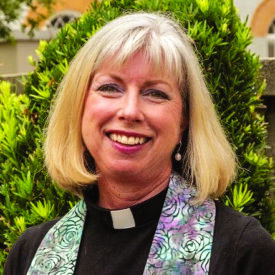
I have always been passionate about women in ministry — the history, the achievements and the obstacles they faced as they paved the way for the rest of us. As I started to dig into my doctoral research on women in ministry, I found “Living by the Gospel,” a guide published by the Board of Pensions. In the document, I discovered the statistical data to back up anecdotal stories of many ordained women in ministry today.
The statistics on gender disparity are staggering. Often, women assume the difficulties they encounter are their problem, not realizing that it is a pattern of discrimination within the larger church. “Living by the Gospel” contains a short section titled “Gender Disparity,” that begins: “From 2007 to 2019, there has been a distinct gender disparity as to the provision of benefits in the PC(USA).” During this time frame, women comprised 52% of ordinations. However, the difference between salaries and benefits were specifically noted. Men received benefits in their calls 79% of the time as opposed to 67% for women. The Board of Pensions noted that benefits were a key indicator for longevity in ministry. The average salary for women – across all but one of the job codes tracked in the study – were not only less than the salaries for men, but also less than the average salary for the job code.
This information is particularly disturbing for two reasons. First, this is recent data. We can’t blame previous eras for bias; this is happening on our watch as leaders in the church. Second, how do we advocate for justice in the world around us when we ignore documented disparity within our own denomination?
Women go through the discernment process – in their home congregation, their presbytery and during seminary – and are affirmed in their sense of call. During this process, gender discrimination in ministry isn’t often discussed. And yet, once women look for their first ordained call, they often run into biases they did not know existed in the 21st century. One example of a blatantly gender-oriented bias is that some churches may not interview or hire a woman, saying that “we’ve already had a woman pastor.” I can’t eliminate the biases within the church, but I can raise awareness that they exist and work with women to avoid them.
My research eventually led to my doctoral thesis, “Not-quite-equal: Mentoring women for 21st century ministry leadership,” and to founding Diakonos Solutions, a nonprofit organization dedicated to mentoring women in ministry through key transitions in their professional and personal life. I chose mentoring because it is an abiding, long-term relationship. From the start, I envisioned an online model, not based upon a woman’s ministry context, geographical location or personal situation. COVID-19 then made online the “new normal” for ministry.
Mentoring is one way for women to navigate biases in their ministry careers and to work together to overcome barriers.