 I spent January 1995 in Chapel Hill, North Carolina, with Uncle Jim, who was dying of AIDS. He was my mother’s younger brother, my favorite uncle. Uncle Jim always had my sister and me in stitches as he told stories from his childhood. I still have the letters he wrote as I was growing up, letters that were full of love and wisdom. When I learned his time was growing short, I arranged for an independent study in oral history to collect my uncle’s stories so I could spend the January term of seminary with him.
In the last week of my visit, I got sick. I had vertigo and nausea. I felt awful. At first, I tried to hide the illness from my uncle, as I didn’t want to worry him. But, concerned that I would pass whatever I had to him, I finally admitted I wasn’t well. Uncle Jim insisted on taking me to a doctor. After the appointment, on the way to the pharmacy to fill prescriptions for anti-nausea and anti-vertigo medications, I got the awful feeling that I was going to throw up and asked him to pull over. I opened the car door and vomited, splattering the inside of the car and my crocheted scarf, which was as long as I was tall.
Using napkins from his glove compartment, Uncle Jim cleaned me up as well as he could. He mopped up the mess on the car door and floor, drove me home and helped me into bed. Still worried about passing the illness on to him, I offered to stay at one of his friends’ houses. But Uncle Jim insisted on taking care of me himself. Over the next couple of days, he brought me tea and toast and set fresh flowers by my bed.
Before I returned to seminary, Uncle Jim presented me with my freshly laundered scarf. He teased me about how filthy it had been, even without the vomit. I felt terrible for making so much extra work for him. I knew he was unwell. I had wanted to make our time special and to help him, and instead he took care of me and cleaned up after me. He said he was happy to do it, that he loved me. He had been a patient for so long that it had felt good to care for someone else. Plus, as he raised an eyebrow, he said that he’d had the satisfaction of getting that awful scarf clean.
 I often think of Uncle Jim and I still miss him. I am so grateful for the family stories he shared and for all that he taught me: how to cook bacon without burning it, the saving grace of butter pecan ice cream and that sometimes the best way to take care of ourselves is to take care of someone else.
Years later, I was in incredible pain when my marriage ended. It was worse than when my uncle died, worse than when my father died. I was in mourning for my marriage and ashamed of the public failure. No one warned me that grief could physically hurt. I felt like someone had poured concrete into my veins. It hurt to move; it hurt to breathe. I didn’t understand how my heart kept beating. Many evenings, as I returned home, I’d hit the button to close the garage door and just sit in the driver’s seat with the car running. Going inside my house required more energy than I thought I had. For a few moments, it seemed easier to sit in the car and let the carbon monoxide do its work. I could just slip away and not have to face the impossible task of reimagining my life.
But then I would remember my dog Mandy, a 35-pound mutt that looked like a miniature black lab. My husband had wanted a dog, but luckily, I got her in the divorce. Mandy was waiting in her kennel in the room above the garage. She was waiting for me to let her out, to give her dinner, to take her on a walk. She needed me. And even though I didn’t feel that I was worth very much, Mandy was. So each day, I fought through my mental fog, climbed out of the car and took care of her. Caregiving helped me find the way back to myself.
Suffering can make our world small. It can suck the oxygen out of a room, suffocating and snuffing out our joy and love of life. Suffering gives us tunnel vision, narrowing our view to the pain that consumes us. It threatens to change our identity; we become the diagnosis, death or divorce we are experiencing.
 Caring for someone else breathes life back into us, expanding the walls of our lives to make room for more than just our grief. It’s not just that being a caregiver is a helpful distraction, caring for someone or something else pushes against the walls of sadness so there is breathing room. Caregiving can change your experience of yourself. You become more than your suffering.
Caregiving can also transform our relationship to our suffering. Ten months after my marriage ended, I received a message from Liz, a church member. She had found her husband Frederic after he tried to kill himself. The paramedics restarted his heart but she didn’t know if he would recover. I spent days with Liz by Frederic’s bedside in the ICU, was with her when she decided to remove life support and walked with Liz for months in her grief. Literally walked. We strolled the sidewalks of our Chicago suburb and the trails of a nearby park. Although our experiences were profoundly different, I resonated with what Liz expressed about feeling betrayed by someone she loved and feeling both supported and abandoned by God. We talked about how to respond to well-meaning friends who said exactly the wrong things. We talked about the ways we channeled our anger as well as strategies for suddenly living alone. I understood what Henri Nouwen meant in his classic book “The Wounded Healer” when he wrote that giving one’s life for others in Christian leadership starts “with the willingness to cry with those who cry, laugh with those who laugh, and to make one’s own painful and joyful experiences available as sources of clarification and understanding.”
 Liz didn’t distract me from my grief, but she helped me see my pain in a new way: not as an enemy, but as a friend through which I had gained hard-won wisdom. I didn’t need to be ashamed of how I felt. I could take the pain into myself and let it dwell within me; I could change my spiritual DNA without being afraid that it would somehow undo me. I could sing with the saints of the church, “Where, O death, is your victory? Where, O death is your sting?” (1 Corinthians 15:55). Of course, there is still a sting in death. When Jesus appeared to his disciples hiding behind closed doors, he still had the marks of his pain. He showed them his hands and the wounds in his side. Caregiving doesn’t cure suffering, but it transforms suffering from an adversary to an ally. That’s resurrection.
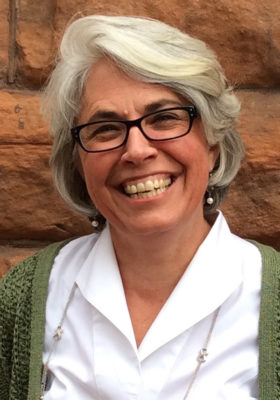 Melissa Earley is lead pastor at First United Methodist Church of Arlington Heights. In addition to all things literary, she loves to hike, kayak and be outdoors — and she’s a Moth Story Slam winner. You can read her blog “Waking Up Earley” at melissa-earley.com.