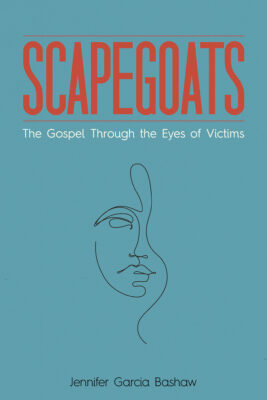
 Jennifer Garcia Bashaw
Fortress Press, 284 pages | Published May 24, 2022
Any serious study of Christian history will bring church members to the uncomfortable realization that our teachings have justified terrible harm. Consider how Christians justified the enslavement of entire groups by connecting Africans with negative figures in Scripture, slaughtered and displaced multiple nations based on “manifest destiny,” or called for the wholesale murder of millions of Jews in Europe based on bad readings of John. Some are realizing that close study of Christian oppression of marginalized or “othered” groups is necessary for real repentance and to stop harmful behavior based on bad theology. We must do more than examine what happened; we must also ask why.
Jennifer Garcia Bashaw’s Scapegoats: The Gospel Through the Eyes of Victims offers a helpful way past the what of oppression toward the how and why. Bashaw draws upon the work of French philosophical anthropologist René Girard to show how Christians have “scapegoated” weaker members of society. Bashaw describes Girard’s “scapegoat mechanism” model, whereby one person or group seeks to remove their own trouble, guilt or fear by attaching it to another and then rejecting them — even when it leads to violence and death. Scapegoats describes the suffering Christians have caused women, outsiders and the poor and infirm, explains the broken biblical justifications and suggests corrective readings.
This may be useful for Christians who, like Bashaw, emerged from evangelical contexts where the subordinate status of many groups is still taught as proper Christian doctrine. For others, this will not be especially fruitful, and Bashaw’s examples and conclusions may even disappoint. For example, she details how women have been scapegoated, but fails to explain why. Do the oppressors covet women as objects to control? Possess an unhealthy obsession with sex? Her arguments seem incomplete.
However, as Bashaw integrates her reading of the gospels with her study of Girard, she offers a sharp analysis of our current situation that is sure to grab the attention of many more. For example, Bashaw criticizes evangelical Christians’ alliance with Donald Trump, a master scapegoater who leads people to resist COVID prevention measures while blaming China for the deaths in America (instead of taking the blame for a poor response.) Even more powerfully, Bashaw calls (predominantly White) Christians to repent from scapegoating Black folks in a way that “recognizes the sinful ideologies at work in church and society – patriarchy, white supremacy, racism, exploitative capitalism, and judgmentalism – and refuses to allow them to marginalize Black Americans any longer. It is a repentance that lights a fire under Christians to root out their own racist collusion and to fight against the oppressive structures that breed inequality.”
Bashaw concludes with a final idea worthy of deeper exploration: Jesus’ redemptive death on the cross was necessary because of humanity’s tendency to scapegoat, not because of God’s vindictive wrath. While a reader might wish that Bashaw would do more to polish this theological nugget, she offers it with the hope that we might, by following Jesus’ self-giving example, create a world where scapegoating no longer exists.
Presbyterian Outlook supports local bookstores. Join us! Click on the link below to purchase Scapegoats: The Gospel Through the Eyes of Victims from BookShop, an online bookstore with a mission to financially support local, independent bookstores. As an affiliate, Outlook will also earn a commission from your purchase.