If you live in a city or the suburbs, you might not believe this, but in rural Kansas, there’s a big difference between a town of 400 and a town of 2,200.
Rice County, Kansas, is home to two Presbyterian Church (U.S.A.) congregations. One is in Sterling, with a population of 2,200, and the other is in Chase, with a population of 400. Both congregations are engaged in impactful community ministry. But even in seemingly similar small towns only 18 miles apart, context dictates much of what happens. In this article, I highlight two aspects of each congregation’s ministries: (1) caring for children in the community and (2) libraries.
Caring for children in the community
In 2007, the United Presbyterian Church of Sterling received a large bequest that included land. After sales and legal fees, the net gift to the church totaled about $1.2 million. The congregation looked at its community and identified a need for a full-time daycare licensed by the Kansas Department of Health and Environment. After years of discernment, prayer and planning, the church committed to opening a daycare in its building. It spent $500,000 to retrofit the building to become the home of Lil Cub Childcare, which opened in April 2016. In addition to turning old Sunday-school rooms into daycare rooms, the renovations added sprinkler systems, new windows and an elevator.
Lil Cub exists because of United Presbyterian Church but runs independently of the church. Lil Cub has 51 children enrolled, served by 19 teachers, an administrator, an assistant and a cook. When the United Presbyterian Church committed to creating Lil Cub, some hoped that families from the daycare would attend worship services. That rarely happens, but these families are served day after day, year after year, because of the church’s generosity and vision. Lil Cub makes the town stronger. Parents and grandparents can work full-time jobs without juggling daycare providers or worrying about their children’s safety. Sterling enjoys this assurance because the church saw a need and found a way to meet it.
Parents and grandparents can work full-time jobs without juggling daycare providers or worrying about their children’s safety.
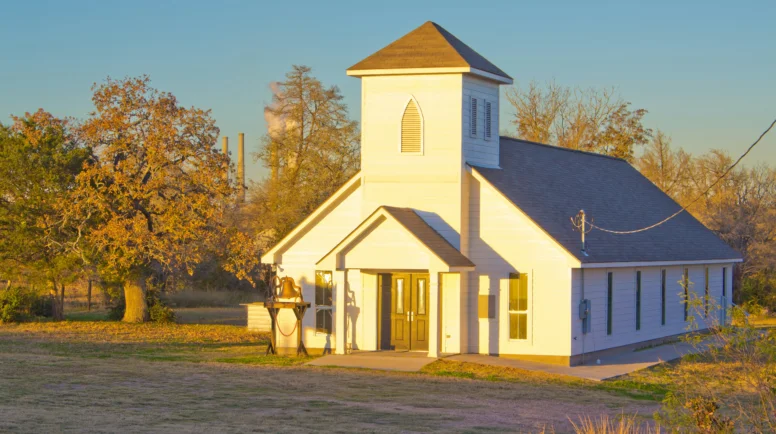
In 2013, the Chase Community Presbyterian Church discerned a call to serve children in its town, as well. The church has no paid employees. The last time it had an installed pastor was the 1980s. Instead, church members run the church. Occasionally, a pulpit supply pastor comes from outside the congregation; however, church members usually plan and lead worship. The church members know everyone in town, and in 2013, they were aware that many people, including children, didn’t attend church.
After an unsuccessful door-to-door campaign to invite families to worship, the church launched an after-school program. Each Wednesday during the school year, church volunteers walk to the school, pick up children registered for the program and walk them back to the church building. After feeding the children a hearty snack, they divide the younger and older children for Bible study and crafts. They close the time with music.
About 20 children participate in this weekly ministry — around 25% of the town’s elementary school population. As with Sterling’s daycare families, these children do not attend Sunday worship. Still, they claim the church as “their” church, and the church claims them in return. The congregation supplements summer camp fees for any child who participates – or ever participated – in the after-school program. Chase is a stronger community because of this after-school program. The children and their families have a support system through “their” church.
Growing community through libraries
Things in Chase happen at the grassroots. Yes, Chase has a school board and a city council, but making something happen mostly takes determination and a willingness to roll up one’s sleeves. There’s not a lot of red tape. That’s where the library enters the story.
Things in Chase happen at the grassroots.
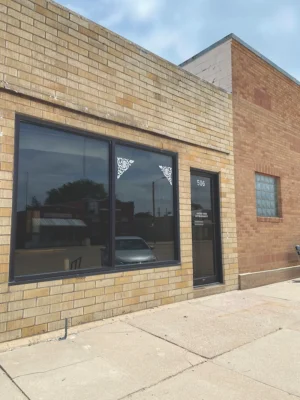
Chase does not have a public library, but it is working to develop a lending library — with members of the Chase Community Presbyterian Church leading the way. These determined individuals identified an empty building in town and secured its donation for the lending library. The team now spends its free time working on construction projects, including roofing, new flooring and plumbing. Where did they hold their bunco night fundraiser this winter? At the Presbyterian church, of course. Who writes the grant requests? A church member. A large motivation for the lending library was the community’s awareness that its children don’t have access to a library during the summer. Soon they will.
The Chase Community Presbyterian Church exemplifies the impact that the body of Christ can have in a small community. When the church seeks to serve its neighbors, its imagination is the only limit. The lending library won’t look like the libraries in larger communities, but books are books, and the children in the community will have access to more of them.
While small, Sterling is less of a grassroots community compared to Chase. To do something in the town, you follow much of the same process that a bigger town follows. Granted, you’re likely to know everyone on the city council, but the system has more red tape than a small place like Chase has. The plus side to red tape is that Sterling has more city services, including a public library with paid staff and oversight by a city council-appointed library board. In the summer of 2023, the Sterling Public Library made statewide news over a book, a display case and the firing of the director and assistant director.
William Allen White was a journalist from Kansas, and a statewide children’s book award is named in his honor. Each year, a collection of children’s books is selected to compete for the William Allen White award. Children are encouraged to read the nominated books, and one book is chosen as the winner.
In the summer of 2023, a donor gave the Sterling Public Library a set of the year’s William Allen White Award list books, one of which included a nonbinary character. A library board member told the library director not to display the book, but she did. Not long after, a display case in the library included a rainbow sticker. The library director and assistant director were fired shortly after. The city claims that the firings were not intended as punishment but were conducted in response to the directors’ performance. The librarians, however, believe that the firings were a form of retribution.
The United Presbyterian Church in Sterling sits less than a quarter of a mile from the public library. The same summer, the congregation was engaged in deep conversations about what it means for a church to say that “everyone is welcome.” While Pastor Melissa Krabbe is committed to full inclusion in the church, she’s aware that saying “everyone is welcome” and meaning it can be two different things. She knows that when a church says “everyone is welcome” but doesn’t really mean “everyone,” the result can cause more harm than an openly exclusive church causes.
… when a church says “everyone is welcome” but doesn’t really mean “everyone,” the result can cause more harm than an openly exclusive church causes.
Krabbe did not want to move ahead of the congregation, but she guided them, knowing that the moment in this town was critical. The church could offer a different voice to the conversation — and it did. Members began to share with the community that the United Presbyterian Church was a place of welcome for everyone.

Repercussions followed. Sterling College, in the town of Sterling, is a Christian college that was affiliated with the PC(USA) for many years. The college was founded in 1887; the United Presbyterian Church began in 1898. So for more than 100 years, the college and church had a strong connection. The church was the “college church.” Professors were often church members, and the school used the church facilities for events. The college left the Association of Presbyterian Colleges and Universities after the 2013-2014 school year, but even after the college ended its affiliation with the PC(USA), its partnership with the United Presbyterian Church of Sterling continued.
Sadly, that relationship changed when the church began to advertise that everyone is welcome. The college cancelled its use of the church sanctuary for music events. Relationships became less friendly. Sterling is a town of 2,200, and although it is bigger than Chase’s 400 people, one finds it hard not to run into people in Sterling. Everyone buys milk at the one grocery store. In time, the college softened its position somewhat, and occasional college concerts resumed at the church.
Currently, the most impactful ministry of the United Presbyterian Church in Sterling is its presence in the community.
Currently, the most impactful ministry of the United Presbyterian Church in Sterling is its presence in the community. The most visible result of its public welcome was the change in its relationship with the college, but there are many less visible but positive results. The community knows that the church is a place of welcome. Whether they set foot in the building or not, that welcome makes Sterling a stronger community.
Kansas is home to faithful Presbyterian Christians who love to serve their neighbors. Come and visit! I’ll take you to Rice County to visit the libraries. Bring your hammer, and people will put you to work on the Chase library construction. We’ll drop by the daycare in Sterling and make sure to visit on a Wednesday to see the after-school program in Chase.