Bob Dylan wanted to keep things simple. His fans wanted – and saw – more.
Describing his song “Blowin’ in the Wind” in a June 1962 interview for Sing Out!, Bob Dylan explained,
“There ain’t too much I can say about this song except that the answer is blowing in the wind. It ain’t in no book or movie or T.V. show or discussion group. Man, it’s in the wind — and it’s blowing in the wind. Too many of these hip people are telling me where the answer is but, oh, I won’t believe that. I still say it’s in the wind and just like a restless piece of paper it’s got to come down some time … But the only trouble is that no one picks up the answer when it comes down so not too many people get to see and know it … and then it flies away again … I still say that some of the biggest criminals are those that turn their heads away when they see wrong and know it’s wrong. I’m only 21 years old and I know that there’s been too many wars. … You people over 21, you’re older and smarter.”
“Blowin’ in the Wind” is one of Dylan’s best-known compositions. According to his website, he has performed the song live more than 1,000 times, not to mention the countless versions covered by other artists over the years. In 1962, however, the song was hardly known outside New York City, and the name of Bob Dylan had yet to gain widespread recognition beyond Greenwich Village.
Dylan as a writer of message songs
While it was far from Dylan’s first expedition into songwriting, “Blowin’ in the Wind” was one of his first and most enduring examples of a message song. This song in particular has resonated with such a large number of people because of what I’d call a double simplicity. That is, the music itself is simple enough to sing along with, but the lyrics – while ambiguous and somewhat perplexing – convey a message or lesson that the listener can ponder once the song is over. Which message do listeners take from this song specifically? Although Dylan offers a message of his own in his description, the lyrics are vague enough for each person to draw conclusions — possibly one reason this song remains popular more than 60 years later. Through songs like this, Dylan attained the mythical status of a prophet, as many of his fans found much to discuss in subsequent years when it came to what he said and sang about.
While it was far from Dylan’s first expedition into songwriting, “Blowin’ in the Wind” was one of his first and most enduring examples of a message song.
Dylan’s own thoughts on “Blowin’ in the Wind” remain an enigma. Later interviews seldom provided insight into what the song was about. Over his lengthy career, his music has attracted polarizing reception and discourse. Among both fans and detractors, a frequent topic is “Why did he write that?” The most intriguing part of the 1962 interview quoted above is the end of the paragraph, where Dylan seemed to claim, somewhat sarcastically, that the people who were older than him (over 21, at the time) knew more and were smarter. On the contrary, in many of his earlier, more politically oriented songs, age is a frequent recurring theme in the lyrics.
Shortly after “Blowin’ in the Wind,” Dylan penned the song “Masters of War,” which serves as a much harsher critique of war practices than the previous song. In the sixth stanza of the song, the narrator says,
But there’s one thing I know,
That even Jesus would never forgive
what you do.
Here, Dylan seems to cast aside his own age and voice for a much more foreboding and angry tone. The song is littered with proclamations about morality, with the speaker criticizing the titular “masters of war” for profiting from violent conflicts. Once again, the song is vague; part of its long-lasting appeal is that it can apply to many wars throughout history. Despite being written and recorded before the Vietnam War started, “Masters of War” was cited by many who protested against the war later in the 1960s. The song also introduces religion into Dylan’s own compositions, with Jesus serving the narrator somewhat as a moral compass who scoffs at those who profit from warfare. This song and several like it (“With God on Our Side,” “Oxford Town” and “The Times They Are A-Changin’” — just to name a few) appeared on Dylan’s second and third albums: “The Freewheelin’ Bob Dylan” (1963) and “The Times They Are A-Changin’ ” (1964). This type of songwriting brought Dylan much larger fame and the title of “voice of his generation” — a role that he quickly tired of playing.
Resisting the “voice of his generation” label
When asked in a 2004 NPR interview why being called a “voice of his generation” bothered him, Dylan replied, “I think that was just a term that can create problems for somebody, especially if someone just wants to keep it simple and write songs and play them. Having these colossal accolades and titles “get in the way.”
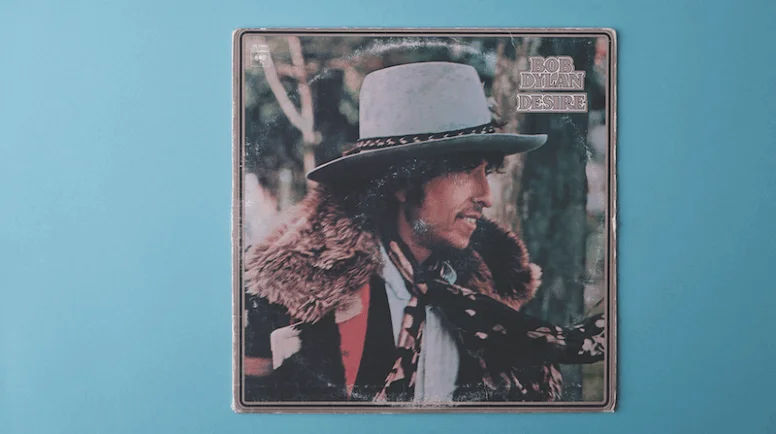
Indeed, throughout his career, Dylan would be plagued by the enthusiasm and eventual anger of those who called themselves his fans. These clusters of people tried desperately to hold on to the image of the singer-songwriter they had in their minds — only to assert that Dylan’s rapidly changing artistic direction was better on the album released before the one in question (whichever one that was). This happened almost immediately with the record that followed “The Times They Are A-Changin’,” roughly 40 years before the NPR interview: “Another Side of Bob Dylan,” released later in 1964. This fourth record still contains many elements found in his previous albums, but it certainly delivers what its title promises. Gone is the topical songwriting that made him famous within the Greenwich Village folk community. Rather than being socially conscious, for which he was mostly known at that point in his career, seemingly overnight Dylan became more self-conscious. Several of the album’s songs are confessional in nature, albeit with a good number of surrealistic lyrics to muddy any definitive conclusions.
Throughout his career, Dylan would be plagued by the enthusiasm and eventual anger of those who called themselves his fans.
“My Back Pages,” for instance, dives into Dylan’s thoughts about the impact his career had already made on so many people, even though he had only turned 23 in May 1964, just weeks before this album was recorded. Dylan frames this analysis of his socially conscious days via the song’s repeating refrain: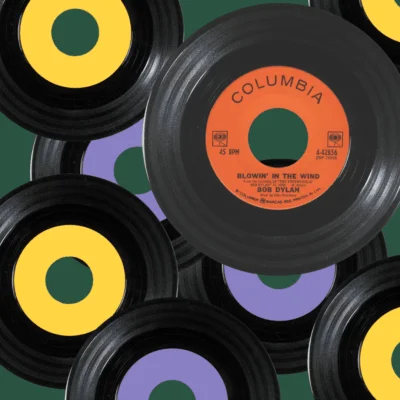
Ah, but I was so much older then
I’m younger than that now.
Like “Masters of War,” age is still a prominent theme within “My Back Pages.” Where this song differs, however, is that here Dylan seems more honest about his age and who he is, rather than making almost omniscient proclamations about Jesus and forgiveness. This newfound youthfulness can also be found in his slightly changed singing voice on the album. On his earlier albums, Dylan sounds like a kid trying to sound like an older man, but on “Another Side,” he sounds much more in line with his age of 23.
As he alluded in the 2004 NPR interview, many of Dylan’s fans within folk and protest communities became upset with the change in direction. Many were frustrated with his sudden and apparent disregard for the social issues that he had sung about not too long before, especially with Dylan refusing to give a coherent reason for this change. He seemed to no longer want to be the prophet that many had made him out to be. The topical songs that many fans fell in love with disappeared completely from his live shows by the middle of 1965. By this time, when his fanbase was already so divided, he managed to divide them even more by finding an entirely new mainstream audience.
My introduction to Dylan
Before my junior year in high school, I didn’t care or know much about Dylan. My knowledge consisted of knowing his more popular hits (“Blowin’ in the Wind” and “Mr. Tambourine Man”) and the song with the goofy police siren (“Highway 61 Revisited”). My opinions about Dylan were minimal — but at the time, I found him somewhat pretentious and overrated.
This impression changed when my history teacher cited examples of revolutions throughout history, pointing to Dylan’s electric debut at the 1965 Newport Folk Festival in Rhode Island as a “musical revolution.” Although the event is today considered a pivotal moment in music history, much of the crowd in the footage sounds derisive and maybe even hostile toward what they are witnessing. Dylan, of course, played his then five-day-old single “Like a Rolling Stone” — a song that I was fairly acquainted with, thanks to my father. In footage reposted on YouTube, some audience members can be heard booing even before the band starts playing. This confusing animosity piqued my interest; before long, I listened to the entirety of “Highway 61 Revisited,” (his sixth album, released in August 1965).
Many fans today cite the Newport performance as a large departure for Dylan. But after exploring more of his catalog, I came to the shocking realization that not much had changed overall. Dylan’s vastly interpretable surrealism can be traced back to as early as his second album, which includes songs like “A Hard Rain’s A-Gonna Fall.” He was no stranger to electric instruments either; his very first single, “Mixed-Up Confusion,” featured a full band backing him.
Dylan’s vastly interpretable surrealism can be traced back to as early as his second album, which includes songs like “A Hard Rain’s A-Gonna Fall.”
But because these aspects of Dylan’s career had not yet been in the forefront of his music, Newport in 1965 must have felt like whiplash to many. The fans booing at this concert were perhaps more upset about what they were seeing rather than what they were hearing.
For these people, Dylan was a prophet. He sermonized about causes they cared about, like a racist judicial system (“The Lonesome Death of Hattie Carroll”), ignorance of people older than him (“The Times They Are A-Changin’ ”) and the need for decreased violence (“Blowin’ in the Wind”). The new Dylan in the leather jacket, however, only sang of a “mystery tramp” and “Napoleon in rags” in “Like a Rolling Stone.” In the eyes of those who had once looked up to him, he was now a complete unknown.
Sixty years have passed since that fateful day in Newport. During the intervening time, Dylan has been called everything from a “Judas” to a “genius.” He has released albums such as the widely panned “Self Portrait” (1970), the successful (yet divorce-foreshadowing) “Blood on the Tracks” (1975), a trilogy of born-again Christian albums (1979-1981), the Grammy-winning “Time Out of Mind” (1997) and even a Christmas album (2009). He famously won the Nobel Prize in literature in 2016, becoming the first and so far only musician to do so.
I finally got to see an 84-year-old Dylan perform live on Aug. 2, 2025, and the experience was surreal. He was undoubtedly the oddball of Willie Nelson’s Outlaw Festival, with the crowd mostly going silent whenever he began a song. The cameras were only allowed to film him and his band from a distance, which added to his overall mysteriousness. Unlike all other acts of the festival, he said absolutely nothing throughout the entire performance. He appeared, sang his songs and quietly disappeared. No one was booing him based on what he did or did not play; most were just happy to see him at all.
Dylan, a prophet?
So is Dylan a prophet? The answer varies from person to person. While I doubt most fans in those Outlaw Festival seats viewed Dylan with a level of admiration and devotion reserved for religious figures, many likely still looked to him to comment on the world we live in today. One thing for certain, however, is that it doesn’t take a prophet, a traitor or even a Bob Dylan to find a singular answer. All we need to do is look at what is “blowin’ in the wind.”