When I was in my early 20s, I got in a fight defending the honor of Dolly Parton.
It happened in seminary, of all places. I was sitting outside class with a group of friends when an Old Testament professor who had just joined the faculty came over to introduce himself. After we exchanged basic pleasantries, one of my friends explained that I had grown up “outside of Dollywood,” and I cheerfully offered up my delight that Dolly Parton had just been announced as a Kennedy Center honoree.
The unsuspecting new professor casually mused – I believe these were his exact words – “Isn’t that a bit much?”
In his defense, this happened in the early 2000s, long before NPR podcasts and in-depth essays had made the case for why liberal intellectuals should take Parton seriously. For many people at the time, Dolly Parton was best known for her big hair and her well-endowed anatomy.
But I wasn’t many people. I was an East Tennessean. And East Tennesseans defend Dolly as if she were their mother.
I stood up, and the professor sat down. Then, in a raised voice, I taught him a few things about Tennessee’s favorite daughter.
While I felt justified in the moment, I later apologized to the professor, as I do not typically yell at strangers. Not only did he accept my apology, but several years later, he invited me to join his family on a trip to Dollywood. It was an experience that he described as “magical.”
In some ways, that this Old Testament professor would appreciate Parton’s contributions is unsurprising. After all, she is a modern-day prophet.
Parton’s childhood
Dolly Rebecca Parton was born on January 19, 1946, the fourth of 12 children, to Robert Lee and Avie Lee Parton. As she recalls in her 1994 autobiography, Dolly: My Life and Other Unfinished Business, Parton’s father did not have the money to pay for her birth, so he gave the doctor a sack of cornmeal. (Parton often quips that she’s “been raking in the dough ever since.”) Parton’s father was a mountain sharecropper who eventually owned his own land, but the family was always poor, which profoundly shaped Parton’s experience of growing up.
The day after she graduated from high school, Parton moved to Nashville, eventually leaving behind both the mountains and the poverty of her childhood. No matter how successful she became, however, she carried her memories of home as she sought to further her musical career.
Parton’s songs about growing up poor in Appalachia extend from the deeply personal to the more broadly systemic, and she anchors her reflections in her Christian beliefs.
Parton’s songs about growing up poor in Appalachia extend from the deeply personal to the more broadly systemic, and she anchors her reflections in her Christian beliefs. In one of her most famous songs, “Coat of Many Colors” (1971), Parton recalls how her mother made her a winter coat from cloth scraps and compares it to the coat that Joseph wore in the Old Testament. While other children teased Parton about her coat, she drew strength from the dignity and love of her mother: “Although we had no money I was rich as I could be / In my coat of many colors my mama made for me.”
Growing up in Appalachia
In the 1994 song “Smoky Mountain Memories,” Parton describes how the men she knew growing up often had to leave the mountains to work in factories up North in order to make enough money to support their families. She names the homesickness and disillusionment that came from the experience, ending the song with an affirmation that God, “the Father,” would help sustain them during such trials. I suspect I am not the only Tennessean who has listened to that song on repeat when far away from home, missing both family and the mountains.
While her music often touches on the challenges of growing up in difficult circumstances, there are also songs like “My Tennessee Mountain Home” (1973) that celebrate the gifts of such an upbringing — from the beauty of the natural world to the closeness of family and friends. For people unfamiliar with the joys and challenges of Appalachia, Parton’s songs share a nuanced understanding of life in the mountains. For those whose lives mirror Parton’s experience, her words help to nurture dignity and pride in their background and heritage. As she explains in “Tennessee Homesick Blues” (1984), “It’s hard to be a diamond in a rhinestone world.”
Taking on women’s concerns and gender dynamics
Along with giving voice to the people of Appalachia, Dolly Parton also elevates the experiences of women in her music, particularly those in the rural South. While much of Parton’s music echoes the influence of mountain ballads, her songs center on experiences of women in the stories that unfold — focusing on common song topics like devoted love or heartbreak as well as more sensitive issues like unplanned pregnancy, violence against women, substance use disorders and divorce in middle age.
Along with giving voice to the people of Appalachia, Dolly Parton also elevates the experiences of women in her music, particularly those in the rural South.
For example, in her 1968 album “Just Because I’m a Woman,” Parton includes the song “The Bridge,” about a young woman who falls in love with a young man standing on a bridge. The song ends with her standing on the same bridge alone and pregnant, planning to die by suicide after the man has abandoned her. While this song is considered one of the most depressing of Parton’s self-described “sad-ass songs,” it also highlights how women often bear the harshest consequences for sexual and reproductive choices. The title track of the same album, “Just Because I’m a Woman,” articulates the perspective of a woman in a relationship with a man who is uncomfortable that she is sexually experienced. She reflects on the double standard of men who want to be sexually active but also want to marry virgins. The refrain explains, “My mistakes are no worse than yours / Just because I’m a woman.”
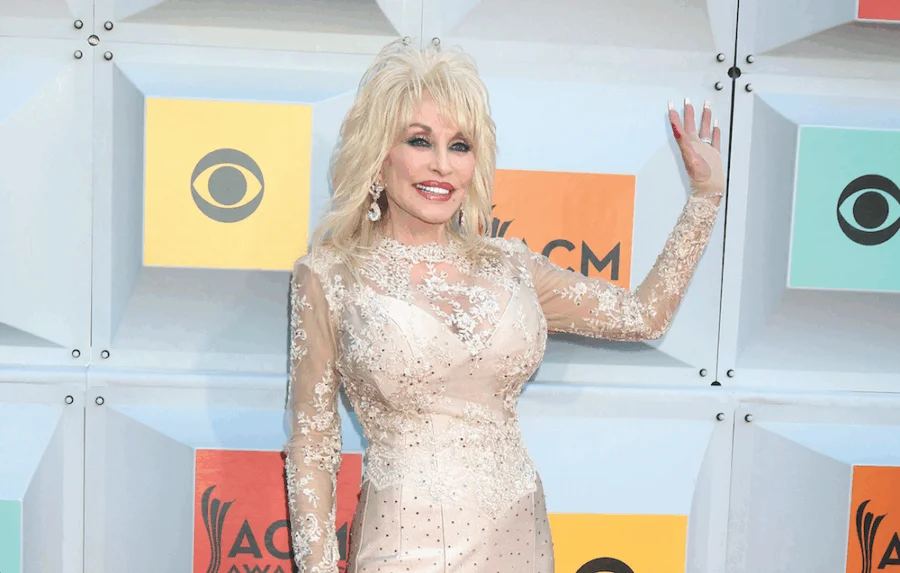
Some of Parton’s best-known songs explore gender dynamics. Female political candidates have used her song “9 to 5” (1980) as entrance music at campaign rallies. The upbeat tune can almost cause a listener to miss the anger in the lyrics, which highlight how women’s professional contributions are often exploited in the workplace. And while her song “I Will Always Love You” (1974) is often interpreted as a romantic ballad, Parton actually wrote the song to her former boss and collaborator, Porter Wagoner, as she made the professional decision to leave his show to pursue opportunities as a solo artist. By almost all measures, she became far more successful after venturing out on her own. While she wrapped the sentiment in poetic terms, the song articulates a strategic professional move.
Advocating for children
Parton also uses her music to call attention to the vulnerabilities of children. Her only song possibly sadder than “The Bridge” is “Me and Little Andy” (1977). The song tells the story of an abused and neglected girl and her dog who show up on a stranger’s doorstep because the girl’s parents, struggling with substance abuse, have abandoned them. If listeners hope for a positive resolution to the storyline, they are disappointed — both the little girl and the dog die in their sleep.
Parton’s musical advocacy for children isn’t always so depressing, though. In 2017, she released an album of children’s music that explores the depth of children’s experiences, with songs helping children delve into complex emotions and affirming their self-worth and personal courage.
Parton’s commercial success and philanthropic work
Of course, other parts of Parton’s canon are just fun songs. Her songbook includes enough popular hits to have made her a commercial success for decades. Songs like “Jolene,” “Here You Come Again,” “Two Doors Down,” “Think About Love,” and “Why’d You Come in Here Looking Like That” have cemented her place among America’s greatest songwriters and country music’s greatest superstars.
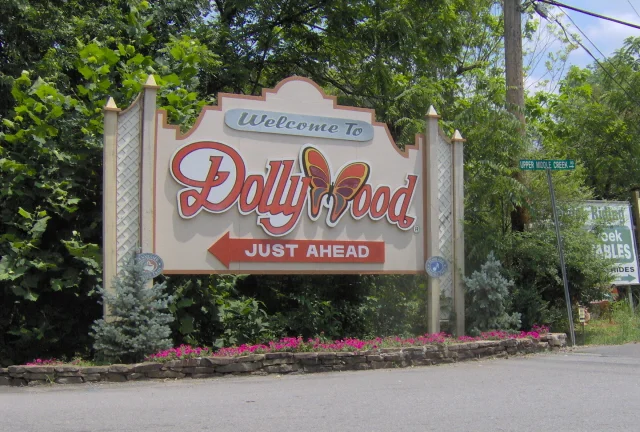
In true prophetic fashion, Parton has spent the profits of her success on significant humanitarian work. In the early 1980s, as Parton’s career expanded beyond music into television and film, she also began a project that seemed far-fetched. In a 1982 interview with Barbara Walters, Parton explained that she hoped to venture into a business opportunity in her hometown: a theme park in and about the Smoky Mountains. Many years later, Parton conceded in an ABC News interview with Robin Roberts that many of her advisers had thought she was crazy. But she said that, once Dollywood became a success, she fired all of those advisers and hired new ones who believed in her dreams. Dollywood is not simply a light-hearted tourist trap. The now multifaceted enterprise, comprising theme parks, entertainment venues and hotels, has brought significant economic opportunities to the underserved community. According to a 2024 article from the Knoxville News Sentinel, 3.5 million people now visit Dollywood each year; and according to Nashville’s WKRN News in 2022, the tourism department reported that Dollywood brings $1.8 billion to the region annually.
This commercial success has enabled Parton to make generous donations to a wide range of philanthropic projects, guided by the Dollywood Foundation she founded in 1988. The foundation initially focused locally on improving high school graduation rates and offering college scholarships. In 1995, the foundation also began sending free books to young children in Sevier County, Tennessee. Parton said she created the book program because her father, whom she deeply admired, didn’t know how to read, and she saw how that inability limited his opportunities.
Now, 30 years later, Dolly Parton’s Imagination Library operates in all 50 states plus five countries and has given away more than 200 million books. The organization estimates that 14% of children under the age of five in the U.S. receive a book each month through the program. When Parton won the prestigious David M. Rubenstein Prize from the Library of Congress, Dollywood Foundation President Jeff Conyers said in a television interview, “There is no doubt Dolly treasures being called ‘The Book Lady’ more than just about anything.”
In true prophetic fashion, Parton has spent the profits of her success on significant humanitarian work.
Parton has also made significant contributions to health care in the state of Tennessee. Her fundraising efforts helped build the LeConte Medical Center in 2010; the hospital now boasts the Dolly Parton Center for Women’s Services and the Dolly Parton Birthing Unit. After her children’s album came out in 2017, she donated $1 million to the Monroe Carell Jr. Children’s Hospital at Vanderbilt University Medical Center, another $1 million in 2020 to help fund COVID-19 research and still another $1 million in 2022 for pediatric infectious disease research.
She also helped to support her hometown community during natural disasters. After wildfires caused significant damage in Eastern Tennessee, she organized a telethon for what she called her My People Fund, raising $13 million for survivors. When Hurricane Helene devastated East Tennessee and western North Carolina, Parton personally donated $1 million to relief efforts and another $1 million from her East Tennessee businesses. Throughout her artistic life, Parton has focused on improving the experiences of Appalachia, women and children — and her humanitarian work reflects these commitments.
LGBTQ+ advocacy
Another notable piece of Parton’s prophetic identity is her long-time advocacy for the LGBTQ+ community. As I was growing up in East Tennessee in the 1990s, Parton was one of the first people I recall articulating their acceptance of LGBTQ+ people. Certainly, other celebrities were pro-LGBTQ+ at the time — but they often lived in big cities and seemed far removed from people I knew. Parton, however, was from the South and spoke frequently of her faith, and her life reflected those values. The fact that she also loved and embraced LGBTQ+ people made a real impression on me as a child. She wrote in her 1994 autobiography, “I believe in ‘human rights’ and the Scripture, ‘Judge not, lest ye be judged.’ I have many gay friends I love dearly. I have also lost some very special friends to AIDS. I believe that being gay is something you are, not something you do.”
Her commercial success has enabled Parton to make generous donations to a wide range of philanthropic projects, guided by the Dollywood Foundation she founded in 1988.
As an adult, I now more fully appreciate the radical position she took as a country music star with a conservative fan base in the early 1990s, especially when such an opinion was far from mainstream. Parton has developed a significant following among the gay community for decades, serving as the inspiration for many drag queens. Many years ago, Parton famously entered a Dolly Parton look-alike contest with many drag queen competitors … and lost. Parton has also shared her perspective on substantive issues related to gay rights, including speaking out in favor of gay marriage and against bathroom bans that especially affect trans and nonbinary members of the LGBTQ+ community.
A prophetic recording artist
Although Parton is well known for her reluctance to engage in most political conversations – a reluctance that has frustrated some on all sides – she has also emerged as a unique figure in our polarized times. She is admired by people across the political and socioeconomic spectrums. Her fan base includes conservative church ladies, LGBTQ+ young adults, rural mountain men and urban hipsters. This collection of people rarely shares much in common, but they do share a love for Dolly Parton.
In an era when so many people are quick to demonize those who seem different, Parton communicates a sense of dignity and worth to all people.
This reality speaks to the essence of Parton’s most prophetic quality. In an era when so many people are quick to demonize those who seem different, Parton communicates a sense of dignity and worth to all people. Her willingness to be unapologetically who she is gives other people permission to do the same, and her sense of self-worth seems to nurture others’ self-worth. When people feel such acceptance and understanding, they are often able to extend such respect to other people too.
In her own way, Dolly Parton, through her life and work, inspires us to be better versions of ourselves.
Just like any good prophet would do.