Hip-hop has been around since the 1970s. It began with Black and Latino teenagers in the South Bronx who wanted to extend the drum breaks of their parents’ disco records. This part of the song was the section that all their peers loved dancing to. (This phenomenon is also where the term “breakdancing” comes from.) Using two separate turntables, these music lovers were able to play the drum break repeatedly, extending a 20-second section of a song into a never-ending party soundtrack.
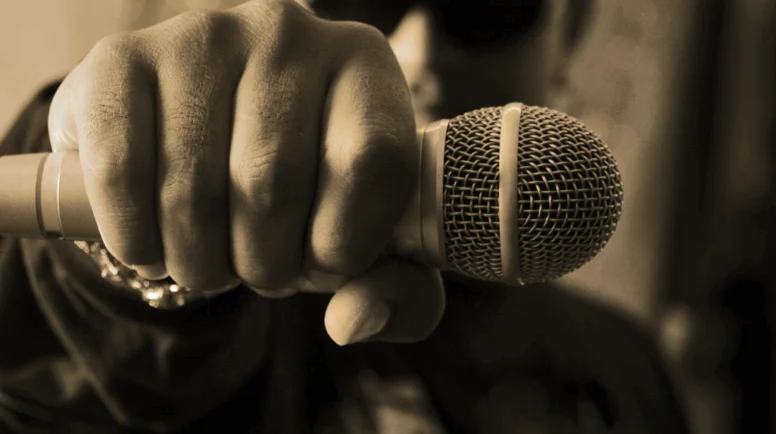
Eventually, other partygoers grabbed a microphone and started “rapping” (a vernacular term that means “talking”) over the music – telling stories, reciting poetry and being the MC (master of ceremonies) – for the party. Today, hip-hop has reached every corner of the globe and is performed in almost every spoken language.
Whether you are a connoisseur of the genre or a relatively recent convert – thanks, perhaps, to the musical “Hamilton” – I have a couple of basic things to share up front. By and large, rappers are regular human beings sharing the same complicated story about the human condition that we all know so well. As listeners, we can see ourselves in the songs precisely because these storytellers have emotions, make mistakes and at times wish they had done things differently. And while a fundamentally universal element often underlies many of these lyrics, the most talented rappers excel because they are telling stories from their unique vantage point.
Hip-hop is a human art form created by human hands that reflects all the beauty and complexity of what it means to be human.
Hip-hop is a human art form created by human hands that reflects all the beauty and complexity of what it means to be human. Many critics of hip-hop, from accredited to armchair, have expressed a level of disapproval of this art form that is disproportionate, far greater than the critique of any other art form, like film or literature. Yes, plenty of criticism is warranted. Misogyny, homophobia and the proliferation of violence can still be found in hip-hop, but these poisonous elements fester in almost every corner of American life and culture. As one would expect, just as prophets and activists educate and fight against these oppressive ideologies in the broader culture, many within the hip-hop community are also naming and fighting these poisonous elements from within.
When asked “Where do you think hip-hop is going?” rapper Mos Def (now Yasiin Bey) famously responded in his 1999 “Fear Not of Man” track: “I tell em, ‘You know what’s gonna happen with hip-hop? / Whatever’s happening with us.’”
Rappers as prophets
Fans of hip-hop have compared modern artists to prophets, saying their voices remind people of who they are and the great good they are called to live into. This comparison is true. Think of voices like Kendrick Lamar, who has unified a generation and given it anthems to sing; these voices address a wide range of modern-day challenges, including policy brutality, love, friendship, mental health and yes, even faith.
I’d like to expand on the role that hip-hop artists can play in our shared faith. Not only are they prophets addressing social ills and injustice — they are our modern-day psalmists, writing hymns to give voice to the human experience and our relationship with God.
Many biblical scholars believe that all the Psalms were originally set to music, which means that rhythm, cadence and tempo were essential to their original creation.
Many biblical scholars believe that all the Psalms were originally set to music, which means that rhythm, cadence and tempo were essential to their original creation. These elements are also essential to hip-hop. Most of the Book of Psalms can be categorized into three sections:
- Hymns: Songs of praise for God’s providence, faithfulness and love.
- Laments from the community and the psalmist as an individual: crying to God in the midst of suffering and uncertainty, often wondering where God is.
- Thanksgiving: Songs praising God for all the great things that the psalmists have seen in their own lives and in their communities.
All these themes are explored in hip-hop today. In fact, themes of faith throughout hip-hop aren’t new. Since the art form’s inception, hip-hop artists have woven their faith into their music and lyrics. DMX (Earl Simmons) integrated his Christology throughout his music, famously reprising the Lord’s Prayer in “Prayer II / Ready to Meet Him.” 2Pac (Tupac Shakur) regularly employed themes of God’s judgment and liberation; and 20 years ago Ye (Kanye West) won a Grammy for his debut album, which included the song “Jesus Walks” and introduced a new generation of listeners to a way of seeing the day-to-day power and ministry of Jesus.
Related content: “The theology of DMX: Lament, prayer and the God who stayed” by Chris Burton
To my mind, the artist who currently embodies rapper-as-psalmist is Doechii (Jaylah Ji’mya Hickmon). In February 2025, she won a Grammy for Best Rap Album for “Alligator Bites Never Heal” (which is really, in her own words, a “mixtape”). This Grammy has been given to just two solo female rappers since the category’s introduction in 1996. Without exception, Doechii explores all the major categories found in the ancient collection of Psalms. The mixtape is filled with stories of lament for herself and her community — the pain of what it means to be a Black woman in America, as well as the joy she has found in her faith in God and in fully living into her beautiful and unique identity, blemishes and all.
Themes of faith throughout hip-hop aren’t new. Since the art form’s inception, hip-hop artists have woven their faith into their music and lyrics.
This combination is best captured in her song “wait,” which I argue is the most underrated song on the album. It sounds and feels like Psalm 40. Here’s how the first verse opens: “What do you think would happen? You wait on it like a laxative / Life is just like a settlement, waiting for you to cash on it.” Doechii isn’t afraid to let her expression of faith be just as complicated as life itself, leading from a place of vulnerability in hopes that her story and her encounter with the Divine will encourage others to own their truth and be cobearers witnessing to the love of God.
Doechii has followed in the footsteps of the original psalmists, who similarly used the foundations of their faith to build new expressions. They honored the relationship their ancestors had created with God and then crafted updated language to express the new relationship they found themselves in — taking the faithfulness that God provided for the people before them and casting it onto and into their own reality and future. God has been faithful before, God will be faithful to us now, and God will be faithful to us in the future.
Related content: “Doechii: Unlimited God, unlimited creativity” by Chris Burton
Rebuilding a unique faith
Explicit discussion of faith in the artists is nothing new. What is new: the artists are rebuilding a faith that is unique to them. Some are shedding the skin of the meaningful yet problematic theology of their upbringing to create a new theology that helps them move through the world they inhabit.
Kendrick Lamar did this wonderfully on his 2022 album “Mr. Morale and The Big Steppers” (which also won Best Rap Album at that year’s Grammys), specifically in the song “Auntie Diaries.” The song tells the years-long saga of his trans uncle’s transition. The culmination of the song happens on a Sunday morning in church: “Mr. Preacherman, should we love thy neighbor? / The laws of the land or the heart, what’s greater?”
This work honors the legacies that the psalmists themselves inherited. Like the psalmists, modern-day rappers are giving us fresh expressions of our faith that do not exclude what has come before but rather make room for what God is doing today. Doechii and Lamar are not the only ones continuing in this lineage. This year, three of the most successful albums fully align with this tradition.
Like the psalmists, modern-day rappers are giving us fresh expressions of our faith that do not exclude what has come before but rather make room for what God is doing today.
The first album is titled “Let God Sort Em Out” by Clipse, a hip-hop duo that has been making music since the early 2000s. The group of two brothers – Terrence “Pusha T” Thornton and Gene “Malice” Thornton (Malice left the industry for a while to become a pastor) – have never been shy about encouraging an authentic faith through their music. The cover of their debut album, “Lord Willin’,” shows Jesus riding alongside them through the streets in the neighborhood of
their upbringing.
The second of this year’s great albums is “God Does Like Ugly” by JID (Destin Choice Route), with tracks like “Glory” and “Like Blue” that fully showcase JID as a psalmist for today. JID isn’t shy about letting the light of God shine on some of the most complicated and painful parts of his life, as well as fully basking in the joys of life with God.
A third successful album in 2025 is “STAR LINE” by Chance the Rapper. If you’re new to hip-hop, I highly recommend you start here. In the track “Letter,” Chance challenges the work the church is doing versus what it is called to do; and Chance magnifies the holiness found in water in “Just a Drop.” The entire album is a spiritual journey about what it means to be part of the family of God in today’s world.
All three albums will play on repeat on speakers around the world this year. All will probably be nominated for multiple awards. All will be studied for years to come. All will give listeners new language and courage to explore their faith without having to hide parts of their identity because culture or even religion might have portrayed them as ungodly.
Filling in the gaps through hip-hop
We live in a time when people, even some closest to us, are turning to places other than the church to explore their faith and spirituality. These rappers and voices like theirs are helping people make sense of the complicated world we live in. Such voices are giving them the courage to build an authentic faith and relationship with a Christ who is still active in the world.
We live in a time when people, even some closest to us, are turning to places other than the church to explore their faith and spirituality.
From firsthand experience, we do more damage by trying to reject this spiritual art than if we just embrace it. For the past 30 or so years, hip-hop has broadened my own spirituality. It has filled in the gaps that church, youth group, summer camp, seminary and vocation could not fill. It gave value to my lived experience and perspective. Because in hip-hop I was able to hear people who look and sound like me speak about God in ways that resonate with me, I was able to see God anew and in all things. Hip-hop saved my faith.
So may we welcome more additions to the diverse tapestry of how we tell the story of God moving through the world. Through today’s hymns, laments and thanksgivings, let us also hear the truth of our continued connection to our God through the people of God
Interested in theology and hip-hop? Check out Presbyterian Outlook’s new partnership with Dr. Chris Burton, “The Theology of Hip-Hop.”