Tucked in a coastal town between the mountains and the sea is a little church with a leaky roof, peeling paint and drafty windows. It’s not a big church. It’s not a wealthy church. And before the pandemic, it was not even sure it had much of a future. However, when COVID-19 struck, something unexpected occurred. Yachats Community Presbyterian Church, in the tiny town of Yachats, Oregon (population 700), did not spend much time trying to figure out how to save itself. Instead, it gave itself away.
The first $5,000
It was March 2020. The streets emptied; the restaurants closed. Musicians, cooks, servers, and dishwashers – most of whom lived paycheck to paycheck – were suddenly without work. Unemployment benefits were delayed or inaccessible. The town of Yachats, Oregon, like many others, was in free fall.
Yachats Community Presbyterian Church called an emergency session meeting. As pastor, I asked, “What if we used $5,000 from our reserves to create a relief fund for displaced workers?”
Silence. Hesitation. Real concerns. We really didn’t have “reserves.”
Would we have enough left to pay the bills? What if giving dropped off entirely? What if we didn’t survive? And then someone said what we were all thinking: “If we’re not here for this, then why are we here at all?”
“If we’re not here for this, then why are we here at all?”
The motion passed unanimously. And that’s when things started to move.
Stacks of twenties
We offered $200 a week to displaced workers, with no strings attached. We kept the paperwork light. We trusted people to know what they needed most.
Word spread.
Cooks. Servers. Musicians. Undocumented workers. Asylum seekers. They came to the church and received cash through the back window, handed over in envelopes or stacks of twenties. No judgment. No sermon. Just help.
No judgment. No sermon. Just help.
They told us their stories. And we listened. People were skipping meals so their kids could eat. Families were days away from eviction. Parents were trying to keep the lights on and the hope alive. One young mother came for help and left with cash, a carload of groceries and a box of diapers. As she turned to go, she stopped and asked me, “Why are you doing this?”
“Because it’s what Jesus would want us to do,” I told her.
She nodded slowly, tears in her eyes. “I gave up on the church a long time ago,” she said. “But if this is what you mean when you say ’God’ … maybe I can believe again.”
Another risk
A few weeks later, small business owners came knocking. These people had created jobs for those same workers, but the businesses were now hanging by a thread.
I went back to the session. Another $10,000? Another long pause.
But the question returned: “If not now, when?”
Again, the answer was yes. What started with $15,000 became something we could never have predicted. Donations poured in from neighbors, local businesses, and even people in other states who had heard about our efforts.
By the end, we had given out nearly $400,000 in direct support to workers and small business owners.
By the end, we had given out nearly $400,000 in direct support to workers and small business owners.
In a town where almost everything depends on tourism, not one business closed during the pandemic. Let that sink in.
Resurrection in real time
We gave $100 to every graduating senior in town. This small gesture said, “We see you. You matter.”
We passed out gift certificates to nurses, firefighters, grocery store clerks, postal workers . . . those who kept showing up when the rest of us stayed home. But it wasn’t just about the money.
Sometimes resurrection looks like a warm meal, a sign in the window, or a stranger remembering your name.
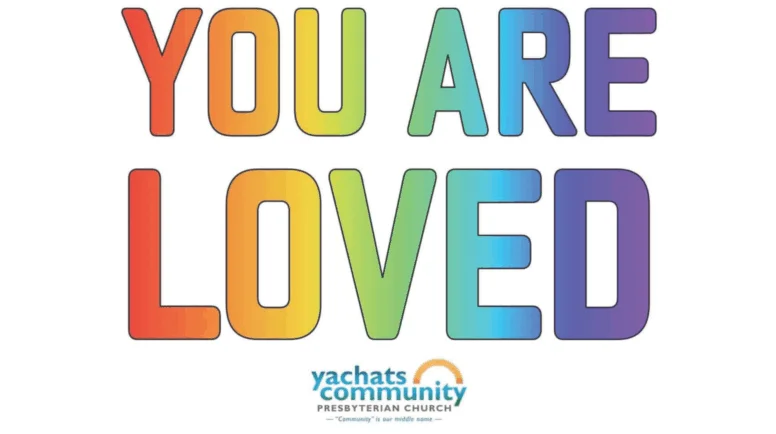
We filled the town with signs that read, simply, “You Are Loved.” We knocked on doors with casseroles in hand. We sat on porches, distanced but present. We checked in with those most likely to be forgotten. Because sometimes resurrection looks like a warm meal, a sign in the window, or a stranger remembering your name.
What the church found
We didn’t plan a strategy, didn’t launch a campaign. We just decided to act like a church. And something beautiful happened: the more we gave away, the more we came alive.
Attendance? It moved online and grew. Giving? It stabilized. Mission? It expanded.
In a moment that should have broken us, we found ourselves rediscovering who we were always meant to be: a people who exist not for ourselves but for the sake of the world.
In a moment that should have broken us, we found ourselves rediscovering who we were always meant to be.
And that’s the story of a little church by the sea. A congregation decided it was better to die giving than to live hoarding, and a community chose risk over retreat.
We gave ourselves away. And somehow, miraculously, we were given back to one another. Not the same church. Not the same world. But maybe something closer to the “kin-dom” Christ keeps calling us toward.
And the story keeps going
What was planted in that season didn’t stay small. That food pantry we ran out of a closet at the city hall? It is now located at the church, where it provides more than 300 meals every single week to neighbors in need — families, seniors and folks just trying to make it through. The shelter we only imagined during those early months? It’s real now. It offers space to those with nowhere else to go, offering warmth, safety and dignity.
And that little church? It grew global.
A refugee in South Sudan stumbled across our livestream and reached out. One message led to another, and now, more than 90 people in a refugee camp in South Sudan gather every Sunday to worship with us online, in real time. We study Scripture together. We share prayer requests. We build church across borders, time zones, and impossibilities.
That initial $400,000 we gave away? It kept growing. Today, our total giving – from the community, through the church to the world around us – has surpassed $800,000. All that from a town of fewer than a thousand people.
Related reading: “A new chapter for small churches” by Mark DeVries
And more than just dollars are up. Attendance is up. Giving is up. Hope is up. And the church is alive again. Not because we saved ourselves, but because we stopped trying to. And the ripple effects? They reached our presbytery.
Inspired by what it saw in this little church on the edge of the continent, the Presbytery of the Cascades made a bold decision. It gave $1,000 to every congregation in the presbytery — not to keep, but to invest in their own communities. It came with one instruction: Do something. Take the risk. Give it away. And then report back what grew.
Resurrection does not end at the tomb. It walks out the door. It spreads.
May we all keep planting, keep giving, keep trusting. Because sometimes, when you think you’re dying, that is exactly when new life begins.