Advertisement

Reading the Bible on Turtle Island: An Invitation to North American Indigenous Interpretation

What might Scripture reveal when read through Indigenous history and experience? Eric Garner reviews "Reading the Bible on Turtle Island."

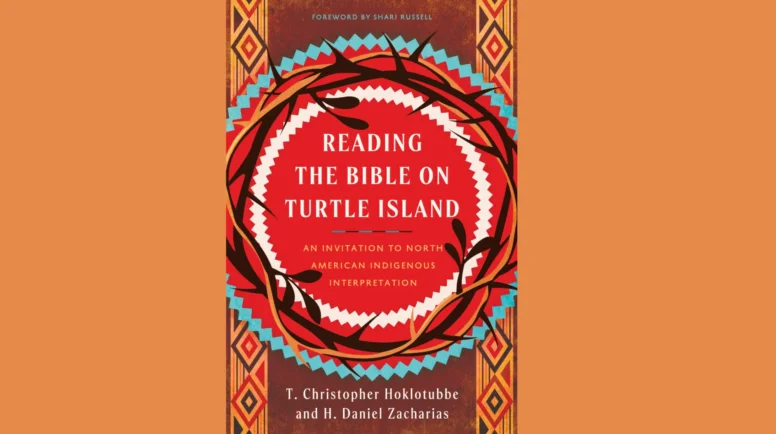
Cover of Reading the Bible of Turtle Island

Reading the Bible on Turtle Island: An Invitation to North American Indigenous Interpretation
By T. Christopher Hoklotubbe and H. Daniel Zacharias
IVP Academic, 240 pages 
Published November 18, 2025    

In My Bright Abyss, poet Christian Wiman compels us to “trust no theory,  no religious history or creed, in which the author’s personal faith is not actively at risk.” This existential danger brims with playful exegetical rigor on every page of Daniel Zacharias and Christopher Hoklotubbe’s exquisite book. 

Reading the Bible on Turtle Island is a rare treat in the contemporary theological landscape — a work that takes both the pathos and levity of the gospel seriously. Focused on the particularities of the Indigenous peoples of Turtle Island (a widely used Indigenous name for North America), Hoklotubbe and Zacharias engage equally with the biblical text, Indigenous history, and our contemporary world. Through this metaphorical dance, the authors witness to God’s dynamic interactions with us.

Their “Turtle Island hermeneutic” weaves together Scripture, Indigenous cultural traditions, creation, and the interior world of our hearts and minds. 

The genius of this interpretative device lies in the persistent refusal to lock God’s activity away in the pages of the Bible or in individual experience. Instead (as witnessed by Scripture), God continues to be revealed in the particularities of the created world and the witness of our ancestors who remain alive by Christ’s power to work resurrection.

From this perspective, Hoklotubbe and Zacharias explore accusations of religious syncretism, creation care, broken treaties, forced removal from tribal lands, the dark history of boarding schools, and other theologically important topics for colonized and colonizer alike. In the chapter “From Babylon to Boarding Schools,” for example, the authors apply the lens of the Book of Daniel to the experiences of Indigenous children forcefully taken from their families, renamed, and required to adopt new cultural practices. Overlaying these stories invites healing for the many Indigenous students and their descendants as they reclaim cultural identities. This approach also asks settler Christians to consider how “reading stories of Moses and Daniel from the perspective of First Nations peoples is a powerful reminder that (churches), even with the most ‘Christian’ and ‘civilized’ of intentions, may be more Egyptian or Babylonian than the pious Hebrew heroes they would like to identify with.” Newcomers to Turtle Island are asked to seriously consider our complicity in a violent history of broken treaties in which our Indigenous siblings were denounced as “pagan,” all while we disconnect ourselves from both spiritual and natural worlds.

Even here, however, the text playfully offers hope; it communicates the gravity of the gospel, while still brimming with the shocking levity of grace. Hoklotubbe and Zacharias do not shy away from the horrors visited upon the Indigenous peoples of Turtle Island, but they find hope in what our God can accomplish.

Within this winsome interpretive framework, Hoklotubbe and Zacharias present groundbreaking research into Indigenous readings of the biblical text that will surely excite academics, yet Turtle Island is accessible for small groups, Bible studies, or book clubs eager to engage with an Indigenous interpretation of Scripture – or for anyone hoping to better understand the God who invites us to be reconciled to one another.   

Presbyterian Outlook supports local bookstores. Join us! Click on the link below to purchase Reading the Bible on Turtle Island from BookShop, an online bookstore with a mission to financially support local, independent bookstores. As an affiliate, Outlook will also earn a commission from your purchase. 

Sign up for Page Turners, our monthly email newsletter, to receive book-related content in your inbox once a month. 

LATEST STORIES

Advertisement