On a cold January night, my wife gave birth to our son, Amos. He was swaddled carefully in a blanket. She held him close to her body, felt his tiny fingers with her own.
The room was full of the holy silence that always accompanies a birth, when nurses talk quietly to avoid disturbing mother or baby. The silence is usually broken by the occasional cries of newborn lungs, but that night, it remained complete.
Amos was stillborn. His body had ceased growing sometime in the week or so before his birth. Though not alive, he was still born; though he had died, he was born still.
The U.S. federal government, for record-keeping purposes, has determined that any child born still after 20 weeks “counts.” They can be assigned a government ID and claimed as a child for tax purposes. But Amos was delivered a few days shy of 20 weeks. So, according to government records, he never existed.
But when my wife and I stared into his tiny face, we recognized him. He looked surprisingly like his brothers, despite the alien appearance of his nearly translucent skin and immature limbs. To the world, he was no one. But to us, a son had been given. Though he had died, he was born still.
Inconvenient grief
Margaret Kamitsuka, in her excellent, thoughtful 2023 book Unborn Bodies: Resurrection and Reproductive Agency, refers to those who grieve the unborn and stillborn as “inconvenient mourners” – inconvenient because their loss is unusual and breaks the natural way of things. Miscarriages often happen without obvious signs — most people may not even know that someone who has miscarried was even pregnant, let alone that she is mourning the end of a pregnancy.
Someone in the postpartum period is expected to take time to physically recover, but the lingering pain of labor is typically compensated for by the joyful presence of baby. When the baby is driven away from the hospital in a tiny box in a hearse, rather than in a car seat, all the mother is left with is pain and grief.
At the typical graveside of an adult, one finds sadness intermingled, ideally, with celebration of a life well lived. The minister will declare the promise of life beyond death, punctuated by those welcoming words from God: “Well done, my good and faithful servant” (see Matthew 25:23). The body will be committed to the earth to rest from life’s labors.
But as I prepared to stand and speak at the graveside of my stillborn son, I was at a loss for what to say about this little life that had ended before it seemingly began. What do the promises of eternal life mean for the one born still?

We are seeds
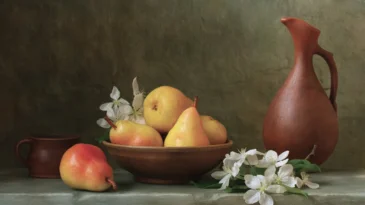
Kamitsuka suggests looking to the metaphor Paul employs in 1 Corinthians 15 to explain the resurrection: a seed. A seed looks nothing like the plant it becomes, yet we recognize that the seed and the plant are one and the same. So it is with the lives we live: our bodies, our minds, our spirits – our whole lives – are seeds that God sows here upon the earth but that ultimately only flower fully beyond the veil of death. This teaching is true of a century-long life; it is also true, Kamitsuka argues, of the little beings whose lives are sown in the womb but do not sprout.
God has made everything to grow beyond this life. Does it not make sense, then, that even though his life in this world came to an end, by God’s grace, Amos will still be born to life eternal?
Speculation about when life begins is useful fodder for political debates, which aim for precision for the sake of regulation. But in the context of theology – of understanding how our lives are knit together in the womb or bound up in the life of Christ – precision is a fool’s errand. The metaphor of the seed contains multitudes because it reminds us that while a seed may be necessary for life, it is not sufficient — other conditions must be met for growth to occur. A worldview not bound up in the strict limitations of materialism affirms that even when the material conditions for life cease, God nevertheless may provide the means for further growth.
In the resurrection, Jesus declared that this same newness of life was promised to all who abide in him through life and even in death.
Life runneth over
That affirmation is the message of Christ’s incarnation. To the world, he was nobody, but through the power of the Holy Spirit, a Son was given. When he was grown, Jesus proclaimed that he had come to give life “abundantly” (John 10:10). This life is not limited to the natural course of things; abundant life runneth over the lip of nature’s cup.
This truth was ultimately expressed in Jesus’s own death and resurrection. The tomb in Gethsemane, a place of death, became the womb that bore Jesus into the newness of resurrected life. Though he had died, he was miraculously still born.
In the resurrection, Jesus declared that this same newness of life was promised to all who abide in him through life and even in death. In the letter to the Romans, Paul emphasized this point, writing “if we have been united with him in a death like his, we will certainly be united with him in a resurrection like his” (6:5).
Did my son have a “death like his”? In a sense, Amos was closer to Christ in death than I will ever be. His life was unsullied by suffering or sin. He never doubted, wavered or feared for his life. Then again, he never will have the chance to love, to serve, to heal as Christ did. But perhaps his gift is this story and the Gospel truth sown in it, shared with you, gentle reader.
Though he has left our little family flock, Amos goes ahead of us to declare the promise and hope that God shared with the world in Jesus Christ: that though we die, we are still born.
Seeds flowering in the light of eternity
A section of the cemetery in Thornton Wilder’s “Our Town” is called the Field of Angels. It is where infants and children are buried. Each flat stone speaks a message of remembrance and hope, marking the place where a seed of eternal life was sown, a seed whose flowering will be seen only in the light of eternity. One of the stones bears the name Amos: that Old Testament shepherd who was called away from his sycamore trees and flocks to become God’s prophetic messenger.
Though he has left our little family flock, Amos goes ahead of us to declare the promise and hope that God shared with the world in Jesus Christ: that though we die, we are still born.