MILWAUKEE — Presbyterian Life & Witness and the Presbytery of Milwaukee coordinated to shuttle attendees of the convention to many of the Presbyterian Churches in the greater Milwaukee area. The Outlook reporting team split up to experience a variety of the 19 services listed on the GA227 schedule. Here is a look into a few of the local congregations.
Come, Jesus, come
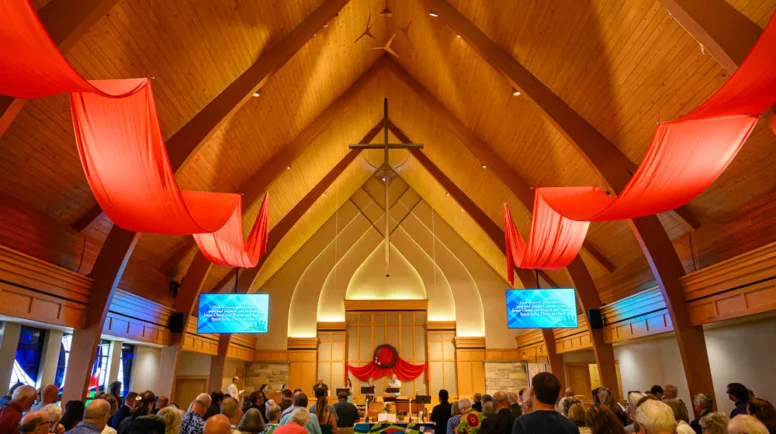
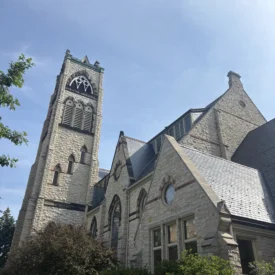
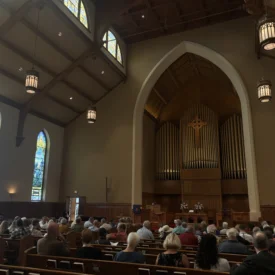
Immanuel Presbyterian Church, the oldest church in Milwaukee, hosted many General Assembly visitors on Sunday. Randall Bush, the interim pastor, described their congregation as growing, vibrant, progressive and hospitable – “For those who insist the mainline church is dying … we are here to tell you that it’s simply not true,” Bush said. A few pieces of advice he offered to visitors were to keep church websites updated, do mission openly, proudly, and boldly, and do something that matters with courageous faith.
Co-associate pastors Robert Ater and Teresa Larson preached a joint sermon. Together, they engaged in what they called “forest bathing”: alternating stories of trees in the Bible, stating how each one provides a framework for how to be the leaves to heal the world, as inspired by the GA227 theme from Revelation 22. “It was important for us to do this together,” Ater shared after the service – “I’m an out gay man, and she’s a woman … there was a time not too long ago that we wouldn’t have been able to [pastor this church].”
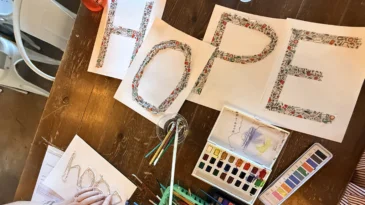
Ater and Larson emphasized the importance of hope, saying that hope can feel like an impossible practice in present times, and that “come, Jesus, come” may feel like the only appropriate prayer, but that we have lots of reasons to resist this hopelessness, and it’s important to do so.
Mary Mabry
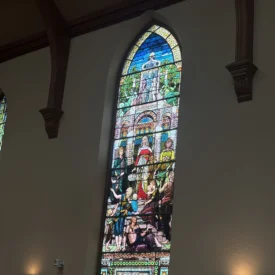
Immanuel Presbyterian Church, in Milwaukee, Wisconsin
Little Church with a big heart
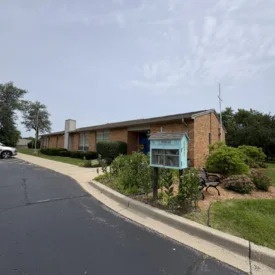
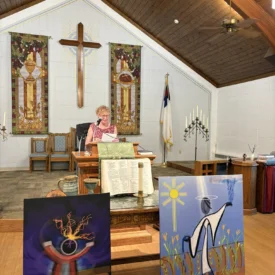
Faith Presbyterian Church in Franklin, Wisconsin, describes itself as “the little church with a big heart” — a reputation it lived up to with a warm welcome for General Assembly commissioners and visitors. Pastor Cathy Manthei greeted guests in the parking lot while congregants from the 55-member church shared the story of their thriving food pantry ministry, Faith Food Cupboard, which serves more than 150 people twice a month. Founded by members in 2009, the pantry expanded dramatically during the COVID pandemic as the church partnered with local food pantries, businesses, and Feeding America to meet growing needs — with additional support from local schools, Scouts, and Lions Clubs.
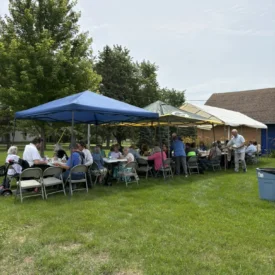
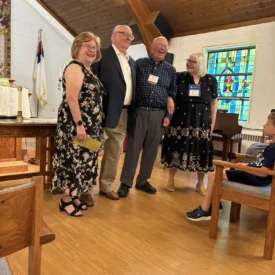
Sunday visitors witnessed a special celebration as longtime members Nan and Glenn Luedtke renewed their wedding vows on their 51st anniversary. By happy coincidence, General Assembly visitors Scott Martin and Karen Blanchard will celebrate their own 51st anniversary later this year, and were persuaded to join the Luedtkes in renewing their vows.
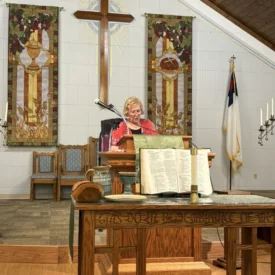
Manthei’s sermon on hospitality, based on Matthew 10:40-42, was reflected in the congregation’s warm welcome, potluck lunch, and enthusiastic sharing of its ministries. By the end of the morning, Faith indeed demonstrated how it is “the little church with a big heart.”
Rose Schrott Taylor
Faith Presbyterian Church in Franklin, Wisconsin
Notable history while celebrating beginnings
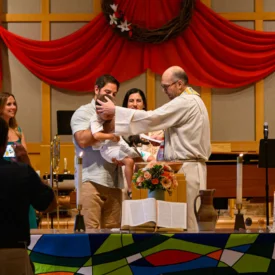
Wauwatosa Presbyterian Church welcomed commissioners to worship during the 227th General Assembly with two baptisms, a brass quartet, soaring special music by Patrice L. Hood and hymns that included “God of Every Generation,” commissioned in 2003 for the congregation’s 75th anniversary.
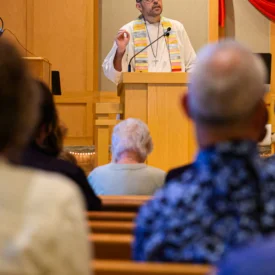
Led by Brett Swanson, the service reflected a congregation preparing to celebrate 100 years of ministry — and one with a notable place in Presbyterian history. On June 2, 1930, Sarah E. Dickson became the first woman ordained as a ruling elder in the Presbyterian Church when she was ordained at Wauwatosa Avenue Presbyterian Church in Wauwatosa, Wisconsin.
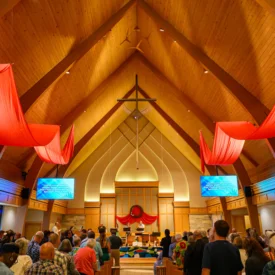
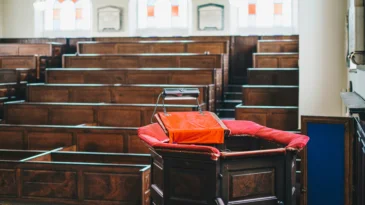
Founded as a small church in a residential neighborhood, Wauwatosa Presbyterian once worshiped with a large boiler in the sanctuary to ward off Milwaukee’s cold. The congregation has worshiped in its current building since the 1940s.
Preaching on genuine love from Romans 12:9-21, Swanson recalled Dick Howe, an elder who accompanied and advocated for him through the difficult Committee on Preparation for Ministry meetings. Howe, Swanson said, was “on my team” and “a true gift.”
Now entering his 10th year as pastor, Swanson said, “I absolutely love this church.”
Teri McDowell Ott
Wauwatosa Presbyterian Church in Wauwatosa, Wisconsin
Answered prayers and hearts on fire
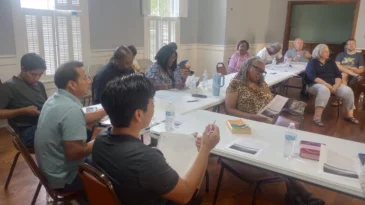
On Sunday morning, commissioners gathered at Christ United Presbyterian Church at the corner of N. 20th St. and Walnut in a building listed on the Wisconsin State and National Registers of Historic Places. According to liturgist NeBritt Herring, Christ Church is the only African American Presbyterian congregation serving the area — and she told the assembly that the congregation had been praying for a full sanctuary. On this Sunday, their prayers were answered: more than 50 GA participants helped fill the small sanctuary.
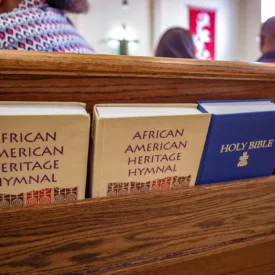
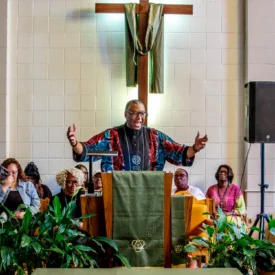
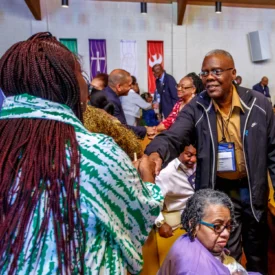
Preaching was Danny Murphy, who grew up at Christ Church and has spent 40 years in ministry, the last 12 as general presbyter and stated clerk of Trinity Presbytery in South Carolina. Murphy drew his text from Luke 24 — the walk to Emmaus — and aimed it squarely at the commissioners in the pews. “There is a spiritual exhaustion,” he said, “that can make us blind to the presence of God walking right beside us.” Several responded, “Amen.”
He traced the two disciples as people doing what commissioners sometimes do — retreating from a place where they believed God would act, rehearsing their disappointment. Then a stranger falls in step beside them. The stranger is Jesus.
Murphy moved through three signs of a heart set on fire: recognizing Christ’s presence in the ordinary, receiving revelation as the living Word opens the written Word, and participating in a mission that sends people back, not away. “The same men who started the day walking away from Jerusalem,” he said, “are now running back toward it.”
For Murphy, Jerusalem was a metaphor for communities burdened by economic disparity, children trapped in failing schools, families crushed by health care inequities, elders watching civil rights gains rolled back. The question, he told the commissioners, was not whether those realities existed. “The question — the only question — is whether the church still has enough fire to go back to Jerusalem.”
Eric O. Ledermann
Christ United Presbyterian Church in Milwaukee, Wisconsin
We do and we will
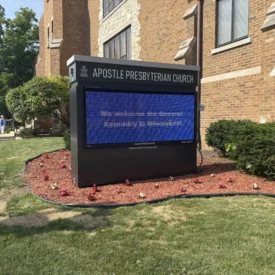
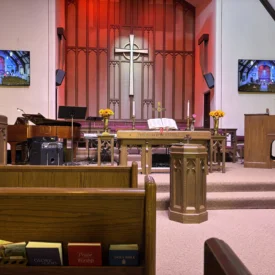
It was a doubly special Sunday at the uniquely named Apostle Presbyterian Church in the Milwaukee suburb of West Allis, Wisconsin, but playing host to visitors in town for the Presbyterian Church (U.S.A) 227th General Assembly was of secondary importance.
Olivia Janet Ann Bruski was being baptized, and in almost any congregation in the country, a baby being baptized is always a main event.
The presence of Presbyterians from all over the country made Olivia Janet’s baptism extra special, even though she may never know it.
When the gathered assembly answered the congregational questions with “We do” and “we will,” it was a real-life enactment of the understanding that a particular congregation’s “we do” and “we will” are on behalf of the entire family of faith agreeing “to guide and nurture Olivia Janet Ann Bruski by word and deed, with love and prayer” and to “encourage her to know, trust and follow Christ, and to be a faithful member of this church.”
Sid Bouldin, a retired PC (U.S.A.) pastor who occasionally fills Apostle’s pulpit during its current vacancy, used Luke 7:1-9 as the basis for his sermon, “Jesus was impressed by … .”
Bouldin recounted many of the people Jesus admired: the Roman centurion, a desperate woman who only wanted to touch his robe, the poor widow who gave from her poverty, and finally, the Samaritan who “got down in the ditch and helped (a) wounded victim.” None of them were part of the ruling class, far from it.
But those are the ones Jesus admired and helped. As Bouldin concluded, he looked out over the congregation and ended his sermon with the same words Jesus used at the end of the Good Samaritan parable: “Go, and do likewise.”
John Bolt
Apostle Presbyterian Church in West Allis, Wisconsin