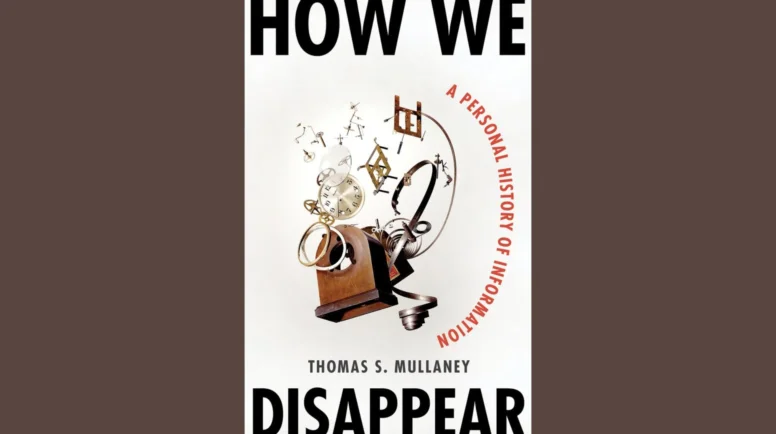
How We Disappear: A Personal History of Information
By Thomas S. Mullaney
W.W. Norton & Company, 240 pages
Published June 23, 2026
Around the time I started reading How We Disappear: A Personal History of Information, I discovered four binders of floppy discs, each containing clip art, in a cabinet at my church. I laughed when I found them. At one point, not too long ago, these discs were probably important, but today they just take up precious storage space. I wonder what else lives in the cabinet that was once useful and is now obsolete?
How do we grapple with the idea that not only will our bodies disappear, but also the structures formed to live beyond us might not last forever?
Thomas Mullaney opens with an adjacent circumstance. Following the death of his father, Mullaney sorts through the artifacts of his dad’s life: papers, photographs, old technologies, and other things that wind up in someone’s attic. This experience of sifting through his father’s physical legacy frames Mullaney’s investigation of how humans create knowledge and preserve it for the next generation, especially when the universe trends toward decay. Nothing lasts forever. All living things die; paper and photographs degrade when exposed to light and moisture; technologies evolve, making once high-tech solutions obsolete. With memoir, historical sketch and philosophical inquiry, How We Disappear explores human finitude and wonders how we might live if one day everything about us – our bodies, our possessions, our legacies – will disappear.
Mullaney is a scholar of Chinese history and technology, and this book is not religious in nature, but for those with eyes to see, it contains theological, pastoral and ecclesial dimensions. Theologically, How We Disappear grapples with questions about meaning and purpose in life when we know that bodies grow tired and memories fade. It is a thought-provoking read for anyone who, like me, cites Ecclesiastes as their favorite book of the Bible. Pastorally, this book tells the story of a man trying to fill in the gaps in his family with what’s left behind, only to find more questions within the answers. It is deeply relatable to anyone familiar with grief, family systems, and the task of cleaning out someone else’s attic.
But I was most intrigued by the moments when Mullaney’s ruminations intersected with my curiosity about the church as a technology that holds and distributes knowledge and meaning. In today’s cultural shifts, the church may feel like a binder of floppy discs, a once-useful technology rendered obsolete and now seen as taking up space. How do we grapple with the idea that not only will our bodies disappear, but also the structures formed to live beyond us might not last forever? Especially if we believe the knowledge and meaning housed within this structure are valuable and worth preserving? These questions fall outside the scope of How We Disappear, but for a reader of this magazine, I suspect they might naturally emerge if this book were used in a discussion group or as a sermon illustration.
If all of this sounds depressing, fear not: How We Disappear suggests that our lives and legacies are impermanent, not unimportant. The book ends on a tender – yet hopeful – note, as Mullaney uncovers new insights and renewed relationships in his late father’s possessions and reckons with the reality of disappearance. I find this hopeful. In different words, it is a truth Christians know well: Even amidst death and dusty attics, new life emerges.
Presbyterian Outlook supports local bookstores. Join us! Click on the link below to purchase How We Disappear from BookShop, an online bookstore with a mission to financially support local, independent bookstores. As an affiliate, Outlook will also earn a commission from your purchase.
Sign up for Page Turners, our monthly email newsletter, to receive book-related content in your inbox once a month.