I have been a member of this congregation since before I can remember. They have seen me through my lowest lows and celebrated with me in my highest highs. The congregation has changed a lot in all that time — we changed buildings, the membership changed, and now we have a new name. I am a proud member and elder at Beloved Community Presbyterian Church in Pittsburgh, Pennsylvania.
Our congregation’s mission is to be a community that encounters the God who transforms lives, to extend hope and sanctuary on the Northside, to seek justice and peace in the world and to see and celebrate all God’s people. We believe that all people, no matter what, bear the image of God and that everyone is welcome to the table to participate in Communion.
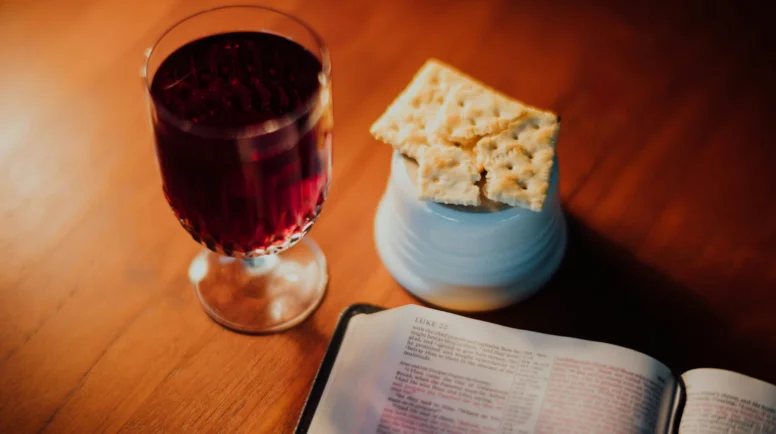
Those are more than just words; they are built into our lived theology. When we gather around the table to share in the Lord’s Supper, we use shortbread wafers made by a member of the congregation with gluten-free, allergen-friendly ingredients for anyone with dietary restrictions. We use Welch’s grape juice in place of wine in consideration of anyone who may be in recovery. We want everyone to be able to eat of the body of Christ. Now that doesn’t mean that we make it fresh every time — that would be impressive. Instead, the member makes big batches at a time, and we freeze them. We take out what we need for one service and then put the rest back in the freezer for future use.
Our intentional work of inclusion starts at the table and extends into our fellowship and mission. On the first Sunday of each month, we have a community potluck. Folks bring what they can, and every dish is accompanied by a card that identifies what it is, who made it and what allergens it contains. These cards are laminated so that they can be cleaned and reused. It is incredible how such little things, if done with intention and prayer, can bring a whole community closer to God and one another.
I have witnessed hearts opened and griefs shared over potluck food at an extension of the Lord’s Table. I have heard laughter strong enough to lighten heavy burdens around these tables. I have seen communities come together to care for one another, all with the sacramental elements at the center.
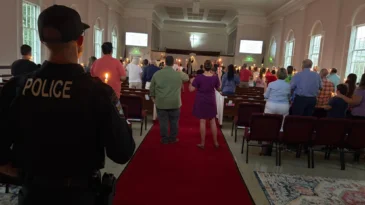
One such story from just one first Sunday comes to mind. It is common for a few unhoused neighbors to mingle in and out during worship; this Sunday was no exception. One neighbor joined us at the beginning of service, mumbling to herself when the pastor prayed. No one shushed her. At one point, she got up and seemed to leave. Not a big deal, right? Our service continued, and when we got to the Great Thanksgiving, she returned to tell us that someone outside had collapsed on the sidewalk and needed help.
Without missing a single beat, a few members who are medical professionals quietly got up and followed her to the neighbor in need. Worship continued; the gathered congregation partook of the feast of heaven. We sang and prayed for one another and our neighbors outside. We received the peace of Christ and then sat down for our traditional potluck. By then, our members had helped that neighbor inside and got him clean clothes and a plate of food, too. After our members settled the neighbor and turned to their own needs, we offered them and the neighbor the option to partake of the elements. They ate Holy Food, nourished by the Spirit, lovingly made by members with ingredients from the earth.
When I think of what it means to be an accessible and inclusive congregation, I think of the small steps we have made and continue to make. Like all congregations, we are still learning what it means to fully live into the kin-dom of God. We have made just as many mistakes as victories. Even so, we keep moving forward with prayerful intention and Spirit-filled flexibility. The comfort we lean on is this: While it is possible to do the wrong thing, the worst thing is doing nothing. Any attempt we make to include as many neighbors as possible is noticed not just by God but also by those neighbors within and beyond our walls.