“Will you be a faithful minister of the Word and Sacrament, proclaiming the good news in Word and Sacrament, teaching faith and caring for people?”
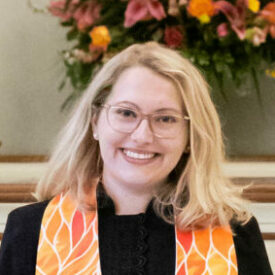
I was standing in a church filled with the people I love most in this world and shifting my weight on pinkish-red wedges worthy of this momentous occasion. My heart pounded as I was listening to these questions being asked of me, known in the Presbyterian world as constitutional questions. I voiced my assent to each one. It was hard to believe that this moment was here, the moment I had thought and prayed about on and off since the first inklings of a call to ministry found me nearly a decade earlier.
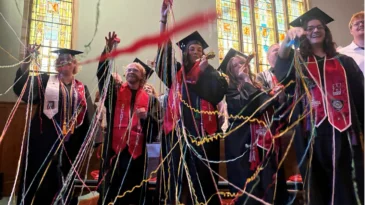
April 24, 2022, was a day that marked me, shaped me and changed me. In a way, this was the ending of a long journey of preparation including four years of undergraduate work, three years of seminary, countless exams, essays and committee meetings. However, the great cloud of witnesses at my ordination service reminded me that this was only the beginning of a life of saying “yes” to God in service of God and God’s people. “God is not done with you yet” was the resounding echo of the sermon preached by my pastor. Certainly, God was not — is not. Indeed, the Holy Spirit has moved and stirred in my life as I live out in real and tangible ways the promise to “proclaim the good news in Word and Sacrament.”
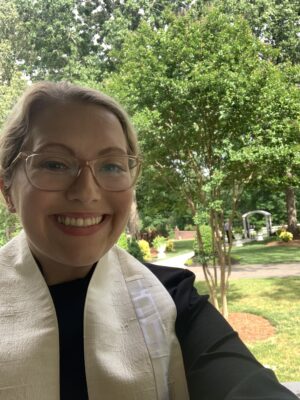
A mere two weeks after my ordination, I officiated my first wedding. The following day, I presided over the Lord’s Table for the first time, and a few days after that, I officiated my first funeral. “God is certainly putting me to work!” I joked with myself as I reflected on the rites and sacraments I was asked to perform mere days after my ordination and installation as a teaching elder. Presbyterians hold to two sacraments: the sacrament of Baptism and the sacrament of the Lord’s Supper, which we believe to be an outward sign instituted by God to convey an inward or spiritual grace. Weddings and funerals are rites of the church, liturgical services that express the church’s relationship with God through words, actions and symbols. In other words, sacraments are gifts from God that symbolize divine grace and invite us into relationship. Rites demonstrate the church’s reaction to this grace and how we seek to ground ourselves in this grace in the extraordinary and ordinary moments of our lives.
And so, I found myself dabbling with both rites and sacraments as a newly ordained minister. What I found on the other side was a sense of awe, wonder and amazement that God gave me the privilege to do this, to point to God’s presence among us through religious ceremony. A grin broke out on my face as I asked the soon-to-be-married couple to repeat the words of their vows after me. Standing under a gazebo with this couple on an overcast Saturday in May, I understood why God wanted Moses to take off his sandals: this was holy ground.
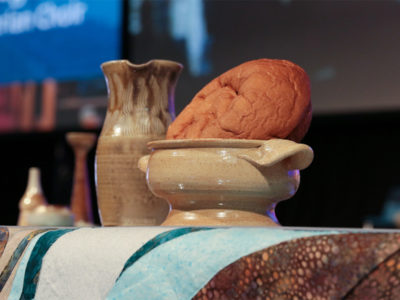
The very next day, I said the Words of Institution for the first time as I stood behind the Lord’s Table: “The Lord Jesus, on the night of his arrest, took bread, and after giving thanks to God, he broke it, and gave it to his disciples, saying: Take, eat. This is my body, given for you. Do this in remembrance of me.” The words I had practiced earlier that morning, pacing back and forth in my kitchen, were now being offered to those gathered at the morning’s 8:45 a.m. chapel service. A wooden table with a loaf of bread and a chalice of Welch’s grape juice transformed before my eyes into the table of grace. As I said those hallowed Words of Institution, words I had heard countless times as I sat in the pews, I believed them anew. I refused to be a used car salesman of grace, peddling grace to the needy while I stood in a lofty place. Proclaiming those words and holding up tangible signs of invisible grace, I realized how badly I needed them, too. I came to the table hungry, and God’s grace met me there, making me full.
I found myself standing on holy ground again as I officiated my first funeral later that week. I was dressed in the same black robe and white stole, the same trusty and comfortable black high heels, but the circumstances were much different. How do you officiate a funeral for someone you’ve never met? How do you switch from celebration to solemnity in the span of a few days? Those were the questions I asked myself as I wondered if I was qualified to do this. I found that God would keep meeting me in times of need and plenty, in times of doubt and assurance. “When in doubt, preach the resurrection,” my colleague assured me. At the end of the day, that is exactly what happened. It turns out that celebration does not solely belong at weddings and solemnity is not reserved just for funerals. Celebration and solemnity crept into each service. God’s people were fed, and I had the privilege of playing a small and humble part.
I’m learning quickly that perhaps one of the greatest gifts of ordained ministry is journeying with God’s beloved through times of joy and sorrow, beginnings and endings, as well as the in-between times. I want to be present for it all. I want to soak up God’s grace. I want to always be reminded that I am not a purveyor of grace, but one of the needy. Ordination is not the ending, but the beginning of a long and winding journey of learning what it means to say “yes” to the calling. Proclaiming the good news through Word and sacraments will forever be one of the greatest privileges and honors of my life. The journey is only beginning; I can’t wait to see it unfold.