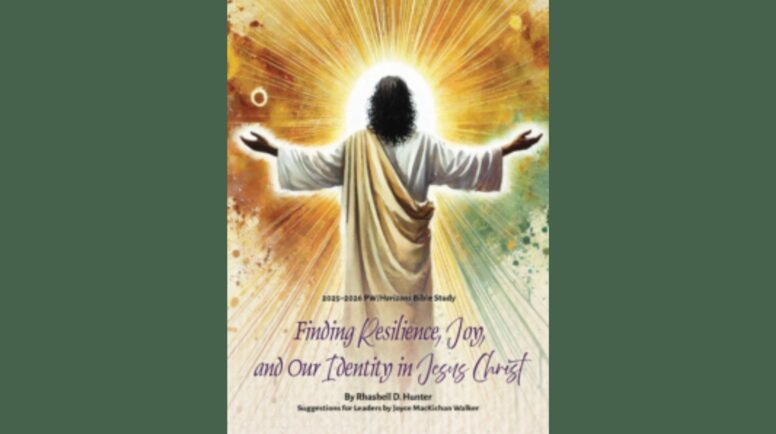
Finding resilience, joy and our identity in Jesus Christ
Rhashell D. Hunter’s Horizons Bible Study
Lesson 7: The Woman Bent Over, Luke 13:10-17
A friend went to work with a computer on her shoulder, an iPhone in her hand, a purse brimming over with children’s snacks, her lunch, receipts, and a list of everything that she needed at the grocery store. She was constantly juggling something in her schedule. One day, her husband was off from work. She had her hand on the doorknob, ready to leave for her job, when their son appeared and said, “Mommy, I threw up.”
“Where?”
“In the toilet.”
“Do you still feel sick?”
“No.”
She said, “I have to go to work now. Go crawl in bed with your daddy and jump on him if you feel like throwing up again.”
Have you ever felt loaded down like my friend? A loved one is ill. There are more bills than money. A relationship falls apart. Many things can knot our neck and shoulder muscles, making us sigh deeply.
Bent over, bound. In our story is a disabled woman, unable to stand up straight. She has been looking at the ground for 18 years. Imagine not being able to see the stars or people’s faces except when lying down. We don’t know what afflicted her. It could be one of many things: arthritis, back-breaking labor, abuse, fear, addiction, mental illness, a ruptured disc, or malnutrition. Jesus says that she is bound by Satan; sounds ominous, doesn’t it? But evil can be anything that is opposed to God’s will for health and wholeness.
We see heavy-laden people, although we may not take note of them: a man moving slowly out of a drugstore, a person whose face droops with sadness, the single mother so tired that she is ready to drop off to sleep. A person weighed down, bound. It could the teenager who cuts herself because her emotional pain
is so great, the older person estranged from family, or the business person constantly at work. Not all are physically bent over, but they know pain.
Jesus perceives people’s maladies.
Jesus is teaching in the synagogue on the Sabbath, where men and women have gathered (usually for hours) to pray and to hear Scripture and its interpretations. Jesus notices the bent-over woman, stops what he is doing, calls her over, and says, “Woman you are free from your ailment” (v.12). He lays hands on her, and immediately she stands tall and begins praising God. Jesus names her a daughter of Abraham, one who belongs in the community of faith.
We can be agents of healing. Of course, it won’t be as dramatic as what Jesus did, but we can lighten someone’s load. In the church I served, we typically opened session meetings with a short prayer, then moved on to the agenda. Then we began to consciously pay attention to the people involved, as well as get the work done. We opened the meeting by dividing into three- or four-person groups, reading and reflecting on a short Scripture, and then praying for each other. We asked each other for joys and concerns that we could lift up and keep confidential.
I was often struck by what people held in their hearts from day to day. In any given meeting, people would ask for guidance for an issue at work, patience with a child, help for a family member going through a divorce, healing for a sick parent or friend. But session meetings began to have more laughter, and we were able to listen to one another better.
Healing comes in many small forms. An older adult, lonely, receives regular visits from a friend. An immigrant family is invited to church and provided transportation. Men gather for years for breakfast twice a month for fellowship and prayer before work. Volunteers show up weekly to pack bags of food for increasing numbers of people who can’t make ends meet. Sick with worry, a friend listens to us with acceptance. We join an organization committed to changing laws to be more compassionate and just for those in poverty.
The woman who had been bent over rejoices at her healing. She stands up straight and praises God. One church that I served shared joys and concerns openly before the pastoral prayer. It was wonderful. One Sunday, a mother shared that her daughter had been sober for six months. The congregation applauded.
Gratitude and rejoicing lift our spirits. They help us to see how God is working in our lives. Thanksgiving is an antidote to the divisive attitudes and the chronic anxiety that many people feel in our society. Thanksgiving and praise untie knots in our bodies so that we can stand tall.
You can purchase the PW/Horizons Bible study book through the PC(USA) Church Store.
Want to receive Horizons content in your inbox? Sign up for our worship resources newsletter here.