ADULT (v.): to behave like an adult; to attend to the ordinary tasks required of a responsible adult. (Merriam-Webster)
Though Merriam-Webster labels the verb “adult” as informal, the experience it describes is anything but casual for many young people. The popular term “adulting” has taken hold precisely because the transition to independence often arrives earlier, faster and with fewer supports than expected.
For young people aging out of foster care, adulthood often begins abruptly
For young people aging out of foster care, adulthood frequently arrives without the gradual preparation most people take for granted. In West Virginia – where foster care rates are the highest in the nation and transition resources often fall short – that abrupt shift can shape the rest of a person’s life.
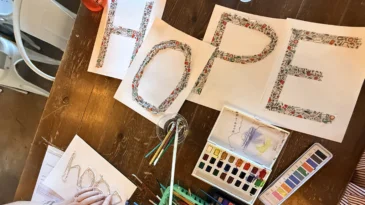
At First Presbyterian Church in Charleston, a mission study led the congregation to help these young adults by creating the FPC Hope Center — a ministry designed to walk alongside those leaving foster care by offering consistent relationships, meaningful choice and long-term support. mission study led the congregation to help these young adults by creating the FPC Hope Center — a ministry designed to walk alongside those leaving foster care by offering consistent relationships, meaningful choice and long-term support.
Pam and Brian Healey, who were among the first volunteers at First Presbyterian Church’s Hope Center, witnessed the challenges of the transition from foster care into adulthood through a relative in another state.
“The Hope Center fills a void.” — Pam Healey
“The Hope Center fills a void for when they leave and all of a sudden, they’re in the big wild world,” Pam Healey said.
Interrupted development, not individual failure
For most people, adulthood unfolds gradually, shaped by years of observation, practice and repair within stable relationships. For young people who spend much of their childhood in foster care – particularly during adolescence – that developmental runway is often shortened.
Foster families and state systems are primarily designed to address immediate needs: safety, food, housing and schooling. Long-term preparation for adulthood is frequently deferred because systems strained by high caseloads and limited staffing must focus on crisis management rather than continuity.
When young people turn 18, many leave care with resilience and determination — but without the sustained relational support that sets them up for success.
A mission study leads First Presbyterian Church of Charleston to act
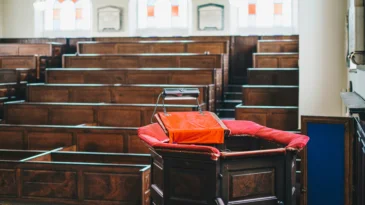
This gap between need and preparation became a focus for First Presbyterian Church of Charleston about five years ago, as the congregation prepared to call a new pastor by undergoing a mission study.
When committee members sought feedback from community, civic and church leaders, they heard a consistent concern: the historic downtown church had become less visible and less engaged in the life of the city.
“You have lost your community input,” committee chair Becky Ceperley recalled being told. “You have a lot to give, and you haven’t been giving it.”
Reflecting on that feedback, committee members turned to the church’s long history of ministry with children and youth. First Presbyterian is home to an 80-year-old preschool that began as one of the state’s earliest kindergartens. About 30 years later, the congregation launched what is now Daymark, Inc., a private, non-profit organization providing advocacy and services for youth and families in crisis. In later years, the church also established a temporary residence for people recovering from alcohol addiction.
Related reading: “How one Houston church turned a childcare crisis into a calling” by Lydia Griffiths, Outlook Reporting
Struck by the dismal statistics around youth who age out of foster care – they are twice as likely as combat veterans to suffer post-traumatic stress disorder, half of them will develop substance abuse disease and 70% of the women will become pregnant before age 21 – the committee proposed creation of “The FPC Hope Center” to help those aging out of foster care begin their way in the world.
“Throughout our history, the leaders of First Presbyterian Church have sought to make a positive difference in the Charleston community,” the mission study authors wrote. “With our demonstrated care for children and youth, and the willingness of congregants to share their skills and time, we propose the FPC Hope Center.”
Charleston is the state capital and sits in Kanawha County, which has the largest number of foster placements in West Virginia: 672 of the state’s 5,915 children in foster care.
What the FPC Hope Center offers: consistency, choice and trust
Rather than approaching the transition to adulthood as a checklist of skills to master, the Hope Center centers its work on three commitments:
- Consistency: adults who show up reliably over time
- Choice: voluntary participation that respects young people’s agency
- Trust: relationships not tied to compliance or surveillance
Practical skills such as budgeting, employment support and housing navigation grow out of those relationships, rather than serving as prerequisites for participation.
Direct involvement, strengthened relationships
The Hope Center vision also played a role in calling the church’s next pastor, Bill Myers.
“When we were discerning a new call, West Virginia wasn’t on our radar,” said Myers. “At the time, Hope Center was a dream, but one that caught my attention. A ministry with young people aging out of foster or kinship care would be groundbreaking.”
Supporting that dream, Myers said, has been deeply rewarding.
“Hope Center has allowed our members to be directly involved with young people we serve and strengthened longstanding relationships with community partners,” he said.
Federal funds exist — but many young people never access them
West Virginia’s foster childcare system has been heavily criticized for several years on such issues as providing substandard foster care environments, insufficient staff, an inordinate number of children sent out of state for foster care and more. These concerns were underscored by reporting from Mountain State Spotlight.
In 2023 alone, the state returned $5 million in federal funds designated to support young people transitioning out of care through the John H. Chafee Foster Care Program for Successful Transition to Adulthood.
Mountain State Spotlight went on to note that between 2018 and 2023, only 13% of young people aging out of foster care in West Virginia received any Chafee-funded services — far below the national average of 81%.
Between 2018 and 2023, only 13% of young people aging out of foster care in West Virginia received any Chafee-funded services — far below the national average of 81%.
Hope Center Director Kyla Nichols noted that one barrier to accessing federal funds is a requirement that some young people remain in state custody until age 21.
“They’re more willing to seek services through programs like Hope Center because it’s voluntary,” she told Mountain State Spotlight. “They know they have a say.”
In an interview with the Outlook, Nichols said the underlying problem at the state agency is a lack of staff, as some caseworkers have as many as 30 clients. “They are so overworked and understaffed, and we have such a high level [of need], the state cannot meet the demand,” she said.
“We believe in you”
Since opening in April 2023, 20 individuals have participated in the Hope Center. Thirteen completed their initial one-year commitment, and eight are entering their third year.
“There have been success stories and broken heart stories,” said Ceperley, who is now president of the Hope Center’s board of directors.
Nichols recalled a graduation celebration for one participant who loved to cook. Staff members gave her a Crock-Pot.
She broke down crying, Nichols said. “It had been years since someone had given her a gift.”
The young woman told staff, “Every time I use this, I’m going to think of you all.”
“We believe in you, and you can do big things.” — Kyla Nichols
“She knew that she was cared about; it was just the simplest of things,” Nichols said. “You don’t think about a Crock-Pot meaning so much to someone. … [It was] our small little group saying, ‘We believe in you, and you can do big things.’”
“These kids have lived their whole life in trauma and in crisis and without people following through and being consistent,” Nichols said. “All they need to know is that somebody loves them and cares about them … just to give them some hope. It changes their whole world. Their whole entire adult life can be so different.”
What congregations can learn from the Hope Center model
For congregations considering similar ministries, Myers offers practical advice: partner with agencies already working with foster and kinship youth, establish clear boundaries and remain flexible.
“Trust takes time,” he said. “Let their needs take priority.”
“Trust takes time. Let their needs take priority.” — Bill Myers
As for the Healeys, they plan to continue mentoring.
“Brian and I are blessed beyond belief,” Pam Healey said. “We believe in giving back — because there but for the grace of God go I.”