How a Houston church identified childcare as a justice issue
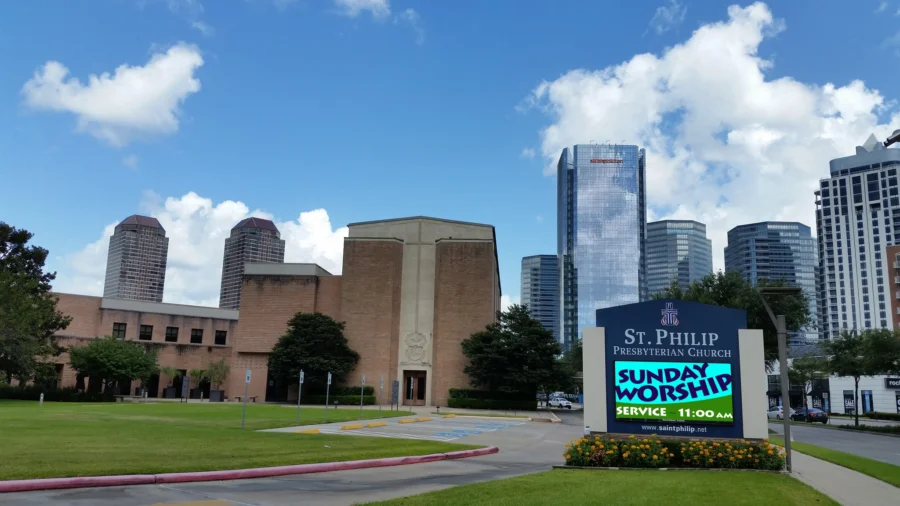
Between a Bentley dealership and a Cartier store is an unlikely place to find a church. But St. Philip Presbyterian Church in Houston, Texas, found it a good space for its calling.
Asking “what in our neighborhood breaks God’s heart,” the church has launched a mission to provide access to affordable, quality, early childhood education, the lack of which has become a crisis for families and children who need this service. Keatan King, who serves St. Philip as the associate pastor, explains that they “envision a compassionate community where every child, regardless of income or family structure, has access to nurturing, high-quality early education, and where empowered parents grow as educators, caregivers, and leaders in their children’s lives.”
“What in our neighborhood breaks God’s heart?”
As the dust began to settle after the COVID-19 pandemic, the congregation found itself, like many churches, in a moment of pause. It was an opportunity to take stock of their community assets and see what God needed from them. Rather than just resuming their old missions, they entered a period of prayer and discernment to determine how they could better serve their community.
Through discussion with local community mission partners working in anti-poverty, hunger and workforce programs, they quickly realized that everyone was bumping up against the same barrier: accessible, affordable, quality early childcare. Many of the people who worked in the church’s direct community, a neighborhood in Houston known as the Galleria, have jobs in retail, hospitality and the backs of kitchens. They have challenging financial situations, and stores often underemploy them to prevent them from having enough hours because it might cause them to become full-time employees.
The childcare affordability crisis facing working families
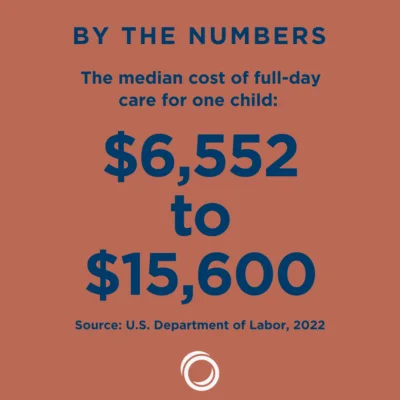 Early childcare in the United States averaged $6,552 to $15,600 annually in 2022, according to the U.S. Department of Labor. This equaled roughly 8.9% and 16.0% of a family’s median income for full-day coverage for one child. This reality leaves many families with difficult choices, forcing them to assess, day by day, the costs of working while raising children. Some must spend a significant portion of their income on childcare in order to work at all. Others weigh staying home — risking the loss of housing or food — or relying on family and friends whose support may be unreliable.
And if they do choose a daycare, is it trustworthy? Does it have availability or a six-month waitlist?
It became clear to the congregation of St. Philip that they needed to help fill a childcare gap in their community. They also quickly realized why such care is so scarce: it is expensive, driven by high provider-to-child ratios and significant liability costs.
So, they got creative.
A cooperative, tuition-free childcare model rooted in church community
As expressed on its website, “The St. Philip Day School offers high-quality, Christian-based Early Childhood Education to children 8 weeks through 3 years of age from low-income families in Harris County, Texas. Through an innovative cooperative childcare model, parents who complete training in Early Childhood Education and Health & Safety volunteer one day a week in a classroom as a Parent Educator. In return, they receive five days of tuition-free childcare per enrolled child,” including diapers, formula and meals.
The school operates on a community-first model and can offer tuition-free education because parents become part of the community, working alongside full-time, licensed teachers and other certified volunteers from the church. It is a community-first model. While volunteering, King says, “every parent is also learning tools that equip them at home and make them feel like a fully capable parent, regardless of whether or not they’ve received that in their life.
“And, after they start volunteering for the day, they now know at least nine other parents in their class who are all background checked, similarly trained and their child already recognized and feels comfortable with.” In other words, they have a community of parents who can swap volunteer days and share childcare outside the school.

What this model could mean for the PC(USA) and underused church buildings
The church’s congregation and the St. Philip Day School’s board of directors both believe that their model could grow beyond their physical location. King dreams that “there could be a world in which every Presbyterian congregation in this country with an underutilized building, in a bustling community that has plenty of people around them” could do it.
King adds that the Presbyterian church wrings its hands about whether it’s still relevant and how to reclaim a place in people’s hearts and minds. But “that question would end tomorrow if we saw ourselves as chiefly responsible for the well-being of infants and toddlers in our communities.”
“There is a world in which Presbyterians could become synonymous with this model of cooperative parent-education, tuition-free, early childhood education.”
“There is a world in which Presbyterians could become synonymous with this model of cooperative parent-education, tuition-free, early childhood education.”
For churches interested in implementing a similar model in their community, St. Philip is ready to give a start-to-finish blueprint, with all the information needed, such as 501(c) applications, business plans and fundraising strategies. They can learn more at https://www.stphilipdayschool.org/ or reach out to King at [email protected].