On the web page for the Presbyterian Church (U.S.A.)’s Center for the Repair of Historic Harms appears this quote: “Calling things by the wrong name adds to the affliction of the world.” — Albert Camus.
In many ways, Liberia Project 180 is about naming things truthfully. “Resolution on Liberia Project 180” from the Racial Equity Advisory Committee (REAC) will be presented to the General Assembly in June and addresses harm caused in Liberia by the Presbyterian Church under the misnomer of “doing good.” It also calls for an official acknowledgment of and apology to the Indigenous people of Liberia for the damage caused by the colonization in the 1800s of their country, which the Presbyterian Church in the U.S. strongly supported both spiritually and financially.
The Center for the Repair of Historic Harms began its work in 2023 by acting on the GA225’s approval of apologies for the sin of slavery. The center also began the work of reparations for specific racist actions, such as the 1963 closure of Memorial Presbyterian Church in Juneau, Alaska.
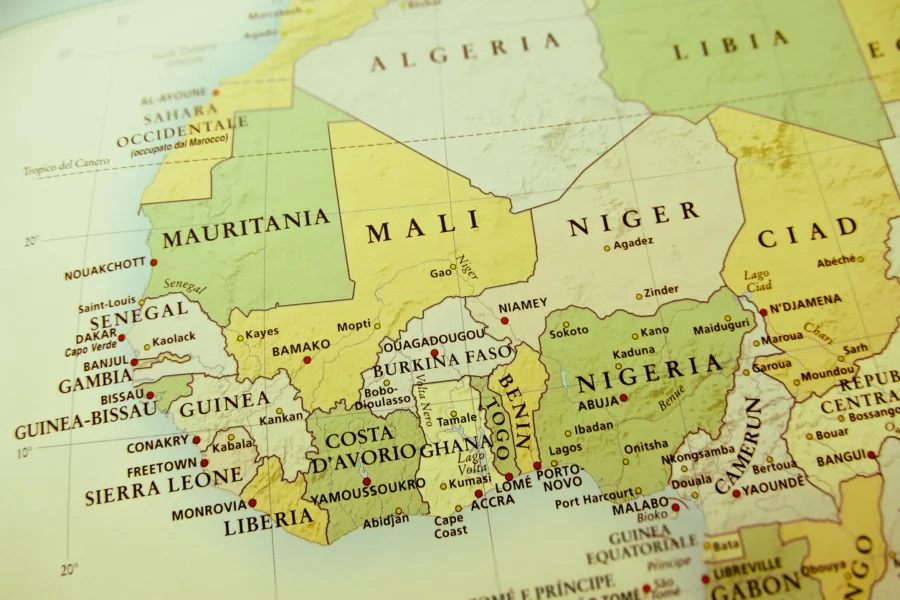
Jermaine Ross-Allam, director of the Center for the Repair of Historic Harms, explained that “broadly speaking,” the resolution grew out of a 2023 visit to Liberia. This particular visit was part of a co-moderator delegation that traveled to Monrovia to meet with the Liberia Council of Churches, an ecumenical advocacy entity that was founded in 1982. However, Ross-Allam was already familiar with Liberia’s history and the ways that colonization created an unequal socio-political system that resulted in years of violence and oppression.
During the visit, Ross-Allam was asked to offer a prayer at a meeting. He recalled praying: “Our job (as Christians) is to say now is the moment when the Holy Spirit is encountering us to do today, for the sake of the future, what should have happened 200 years ago.
“The response from the Liberia Council of Churches was a resounding, ‘Yes!’” he said.
That affirmation may now lead to a fuller acknowledgment of what is true, rather than to the story often told about Liberia’s colonization in the 1800s. While the Presbyterian Church was not the only denomination that supported the efforts of the American Colonization Society (ACS) to resettle Black people from America to Africa, Ross-Allam noted that “there were a greater number of Presbyterians” among its supporters.
The resolution, he said, is about “cleaning up our own house.”
The “Resolution on Liberia Project 180” is about “cleaning up our own house.” — Jermaine Ross-Allam
The delegation also heard from Liberians about another source of harm: the church’s withdrawal of support from programs, leaving communities without resources.
“In a sense, we had abandoned them as a denomination; we have not done work in maintaining fellowship,” said Cheryl Barnes, manager of U.S. Global Ecumenical Liaisons for the PC(USA), who was part of the delegation.
What struck Barnes most, however, was the forgiveness expressed by Indigenous Liberians.
“They were loving, accepting and eager to re-engage with the church of America,” she said. “There was no animosity. They are people very much aware of the history, and yet they received us in a way that showed they wanted us to continue being in partnership with them.”
The truth
The White House Historical Society explains that the ACS “was founded in 1816 by a group of white elites,” including Robert Finley, a Presbyterian pastor and educator, Daniel Webster and Francis Scott Key.
“The ACS quickly recruited support and financial backing from enslavers, the Protestant and Presbyterian churches, and others, including the federal government officials,” according to the historical society’s website.
Over time, various U.S. presidents and even some abolitionists supported the ACS, believing that free Black people would never be accepted as equals in the United States and seeing Liberia as an opportunity for self-governance. However, many proslavery advocates supported colonization primarily out of fear that free Black populations might inspire rebellion, as in Haiti, where a successful insurrection in the late 1790s led to the creation of a free state governed by formerly enslaved people.
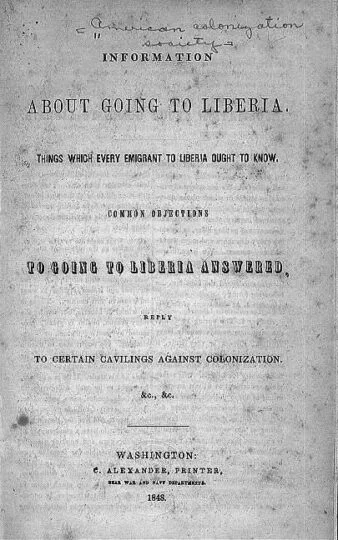
The White House Historical Society notes, “Colonization became a convenient alternative to emancipation, justifying the removal of a group of people deemed inferior while avoiding a direct confrontation with the institution of slavery and the large-scale manumission of enslaved people.”
Known as Americo-Liberians, free Black settlers arriving in Liberia often assumed they were more educated and capable than Indigenous Liberians, and they seized land, imposed new systems of governance, ignored culture and traditions, and perpetuated inequality, such as paying Indigenous people less than fellow settlers.
“We came fresh off the plantation,” Ross-Allam said, “and in many cases, had no process of deprogramming from the racism of the plantation … and set in motion damages from which Liberians continue to recover today
“We came with language like, ‘This is our new Israel God is giving us to make up for our time under the Pharaoh in Mississippi,’” he said.
Wayne Doe, chair of the Council for Minnesotans of African Heritage and a native of Liberia, also described the long-term effects of colonization.
“Freed Black settlers began to act like slave masters,” he said. “There is a lot of healing that needs to take place,” said Doe. He stressed the importance of teaching Indigenous history in schools and recalled the prevalence of an Americanized education and influence in the past.
“There is a lot of healing that needs to take place.” — Wayne Doe
“I learned the ‘Star-Spangled Banner’ when I was 3,” he said. “The first 19 or 20 presidents were Americo-Liberians. That explained why we learned American history.”
“There is a brilliant and world-historic opportunity now for us to do right, to repair what we could have done in the early 1800s,” Ross-Allam said. “We get an opportunity now to go back as Black Presbyterians and acknowledge that we solved part of our problem by causing additional problems for a group of people who had nothing to do with the problems of racism and slavery from which we were escaping.”
Addressing the harm
If GA227 adopts Liberia Project 180, the exact forms of apology and reparations are not yet defined. Ross-Allam emphasized that all Indigenous Liberians, including leadership, should lead the discussions and process, a lesson that became apparent as the Center for the Repair of Historic Harms worked toward apology and repair in Juneau, Alaska, in 2023.
“We can’t assume out of our own heads we know what is acceptable and meaningful to the people who were harmed,” said Ross-Allam. “We have to make sure we are focused on addressing the Indigenous Liberian and not proceeding as if the Indigenous Liberian and the Americo-Liberian there today have the same history.”
Repair recommendations will be developed and implemented collaboratively with the Liberia Council of Churches, the Center for the Repair of Historic Harms, and the Betsey Stockton Center for Black Church Studies at Princeton Theological Seminary.
Another partner organization is the Response Initiative (REIN), which works in agriculture, education, language repair and preservation, and justice.
“There is a brilliant and world-historic opportunity now for us to do right …” — Jermaine Ross-Allam
“I remember as a boy seeing the missionaries coming, bringing the gospel. They came to a system that was already there and wanted to change it,” said Paul P. Paukpa, executive director of REIN. “We lived in peace and harmony. [The missionaries] brought a new level or type of confusion.”
Part of that disruption came through language and missionaries’ refusal to honor and use local languages, Paukpa said.
“I remember missionaries teaching us in the school to learn the ABCs and recite portions of the Bible in English,” he said. Paukpa witnessed relatives arguing and families turning against one another because some supported the missionary ways while others insisted on respecting tradition and their native culture. Some people adopted the American names assigned to them, while others maintained their African names – a division that persists.
“It still exists … I will be treated differently based on my name,” Paukpa said.
Over time, these divisions contributed to broader social tensions and exploded into a long civil war.
Paukpa believes that repair should follow African traditions.
“If I made a list of things that should happen, especially in repair, I would insist it be done the African way,” said Paukpa.
“For example, there must be storytelling,” he said. “The real harm that was done to our environment is not being told. It is not in the books we have.”
He said information should be gathered in person, not only from those in cities but also from those in villages, which means traveling into rural areas and speaking to people in their own languages. The Center for Repair agrees, and its partners are already preparing information in Bassa and Kpelle, the languages most widely spoken in Liberia.
Paukpa hopes this time, learning will also include “practical education on things that improve the life of people.” He lists examples such as planting crops by building on traditional methods and using renewable energy.
The importance of relationship
During the 2023 visit, the Presbyterian delegation listened as Liberians identified their priorities for repair in their communities and heard from young people about the harms they believe can be addressed.
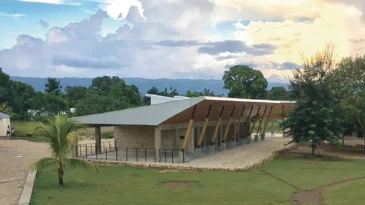
Barnes was captivated by the story of the Todee Mission School, which had been built on land donated to the Presbyterian Church by Paramount Chief Kpana Goba in the 1940s. The school was built to support leadership development of young people in Liberia.
“It was very successful for a time, but we did not continue in a mutual relationship with the school, so it began to deteriorate,” said Barnes, who noted that the disrepair caused teachers to leave and the community to lose faith. The school eventually closed.
After returning to the U.S., Barnes secured a grant for the school to begin some repairs.
If the General Assembly approves the resolution, “we begin investigating what an apology looks like.” — Jermaine Ross-Allam
The proposed resolution includes the creation of a Transatlantic Pan-African Youth Society, which Ross-Allam said will “help junior high and high school students on both sides of the Atlantic get to know each other so that Pan Africanism will become a part of the present Christian tradition.”
If the General Assembly approves the resolution, the more extensive work will begin.
“With their blessing, we begin investigating what an apology looks like, “ said Ross-Allam.
He is excited about the mystery of not knowing what the results will look like. He believes that by trusting God and allowing Liberians to lead, it will be possible to create “a new form of faithfulness.”