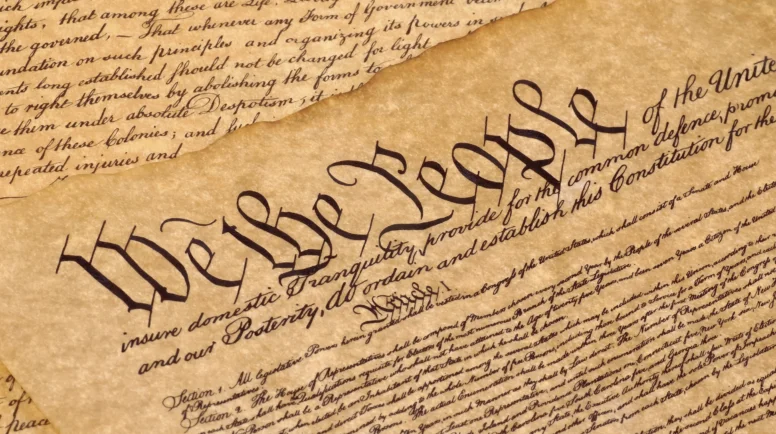
I was 5 years old when the United States celebrated its bicentennial, so my only memory from July 1976 was the giant patriotic coloring book I got as part of the festivities. Looking back on that year, however, older Americans remember a muted observance, mired as we were in an inflationary economy, an energy crisis and deep distrust of a federal government that had demonstrated its openness to corruption. Many Americans were caught in a general “malaise,” as President Jimmy Carter famously observed.
As we observe our semiquincentennial this year, we find ourselves in a similar collective circumstance and mood. Polls suggest that most Americans believe the country is not strong and is heading in the wrong direction. Once again, we suffer through an economy in which affordability is an acute issue for most households, the price of gas has skyrocketed due to intervention in Iran, and federal policy priorities consistently benefit wealthy CEOs and the president’s friends at the expense of working-class Americans.
Most troubling to many Americans is the sense that our nation has lost its moral compass — though what counts as a sign of ethical drift differs between critics and fans of President Donald Trump. Critics point to the normalization of dehumanizing attitudes and the decline of basic social decency under the president’s direction, while his fans point to a drift from traditional Christian social mores.
Some Americans in that second camp have responded to our current American malaise by reinvigorating the idea of Christian nationalism. Our economic and moral crises, they argue, are a consequence of the country’s abandonment of its true calling to be a Christian nation. The founders, they believe, intended the United States to be an explicitly Christian society ruled by Christian leaders and adhering to biblical norms. For Christian nationalists, secularism and pluralism threaten the purity of Christian America, as its religious identity and mission are diluted by other religious and cultural (read: racial) representation. To right the national ship, Christian nationalists call for a return to what they deem to be our religious roots, reconstructing a society in which church and state cooperate to reestablish a (White) Christian national identity.
Related reading: “PC(USA) labels White Christian nationalism ‘Theological Error’” by John Bolt, Outlook reporting
Here, Christian nationalists use distorted readings of early American history in their agenda, turning founders like George Washington and Thomas Jefferson into reflections of their dream of Christian theocracy. John Witherspoon is another early American leader whom Christian nationalists use to make the case for a Christian America. A closer look at Witherspoon, however, shows a different vision of the new republic, one that could offer a helpful antidote to our current dysfunction.
A nation with a “public spirit”
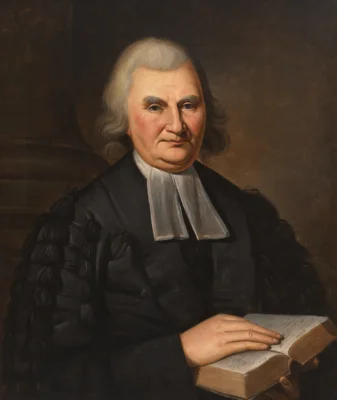
Many readers of the Outlook know John Witherspoon (1723-1794) as the father of American Presbyterianism. Presbyterians were already in the colonies when Witherspoon came from Scotland in 1768 to assume the presidency of The College of New Jersey (now Princeton). Still, he quickly became their most famous leader.
His leadership of a Presbyterian college contributed to his prominence, but he was also recognized for his preaching and his role in the independence movement, which he joined almost immediately upon arriving in America. In fact, Witherspoon was the only practicing clergyman to sign the Declaration of Independence in the summer of 1776.
Witherspoon served on numerous committees at the local, state and federal levels during the American Revolution, and he offered eloquent defenses of American independence that were celebrated (and derided by loyalists) on both sides of the Atlantic.
A consistent theme of his oratory and writing in the revolution was his insistence that the war would be won and the new republic would succeed only if Americans cultivated among themselves a collective moral character — what he called “a public spirit.”
Witherspoon defined this public spirit as a deep commitment to the common good, which he believed should manifest in concern for others and an investment in protecting natural rights. A principled investment in rights, Witherspoon thought, was the character of a virtuous nation. The defense of rights – to free expression, the practice of religion, speech, self-determination and assembly (among others) – was what he thought the American Revolution was ultimately about.
Witherspoon argued that this public spirit was the responsibility of all members of society. In his Lectures on Moral Philosophy at Princeton, he rooted public spirit in “the great law of love to others,” in which Christ commanded us to serve the “greatest and best interest” of our fellow human beings. A commitment to the common good should govern not only citizens’ behavior but also our selection of leaders. Leaders committed to defending rights and pursuing the common good were essential to the health of the nation they were striving to create. Conversely, leaders who pursued their own selfish interests or undermined the sanctity of human rights would doom the nation to failure.
A public spirit should always challenge the boundaries we place on the public to which we are morally responsible.
As he wrote in a letter to fellow ministers and churches in the Synod of New York and Philadelphia in 1775, this commitment to the common good could present as patriotism, insofar as a “generosity of spirit, or benevolence of heart” compelled a person to “offer himself as a champion in his country’s cause.” But in his moral philosophy lectures, Witherspoon also cautioned against the excesses of patriotism, warning that “attachment to country appears in a littleness of mind”: “thinking all other nations inferior, and foolishly believing that knowledge, virtue and valor are all confined to themselves.” Properly understood, a public spirit should always challenge the boundaries we place on the public to which we are morally responsible.
Witherspoon was gravely inconsistent in his own commitment to rights and the common good. Like other founders, Witherspoon was implicated in America’s original sin of racialized slavery. In my recent book, The Character of a Nation: John Witherspoon and the Moral Foundation of the United States, I deal extensively with this hypocrisy, asking whether we can learn anything constructive from figures whose legacy is morally sullied by their complicity in the enslavement of Black Americans.
Indeed, by juxtaposing their virtues and sins, a chastened telling of history can best lend us wisdom for our own moment. Witherspoon’s inconsistent commitment to respect for rights and the common good stands as a powerful judge of his own character, our national legacy and the erosion of rights and a sense of the collective good in our own time.
Christian citizenship
Like others before him, Witherspoon thought that moral character had to be intentionally cultivated to be behaviorally habituated in citizens and leaders. He argued that the best people to cultivate such character are found in subcommunities and institutions within the greater society — what I have called elsewhere “schools of civility.”
Witherspoon recognized that maintaining virtue is a social exercise. We develop our character in relation to others. We learn from others what good (and bad) character looks like, and ideally, we serve as models of character to others. Two months before signing the Declaration of Independence, Witherspoon preached a sermon titled “The Dominion of Providence over the Passions of Men,” in which he expressed his belief that the tragedy of the impending war could serve as a vehicle for God’s work.
He also reinforced the importance of maintaining good character in that struggle, which he insisted was a collective effort: “We contribute constantly, though insensibly, to form each other’s character and manners; and therefore, the usefulness of a strictly holy and conscientious deportment is not confined to the possessor but spreads its happy influence to all that are within its reach.” Good character is contagious, Witherspoon argued — and so is its opposite.
Witherspoon identified the family, churches and colleges, such as the one he served, as useful incubators of benevolent public character. Given Witherspoon’s emphasis on the church as a source of public morality, we might be tempted to identify him with modern Christian nationalists’ fusion of church and state. Witherspoon, however, did not believe that Christianity needed to be established as an official religion in order for the church to cultivate a public spirit. Like many of his contemporaries, Witherspoon was afraid that the king would establish a bishop of the Church of England in the colonies, so official, established Christianity was the last thing on his mind.
Instead, Witherspoon argued that religious liberty was among the most basic human rights that a virtuous nation must defend, because the freedom to practice religion is a necessary condition for religious communities to be able to serve the public good by fostering public-serving virtues. To ascribe to Witherspoon a strict “separation of church and state” aim is inaccurate, for he believed that religion (especially Christianity) could be a positive source of moral guidance for citizens and leaders. But he did not think that the legal establishment of any religion was necessary for religious communities to exert a positive public influence.
Witherspoon and America at 250
Witherspoon’s insistence on the importance of public character for the health of the American republic is a key legacy to rediscover in our own moment. At a time when Americans harbor deep distrust for one another – particularly along partisan, ideological and racial lines – and when political leaders actively stoke our distrust, Witherspoon’s call for a shared commitment to the common good stands as an important remedy.
When governmental actions aggressively undermine basic human rights in the name of security and order, Witherspoon’s insistence that a healthy society is based on protecting rights calls our attention back to our founding documents and their “self-evident” truths. In a political ethos that has normalized dehumanizing rhetoric, Witherspoon’s suggestion that basic respect and public decorum are necessary for a functioning democracy reveals the extent to which our democratic norms have eroded — even in the last decade.
In a political ethos that has normalized dehumanizing rhetoric, Witherspoon’s suggestion that basic respect and public decorum are necessary for a functioning democracy reveals the extent to which our democratic norms have eroded — even in the last decade.
Witherspoon also reminds us that we, as Christians, have a role to play in reclaiming public character. The official establishment of Christianity – explicitly outlawed by the First Amendment of our Constitution – has never been the answer to the conflict that besets the United States. In fact, the Constitution serves to protect religious rights in a pluralistic democracy, which itself depends on fundamental freedoms such as the freedom to believe, practice, and congregate according to one’s convictions.
While insisting on the importance of religious liberty, Witherspoon nonetheless believed that religious communities could foster the public character essential to a healthy democracy. This public character should include care to balance self-interest with the good of others, a shared commitment to the “general welfare” (as the Constitution puts it), and a dedication to the basic rights and dignity of all people.
Churches and other religious communities can and should be places where we practice living with one another in difference and where we nurture a regard for the dignity of other human beings, rooted in obedience to the God who created them and us.
In this national anniversary year, we may feel like we have little to celebrate in our public life. Much of that dispiriting mood is rooted in the scarce signs that we remain a United States of America. But for Christians, Witherspoon reminds us of the ideals on which the U.S. was founded and their resonance with theological convictions we ought to hold dear.
However unevenly and even hypocritically implemented in our national history, those ideals remain the antidote to the incivility and divisiveness that plague us. Witherspoon reminds us that mutual respect, basic human rights and the common good are indispensable. He also reminds us that religious people have a role to play in the essential project of rediscovering those founding ideals.