(RNS) — For some conservative Christian fans of C.S. Lewis’ Chronicles of Narnia, the idea of God being portrayed as a lion is fine.
As long as he sounds like a guy.
News that three-time Oscar winner Meryl Streep would voice Aslan — the Jesus figure at the center of Lewis’ bestselling series in Greta Gerwig’s upcoming adaptation of “Narnia: The Magician’s Nephew” — led to confusion, anger and disappointment on social media, with some evangelical fans planning to skip the film. It’s set to be released in theaters in February 2027.
Some called the change “blasphemy” or claimed it mocked Lewis’ work, saying Aslan had become “Translan” and a symbol of the broader culture war. Others told their fellow fans to chill out.
“Meryl Streep as Aslan?” wrote conservative influencer Mike Winger in criticizing the move on social media. “It runs counter to the entire purpose of the story. CS Lewis would have a fit and rightly so.”
The dustup over Streep and Aslan echoes some of the culture war debates over the cast of “The Odyssey” earlier this year, in particular, Lupita Nyong’o being cast as Helen of Troy. But the debate has taken on religious overtones, given the devotion that evangelical Christians have to Lewis — whose Narnia books have sold more than 100 million copies since 1950, and whose books on faith are often cited by evangelical pastors.
For some evangelicals, the Christian author is essentially a saint, said Leslie Baynes, a religion professor at Missouri State University and author of “Between Interpretation and Imagination: C.S. Lewis and the Bible.” Making changes to his work can be like messing with something sacred, she said.
“For many evangelicals, C.S. Lewis can do no wrong, and they have a very close relationship with his work,” she said.
Many fans, evangelical or otherwise, already have a vision of what the characters in the books should look and sound like, she added. And in the Narnia books, Aslan is a Jesus figure. Evangelicals have very clear views of gender, especially when it comes to God.
“I myself don’t have any problem with a woman voicing Aslan, but for a lot of evangelicals, it seems almost like blasphemy,” Baynes said.
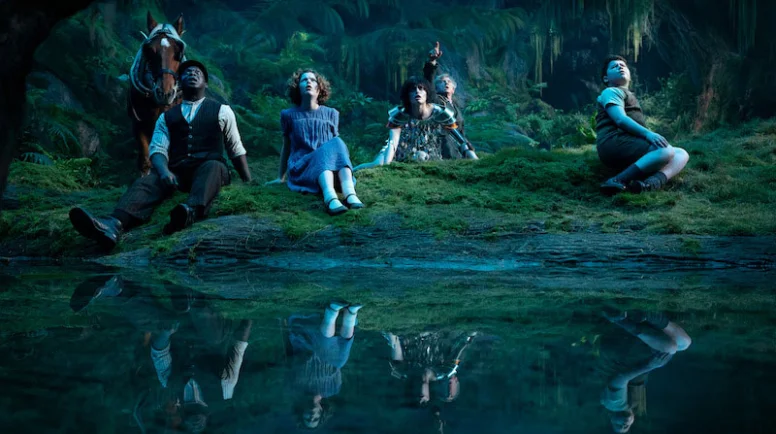
“The Magician’s Nephew,” which has been adapted as an audiobook read by British actor Kenneth Branagh, has never before been made into a film or television episode. The book was inspired in part by the children’s books written by British author E. Nesbit, which Lewis read as a child, Baynes said, as well as the creation story in Genesis. It tells how the conflict between Jadis, the White Witch and chief villain in the Narnia books, and Aslan began. And of course, two children play a key role in the story.
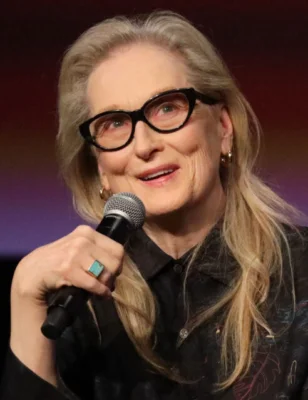
Gerwig, the new film’s director, told Empire that in casting the role, she sought “someone who was profound but not pretentious, who had gravitas but not morose self-seriousness. Someone who could communicate depth and pathos as well as joy and delight. I wanted someone who was older than 70, so there was a wisdom of experience, but who also had the capacity of fresh wonder, like a child. And also to be one of the greatest actors to ever do it. That list is not a long one.”
Phil Vischer, creator of the VeggieTales Christian video series and co-host of “The Holy Post” Podcast, told RNS he was more puzzled than angry at the gender switch for the actor voicing Aslan — British actor Liam Neeson played the role in the trio of early 2000s films from Disney. And he wondered what the change in actors meant for how Aslan would appear in the new film.
“So if Meryl Streep is Aslan … is Aslan a female lion with a mane?” he wrote on X. “Or a male lion with a woman’s voice? I’m not thrilled with either possibility.”
Vischer pointed to a general annoyance with Hollywood rewriting classic stories — as was the case with “The Odyssey” or with the “Wicked” films, which reimagined “The Wizard of Oz” stories. But the case of Aslan is different because of the religious dimension of Narnia.
“It’s more incendiary because this character represents Jesus, and the notion that you would gender switch God or Jesus has been a hot-button issue for 100 years,” said Vischer, adding he is withholding judgment until seeing the final film. “It’s culture war red meat.”
Author Mary Pezzulo, a lifelong Narnia fan, said “The Magician’s Nephew” is one of her favorite books. “It’s the scariest and also the funniest of the Lewis books,” she said, pointing to a scene where the White Witch shows up on a London street and starts a humorous brawl.
She’s not a big fan of Gerwig’s approach to Narnia based on some of the reported changes in the film, which include moving the story time frame to the 1950s, rather than the early 1900s in the novel. But she worries that the backlash against Streep sends a message that denigrates women.
Why, she asks, is it alright for Jesus to be portrayed as a lion but not as a woman?
“You can turn Jesus into an animal, and it doesn’t take away from his dignity,” she said. “But you think it’s offensive to turn (Jesus) into a woman? That just kind of hurts. That’s just a really nasty way to think about women.”
The debate over Streep comes at a time when women leaders in churches are increasingly viewed with suspicion by evangelicals. The Southern Baptist Convention, the nation’s largest Protestant denomination, is considering a ban on churches that give women the title of pastor. Some of its leaders see women in that role as an existential threat.
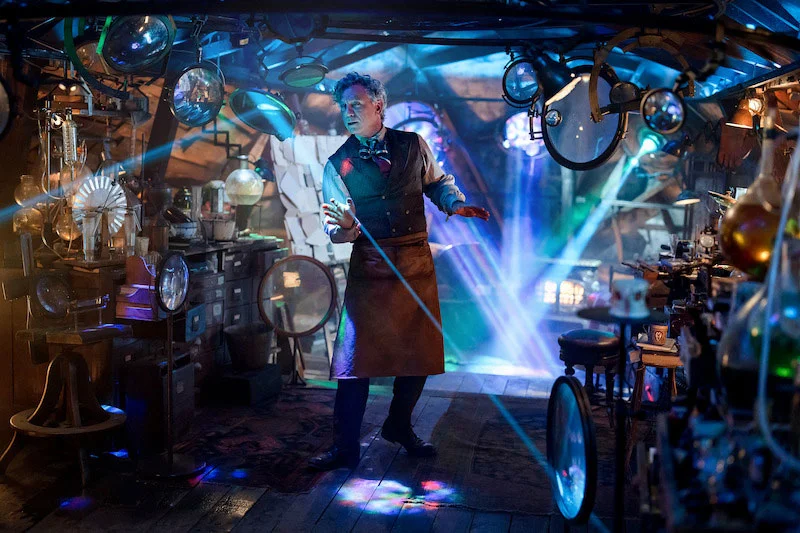
Fewer fans of the Narnia books have complained about Kobna Holdbrook-Smith, a British actor who was born in Ghana, playing a cab driver named Frank, a key supporting role in the film. In the novel, the character is from the English countryside and is assumed to be white.
David Regier, an influencer best known for his sarcastic commentary on X as the “Church Curmudgeon,” wonders if the makers of the new film underestimate the close ties between Lewis and his fans. He said he read the Narnia books as an adult and then read them to his kids.
But he also devoured Lewis’ books about religious topics, like “The Problem of Pain,” “Miracles” and “The Great Divorce,” a book about heaven and hell. And in his works, Regier said, Lewis had strong ideas about gender.
“If you’ve had a lot of connection to Lewis, you have a lot of his worldview in you,” he said. “And Lewis was pretty clear about male and female not being interchangeable.”
Still, he thinks some of the online responses have gone too far. “People were calling it blasphemy and things like that. I don’t think I would necessarily go that far because we are talking about a fictional character,” he said.
Via his online persona, Regier had a funny response to the whole controversy.
“I asked who was in charge,” he wrote on X. “They said, ‘Narnia business.’”
By Bob Smietana, Religion News Service