by C. Christopher Smith
The new creation that God is bringing forth is one that stands in contrast to the status quo maintained by the world’s prevailing powers. In order to act faithfully within the story of God bringing healing and flourishing to the world, we must begin to imagine the world in new and deeper ways. Reading is an essential practice in these efforts to reimagine the world — reading Scripture of course, but also reading a broad range of other works that help us discern what it looks like to live in ways that are faithful to the way of Jesus in our time and place.
Reimagining the world is a massive task, one too large for any one individual or one lifetime. Our imagination of the world at large will change gradually over many centuries and with the contributions of a vast host of faithful thinkers. Perhaps we each start by seeking to find Christ in the discipline to which we have been called. If I am a cellular biologist, I look for Christ and the beauty and coherence of the way of Jesus among the cells. I look for similar things if I am a social worker or a pianist. The joy of finding Christ everywhere we look in his wondrous creation is a sort of leaven that works its way into our minds, transforming the ways we envision the world.
Reading can guide us into a deeper knowledge of who we are as churches and of the places we live; it can also help us begin to grasp the ways we are connected to people in other places. Reading illuminates and deepens our bonds with others, particularly our bonds with other churches; our ecological bonds with those who live in the same watershed or region; and our geo-political bonds with those who live in the same city, state, province or nation.
Poetry is a compelling way of seeing the world through different eyes or articulating it in different terms. In his excellent book, “The Better Angels of Our Nature,” Stephen Pinker has argued compellingly that the rise of fiction over the last 200 years has helped humanity be more empathetic, imagining and entering into the situations of others.
Jesus promised us that we will find what we seek. Whether reading for work or for pleasure, if we are seeking Christ, we will find him, and our minds will be transformed. In an interconnected creation, our reading is never merely for us as individuals. It is meant to be shared and wrestled with in community. We need spaces in our churches where we can talk and seek together, sharing what we are reading and allowing it to shape us as community called to embody Christ together. The fruits of seeking faithfully together will flow outward from the congregation and begin to transform our places and the world.
This confluence of reading, seeking and action, is our hope for the flourishing of the whole creation!
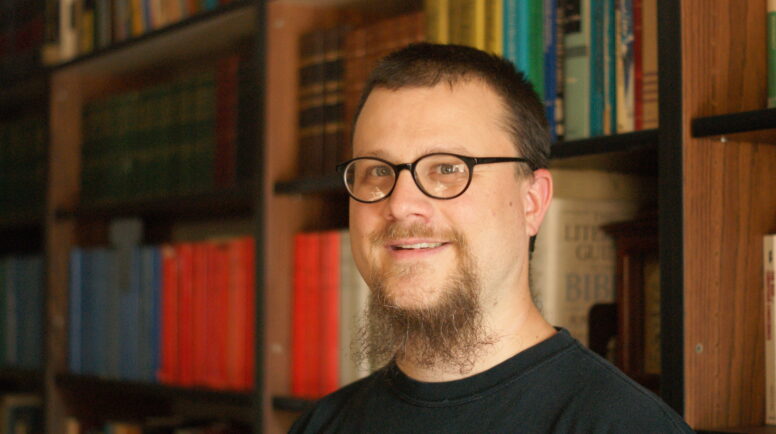
 C. CHRISTOPHER SMITH is senior editor of The Englewood Review of Books and co-author of “Slow Church: Cultivating Community in the Patient Way of Jesus.” He is currently finalizing his next book manuscript, tentatively titled “Reading for the Common Good: Toward the Flourishing of Our Churches, Our Neighborhoods and the World.”