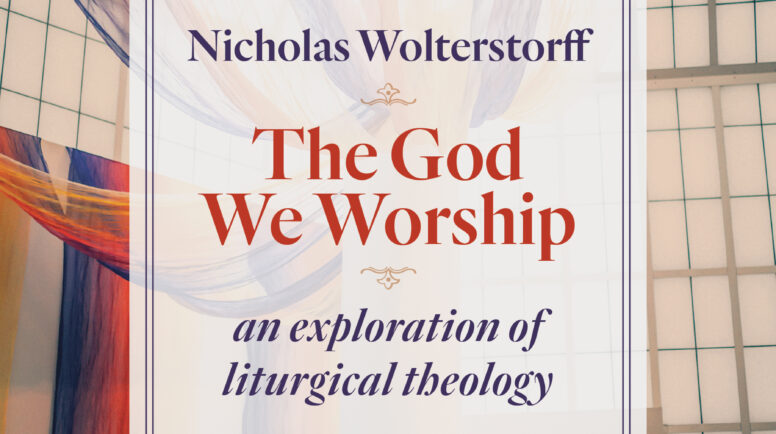
 by Nicholas Wolterstorff
Wm. B. Eerdmans, Grand Rapids, Mich. 196 pages
Nicholas Wolterstorff is a distinguished philosophical theologian in the Reformed tradition. This book is derived from his Kantzer Lectures at Trinity Evangelical Divinity School in Deerfield, Illinois.
Wolterstorff argues that there are three strands in church theology. One is the theology rooted in engagement with Scripture; another is what he calls “conciliar” theology, centered on the creeds/confessions and catechisms; and the third is the theology that is embodied in liturgy. “Liturgical theology,” Wolterstorff says, “is significantly different from both biblical and conciliar-creedal theology. Liturgical theology does not contradict those other forms of theology; at many points, it overlaps them. But it has its own distinct configuration.” Biblically-based and conciliar theology have been much discussed, Wolterstorff contends, but “the distinct character of the authority of the liturgical dimension of the church’s tradition has been discussed less, and hardly at all by Protestants.”
This last observation calls for attention. Even Protestants who are serious about theology may imagine that what is done in worship is a matter for indifference, as though nothing much is at stake. And yet, it is in the worshipping assembly that the congregation is most likely to be exposed over time to a formative theology, whether the intended theology or some other. Since that is the case, liturgy (both texts and practices) needs to be critiqued with as much care as are the other two ways of doing theology. “There are not two gods, one whom Christian theologians write about and one whom Christians worship.” It is a critique of the liturgy that Wolterstorff offers in this book.
When the author writes of “the liturgy,” he has in mind particularly the liturgical structures that Orthodox, Roman Catholic, Lutheran, Anglican and Reformed traditions share. His interest here, however, is specifically in those aspects of the liturgy that are implicit, rather than those that are explicit. For example, in worship Christians speak to God with the presumption that God listens and hears. But what does it mean to say that God listens or hears? And what does it mean to say that God speaks in the liturgy, particularly in preaching and the sacraments?
Wolterstorff engages in dialogue with figures such as Maimonides and Thomas Aquinas as he tries to articulate how one is to understand these liturgically implicit characterizations of God. (Here we meet the philosophical theologian.) He is especially interested in three others as he unfolds his project.
One is New Testament scholar N.T. Wright and, particularly, Wright’s treatment of the “kingdom” of God. At this point, Wolterstorff joins with other contemporary theologians who exhibit renewed interest in biblical images of God’s kingdom, in both present and eschatological manifestations. He also engages with Karl Barth, both appreciatively and critically, and with John Calvin, mostly appreciatively, specifically in reference to his theologies of preaching and Eucharist. I was particularly struck by his observation that “Calvin’s teaching concerning partaking of Jesus Christ and the benefits thereof reminds one of the doctrine of divinization (theosis) common in Eastern Orthodoxy.”
This is a very rich book — not always easy, but with all sorts of insightful treasures, which is not surprising for those who know of Wolterstorff’s work.
 RONALD P. BYARS is professor emeritus of preaching and worship at Union Presbyterian Seminary in Richmond, Virginia.