 Lately I’ve seen a lot of Facebook posts written with the catchphrase “Nurses are heroes.” Nothing could be truer. There is something deeply Christian about the work of nurses who touch the infected and comfort the sick. While people are dying without family present, they are not dying alone. God is with us in death, and so are nurses and doctors. Thanks be to God.
While nurses (and John Krasinski in my opinion) are winning the pandemic, a surprise visit from a young boy in our congregation has got me thinking about the unsung heroes of this strange time—pastors. This young congregant spent his day driving to the fire station, to the hospital, to the police station, offering thank-you notes and words of encouragement to his “pandemic heroes.” And his last stop? His pastor’s house. “Can I take a picture with you?” he asked. “Thanks for all you’re doing for our church.” I was taken aback. Needless to say, I cleared some refrigerator space to put the handwritten note front and center.
To call a pastor a “hero” may feel to some a bit of a stretch. In the 1960s, pastors were in the top 10 on the list of most trusted vocations, and concomitantly on the list of the top 10 professions youngsters said they “hoped to be when they grew up.” For unsurprising reasons, that has changed. Between church abuse scandals, decreasing religiosity, the public peddling of fundamentalist Christianity and the church’s failure to speak gospel and justice in the same sentence, our world has come to deeply mistrust the word “pastor.” And for good reason. As of late, we are not cultural heroes. We don’t run into burning buildings like firefighters (well, depending on the session meeting) or heal the physically diseased like nurses. Beyond all of this, I’m not sure the point of Christianity is to be upheld as meritorious by society. If the gospel is foolishness, scandal and a stumbling block, I’m not sure its weird proclamation should come across as reasonable and heroic to the world. If it had, Jesus would’ve started a convent instead of getting crucified.
All of that notwithstanding, I am mindful of the fact that historically, the early Christians’ amazing love and care of the dying was noticed by their pagan Roman counterparts. This was especially true when plagues decimated the Greco-Roman world. One historian commented that Christians were seen not leaving the great city upon a great contagion, but were seen going back in. Even the Roman emperor took note that Christians were taking better care of Roman citizens than were the Romans themselves. Of all the blemishes of historical Christianity – colonialization, imperialism, genocide and the crusades, to name a few—we must not quickly forget that in its early iterations, a rag tag group of blue-collar fishermen from Galilee brought the gospel to a cultural setting that was irreconcilably different than Judaism. They were able to do so because of the Holy Spirit, yes, but also because of their unending compassion for the vulnerable and dying. Christianity saw its brightest days in plague and pandemic not because it was “deployed” (I hate that image), but because Christians saw in Jesus’ ministry the dignity and sacredness of life as the ultimate goal of the church.
And here we are again, in a time of uncertainty and disease, not in an “unprecedented time,” but rather in a time that, historically speaking, our great cloud of witnesses has seen aplenty. This kind of time was the only one in which Jesus lived and ministered. Read the Gospels and you’ll find a story about how Jesus encountered disease, infection, uncleanness and death. And this is why, my fellow pastoral colleagues, you are my heroes in this, our weariest of days. I’ve seen you preach hope amidst despair and sing the music of joy when the world is hanging up its harps. I’ve seen you wear your heavy black robe, white stole and mask on an 85-degree North Carolina day as you preach resurrection to a grieving family in funeral home parking lot. I’ve seen you comfort the lonely with a phone call, read bedtime stories to children and edify fellow ministers with a Facebook post. You’ve been, as Eugene Peterson names it, “the colony of heaven living in the world of death.”
Before all of this I wasn’t sure exactly how I would’ve defined the word “pastor.” Are we conveyers of religious services, or social justice advocates, or Bible scholars lite, or professional prayers, or salaried Jesus-lovers, or gospel entrepreneurs, or life-transition specialists? And what did the world think of us before all this? Were we false prophets, or weird Christians, or brazen hypocrites, or “those Jesus people”? If I’m honest with myself, depending on the day, I’m several of these things all at once. But just as this pandemic has redefined what “normal” means, it also seems to have reminded me of what pastor means. Pastor means pointer to God’s presence, means radical lover of off-color neighbors, means proclaimer of ludicrous grace, means shepherd to the dying, means hiker of death’s valley, means practitioner of resurrection. So, you weary and anxious group of pastors, as we all sprint ahead into the cloudy uncertainty of “reopening,” let me not forget to say: Thank you, pastor. For all you’re doing for the world. You’re my hero.
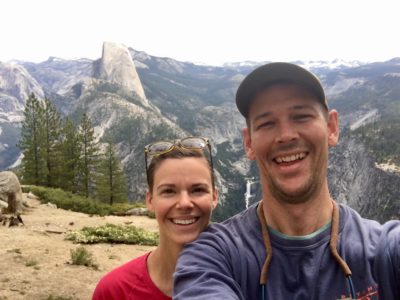 JOSHUA MUSSER GRITTER co-pastors First Presbyterian Church in Salisbury, North Carolina, with his wife Lara. They watch movies together with their dog Red.