 For many churches, Ash Wednesday in 2020 may have been one of the last worship experiences the COVID-19 pandemic didn’t alter, coming just before the realities slammed the nation.
And that means that in 2021, some congregations are considering for the first time how to approach Ash Wednesday, which this year falls on Feb. 17, while taking into account the constraints of the pandemic.
Catholics take Ash Wednesday seriously. But the Vatican Congregation for Divine Worship and the Sacraments has given new instructions to priests this year not to make the sign of the cross on people’s foreheads, but to bless the ashes, say the familiar prayer to all assembled – “Remember that you are dust, and to dust you shall return” – and, while wearing a mask, sprinkle the ashes on people’s heads as they come forward one by one.
Here are some ideas Presbyterian pastors and church leaders are floating for dealing with an embodied ritual at a time when we are advised to keep our distance from one another.
Drive-through ashes. Some churches are planning a drive-through event before Ash Wednesday, where parishioners can pick up a small container of ashes, along with a blessing and a liturgy card that can be used at home.
Outdoor services. Some are planning outdoors services, weather permitting, with individual packets of ashes that people can administer to themselves collectively during the service or later at home.
Self-imposition. Ash Wednesday begins the season of Lent – with its emphasis on self-examination, renewal, entering the story of Jesus’ death and resurrection.
While Presbyterians may be familiar with the power of having someone trace a cross on their forehead while reminding they come from dust and will return to dust, perhaps there are new theological insights to unpack when someone marks themselves with ashes at home, particularly during a pandemic, when reminders of mortality and the unpredictability of the future are all around.
“There is something about having the mark visible to others (but not to yourself), and also having the stubborn grit on your fingers that you can’t ignore,” one pastor wrote.
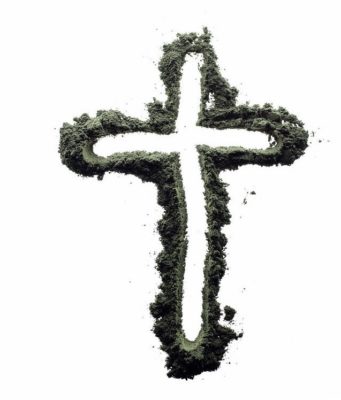
“For years I have been advocating the idea of people signing themselves with ashes to indicate their willing commitment to enter into the disciplines of Lent, rather than having that ‘imposed,’ ” said Don Caron, an Episcopal priest from Cranberry, New Jersey, quoted in The Living Church magazine. “We are considering making available little packets of ashes that can be distributed along with a prayer card with an appropriate statement of the intention for the season. I am also considering distributing a sticker in the form of an ash cross that can be put in a prominent place, such as a mirror or computer screen.”
A Sanctified Art is offering for sale a downloadable “Again & Again” at-home liturgy for Ash Wednesday, designed for individuals or families who want to make space for reflection and setting intentions for Lent.
“Folks don’t need to be reminded of their mortality; this past year has made that clear,” one minister wrote. “What we need to be reminded of this year is that God can do something with dust and ashes.”
Where to get virtual ashes? For congregations that will hold virtual Ash Wednesday services, on Zoom or pre-recorded video or some other platform, the question remains: Where will people get the ashes?
Some possibilities shared on social media:
- Ash from a candle wick.
- Ground up black eye shadow.
- Ash mark stickers or temporary tattoos.
- Ashes that would have been used in worship, provided ahead of time in baggies or small containers (condiment cups, lip balm jars) and maybe Q-tips as well — either at a drive-through event or by delivering them to parishioners’ homes.
- One person wrote: “We are going to have burnt wine corks available for pickup. They can be used easily by individuals or entire households. … They leave a good smudge.”
- One pastor wrote: “I am imagining mixing ashes in with potting soil and then putting a scoop into a small pot and giving each worshipper the pot with a seed to take home. Both as a reminder of our mortality as well as the new life in Christ. John 12:24 kind of idea.”
- And David Gambrell, from the Presbyterian Church (U.S.A.) Office of Theology and Worship, suggested that “for those worshipping from home, an alternative to palm ashes is ‘local dust’ – soil from the yard, a potted plant, or nearby green-space. Where ashes or soil are not practical, people may trace the shape of the cross (a sign of baptism) on hands or foreheads with water, oil, or just the finger.”
Just skip it. Some Presbyterian congregations don’t impose ashes and it’s never been part of their practice. And this year, some can’t figure out a safe or uncomplicated way to do it.
As one pastor wrote on Facebook: “I tend to wonder if ‘ashes to go’ and similar practices start tearing the ritual away from a helpful context of worship where the Word is proclaimed. For my congregation, I know they want and need the worship experience — and if we don’t get ashes distributed for use in worship it’s not a big deal. For those who need to hear that you don’t have to mark the beginning of Lent with physical ashes, I’m saying it.”