

 $24.95
 The big problem is that theological seminaries do not and probably cannot fully prepare people for parish ministry. Seminaries can provide theology, Bible, church history and certain skills training in homiletics. They can give attention to the spiritual and emotional development of the person.
ISBN 0-8006-3176-5 Anyone who has read the work of Walter Brueggemann knows that he is a radical, in the true sense of the word. Impatient with worn-out ideologies (either liberal or conservative) that have lost touch with the text, Brueggemann is eager to confront his readers with the transforming power of Scripture.
ISBN 0800631331 Gordon Lathrop's book, Holy People: A Liturgical Ecclesiology, voices fresh thoughts in the sometimes cacophonous conversations about contemporary ecclesiology. Holy People is a reflection on the meaning of "church," working from the conviction that the church's identity arises from the One the church worships -- the Triune God.
ISBN 0-8308-2223-2 This is a rich and nuanced study of voices on both sides of the well-known right-left division of American Protestantism, with special emphasis on the PC(USA). Richard Hutcheson and Peggy Shriver personally represent the "evangelical" and "liberal" wings of the church, respectively.
ISBN 0-687-08549-7 I approached this assignment as an academic chore and was delightfully surprised to have an enriching spiritual experience. Troeger knows what it is like to minister as a pastor, and he scratched where many of my fellow pastor/preachers and I are itching.
The third edition of Presbyterian Polity for Church Officers by Joan Gray and Joyce Tucker is an improvement of a resource that has been essential for Presbyterian leaders since it first appeared in 1986.
ISBN 0-8298-1322-5 If you are looking for a book to use this fall with your adult education class, look no further! This is a wonderful resource that lends itself to an eight-week class on "How a Church Can Engage the World."
Tex Sample's volume on electronic culture and Christian worship is popular in the best sense: it is clear, concrete, accessible and not too long. Believe Leonard Sweet's book cover blurb: "It's the next best thing to Tex Sample live!"
ISBN 0-664-25777-1 "The Trinity are a grammar problem," according to an answer once noted on a theology exam. The authors of this remarkably useful book suggest it has too often also been a worship problem and they assume the task of showing how we can more adequately speak to and about the Trinitarian God in worship.
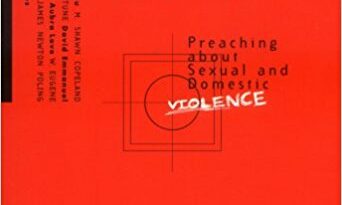
John S. McClure and Nancy J. Ramsay, eds.
Cleveland. United Church Press.1998. 162 pp. Pb. $15.95
ISBN 0-8298-1282-2
Reviewed by Gail A. Ricciuti
ISBN 1-57806-175-X "Exegete the biblical text, exegete the congregation, and exegete the community in which you serve." This profound advice for pastors and others who would lead the church I have heard constantly from seminary professors and from wise old hands in presbytery.
Lewis Mudge, professor of systematic theology at San Francisco Seminary, is one of the greatest gifts the Presbyterian Church (U.S.A.) shares with the ecumenical movement. His vision and insights, matched by his gracious and generous spirit, have decisively shaped all of the major ecumenical movements in which our church has been engaged for more than a generation.
ISBN 0-8028-4604-1 In a word, it is a gift. Martin B. Copenhaver, Anthony B. Robinson and William H. Willimon's book, Good News in Exile: Three Pastors Offer a Hopeful Vision for the Church, is a genuine gift to the church. Unlike other "gifts" where we get exactly what we ask for, where there are no surprises, and where we know what to expect, Good News in Exile offers the church -- and thus offers us, as people of faith -- one of those rare gifts.
Michael Welker, Heidelberg University, is only now becoming known and visible in the United States, both through his publications and his extended residency at Princeton Seminary. He is emerging as a major force in Reformed theology, perhaps destined to be the dominant German figure in Reformed theology as was JŸrgen Moltmann before him.
ISBN 0-8298-1353-5 We live in a time of increased interest in things spiritual -- practices, techniques and theologies -- many sincere, some shallow. Our days are marked, moreover, by suffering and awareness of evil in our midst -- manifested in ethnic cleansing, wars, school shootings, family violence, etc.
ISBN 0-19-511493-0 The book has a snappy title: Being There. I wanted to read it because one of the four authors is Barbara G. Wheeler, president of Auburn Seminary, and I think she has one of the best minds in Christendom.
ISBN 1-56101-167-3 When I first met Barbara Brown Taylor more than 20 years ago, she was becoming a writer. We were both at the Candler School of Theology at Emory University, where Barbara worked in administration during her postulancy for the Episcopal priesthood.
As a molecular biologist, I have grown to appreciate the complexity of genetic mechanisms underlying biological processes. No one doubts that molecular biology has revolutionized the biological sciences in the 20th century. We know a great deal about how genes are expressed, replicated and transmitted.
ISBN 0-664-25841-7 While too much of the Christian world is coming off the rails in expectation of a divine cataclysm on Jan. 1, 2000, N. T. Wright offers us a challenge to celebrate the millennium as a Christian festival, rather than standing by passively or ex-citedly, waiting to see if the world will end. He issues the challenge in few words, with the clarity and good sense we have learned to expect from him in his New Testament scholarship.
If you are a feminist, female or male, you will find convictions and new insights resonating deep in your being. You will also be challenged to think through again the broader and deeper dimensions of life lived on the basis of feminism rather than the patriarchy that has so long dominated the culture of much of the world.
ISBN 0-8272-0626-7 Out of his "25 years of pastoral work, 16 years of teaching ministry in a theological institution and more than 200 seminars with churches and judicatories," Robert Ramey offers congregations the distilled essence of his considerable wisdom.
ISBN 0-664-22150-5 Pay attention, lay people, ministers and Christian educators! Putting the Amazing Back in Grace is another Ann Weems collection of poems to use in reflection, preaching and teaching!
ISBN 0-8010-9088-1
Watchman, tell us of the night,What its signs of promise are. -- Advent season hymn
© Copyright 2026 The Presbyterian Outlook. All Rights Reserved. Privacy Statement. Website by Web Publisher PRO