

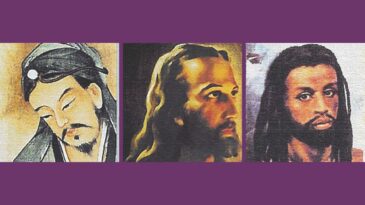
Considering the contextual nature of theology, the writer opens up reflections on who Jesus Christis for different people. — Rachel Baard

By the power of the Holy Spirit, our hearts are joined in one holy unity writes Ron Byars.

The Fostering Congregations Initiative guides ministries in caring for foster families and children who have come from difficult spaces.

The ongoing challenge, says Sarah Ann Bixler, is to reconcile experiences of trauma with our theology.

We need to consider not only how we respond but how we locate ourselves as those called upon to speak and act faithfully, writes Kimberly Wagner.

We often fail to identify common stories as trauma or to recognize their impact, writes Chanequa Walker-Barnes.

In the heat of competition, we forget the bodies we are watching are risking health and well-being in the game or match we find entertaining, writes Patrice Gaines.
Journeying together on and off the field of play is to be open to what God wants, says Jim Mohr.
Professional sports has become "one of the ways in which we make meaning and tell our own stories," writes Scott Hagley.

Is fitness America's new religion? Rose Schrott Taylor explores how boutique workouts like Peloton go beyond physical training, offering community, meaning, and transformation.

Gratitude to God inspires us to admit and apologize for our denomination’s role in historical harms, writes Jermaine Ross-Allam.

There is no redemption without restoration, no deliverance without atonement, writes William Yoo.

Gathering and singing along with members of her community, Katherine Douglass understands more deeply that congregations are uniquely positioned to do the work of communal reconstruction.
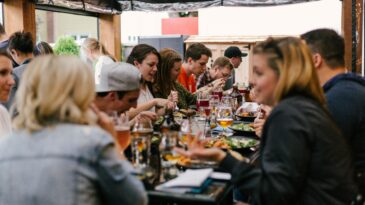
If the greatest commandment is to love God with all our heart, mind and soul, and the second is to love our neighbor as ourselves, then we must stay in community with one another, writes Shani McIlwain.
Blake Brinegar updates on new General Assembly proposals impacting small congregations.
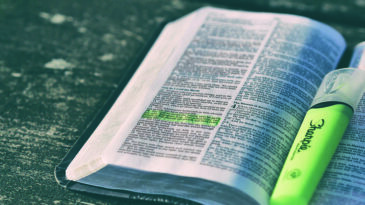
Rob Lowry, the chair of the Presbyteries’ Cooperative Committee for the Examination of Candidates, writes about revamping the PC(USA) ordination process.

After a decade of innovation, growth and “pastoral shopkeeping,” essayist Andy Kadzban realized he had left God out of the equation.
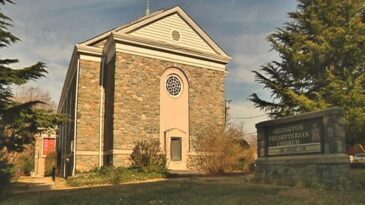
When the congregation at Arlington Presbyterian Church decided to be the church, Sharon Core reflects, profound shifts followed.
Eight unique ministries offer insights into the future of the ever-evolving church.

If we do the work, if we keep listening, we get to co-write the next plausible chapter of our good news together, writes Karen Rohrer.
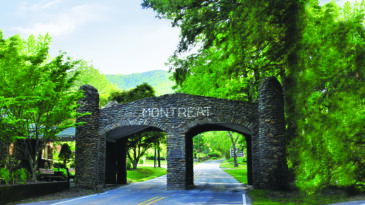
Richard Dubose discovers the vulnerability that settled in with the pandemic allowed Montreat staffers to understand what authentic and faithful hospitality includes.
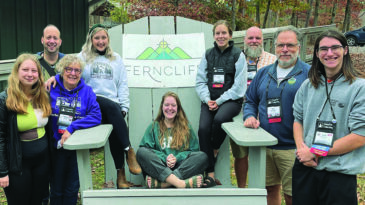
Invitations to other denominations isn’t enough. Instead, Joel Winchip believes, finding the strengths – and weaknesses – we all see in our ministries can help us serve more people.

While lost in the once familiar New York City, Johanna W.H. van Wijk-Bos found two women who offered guidance and protection to the wandering stranger.
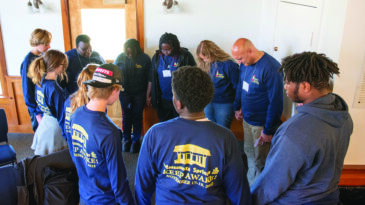
Showing up and saying yes, even when – especially when – we don’t know where that answer will lead, is a major lesson in Christian hospitality, say Colleen Earp and Clayton Rascoe.

Writer Alejandra Oliva meditates on preparing feasts for friends — and strangers.
© Copyright 2026 The Presbyterian Outlook. All Rights Reserved. Privacy Statement. Website by Web Publisher PRO