


Prevention is not only a clinical task. It is a human task, a family task, a church task and a community task, write Michelle Snyder and Christopher Epperson.
Maintaining the status quo can be antithetical to connection and needs, writes Jason Tucker.

Chris Dela Cruz explores how listening can be an act of faith formation, challenging churches to create spaces where young people feel noticed, known, valued and empowered to shape their communities.
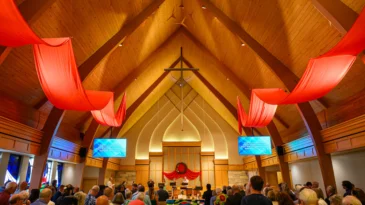
Christy Williams and Brittany Porch reflect on the shrinking path for nonordained Christian educators and youth workers — and what the PC(USA) risks when it fails to invest in those called to faith formation.
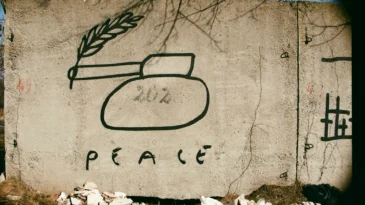
Mihee Kim-Kort shares what remembering the Korean War, American militarism and the church’s witness can teach us.
Jennifer Butler argues that mainline Protestants must reclaim a public, liberating faith to counter Christian nationalism and help heal a fraying democracy.
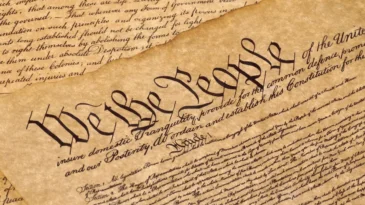
The juxtaposition of virtues and sins of John Witherspoon and other founding Fathers can lend wisdom for our own moment, writes James Calvin Davis.
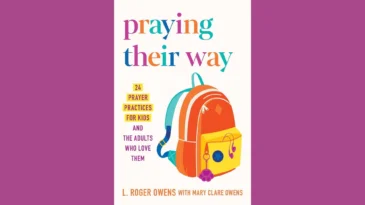
Roger and Mary Clare Owens share how writing a book on prayer together taught them there are no experts — just curious souls learning to connect with God in their own way.
Winterbourne Harrison-Jones reimagines prayer as activism, insisting that true communion with God must move beyond the sanctuary and into the streets.

Poetry is not proclaimed in a vacuum. Neither is prayer. Both teach us to construct our words with care and intention. — Kathryn Lester-Bacon
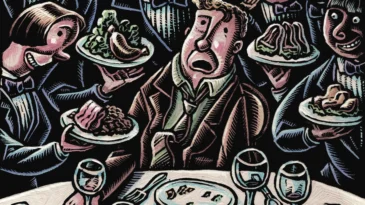
Quincy Worthington recounts witnessing protest and brutality outside an ICE detention center in Broadview, Illinois — and how that moment reshaped his understanding of faith, power and public discipleship.

L. Roger Owens reflects on prayer as both practice and way of life, inviting readers to see every moment as participation in God’s presence.

Tony Stiff explores how disability and queer theology together challenge the church to expand belonging and reimagine true inclusion.
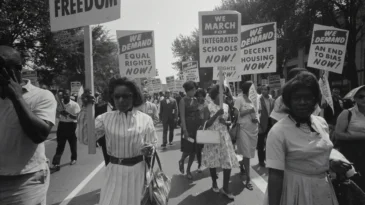
White supremacist institutions cannot be reformed to realize Martin Luther King Jr.’s dream. New structures are needed, writes David F. Evans.
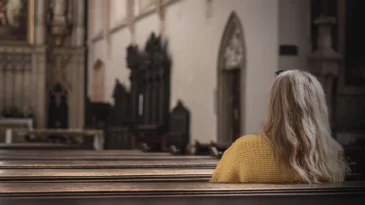
Through stories of exclusion, resilience and welcome, Patrice Gaines examines how transgender Christians are finding and reshaping belonging within the church.
A neurodiversity lens helps churches move beyond ableist expectations and cultivate worship spaces of belonging, writes Jen Bluestein.

Heartache and wonder can coexist, writes Christopher Elwood.

Julie Hester offers writing prompts for you to try during this season of Lent.

Aaron Pratt Shephard writes that even when a child’s life seems to end before it begins, faith in Christ’s resurrection offers hope that every life will yet be born into eternal fullness.

Even joyful transitions can stir grief. During Lent, Christians learn how to face the losses we know are coming and walk toward the cross with hope, writes Vern Farnum.
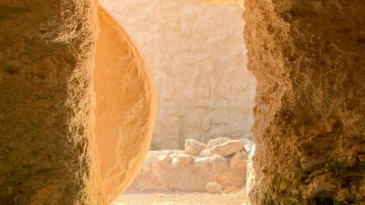
Empathy is the heart of our covenantal relationship with one another, proclaims Chris Henry.

Rubén Arjona writes on how empathy allows us to imagine the other person’s feelings, thoughts and experiences.
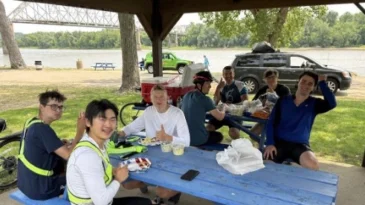
Charlie Berthoud recounts his son’s 4,000-mile charity bike ride from Virginia to California and witnessing remarkable generosity — especially from church communities along the journey.
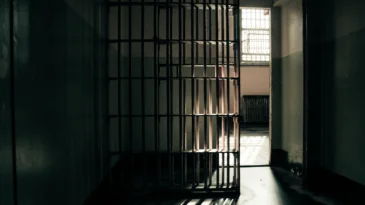
Alfred Walker shares how a 1989 letter from a man who was imprisoned opened a path for ministry.

Mathew Frease frames empathy as a radical, Christ-centered practice that connects people, transforms relationships, and expands our capacity for justice across difference.
© Copyright 2026 The Presbyterian Outlook. All Rights Reserved. Privacy Statement. Website by Web Publisher PRO