Atlanta. The city’s soul still aches from the carnage suffered generations ago when the nation was divided against itself. In recent years, the city has become a healing place, a hub of reconciliation.
Forty years ago, the pulpit of the Ebenezer Baptist Church gave impetus to a movement of racial reconciliation. Twenty-five years ago, the streets filled with celebrating Presbyterians as they reunited after 120 years apart.* And, just a few weeks ago, 15,000 Baptists gathered there, and began to forge another reconciliation, a New Baptist Covenant. We Americans, and especially Presbyterians, might do well to study and emulate it.
It was no small feat bringing these folks together. It took two Nobel Peace Prize laureates to organize this warring branch of the church.
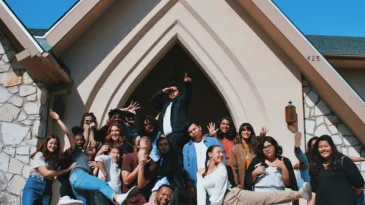
It seems to have worked. Even a casual observer would have been stunned to see the mix there. Black and white Baptists plus Asians, Latinos, and others, came together as if at a family reunion. Women weren’t only in the seats but in the pulpit: praying, preaching and teaching. Also surprising was the denominational mix: various denominations that typically shun each other, at this gathering walked together.
For those aware of recent history, the happiest surprise at the conference came when they spoke of those not present — the fundamentalists who had successfully engineered a takeover of the Southern Baptist Convention over the previous three decades. Those denominational wars had produced plenty of carnage. Hundreds of moderate Baptists had been kicked out of office, squeezed out of influence, and pushed out of the mainstream.
What would they say here in Atlanta, now that they finally had “the numbers,” controlled the microphones, and could whip up the crowds with passionate oratory? Given the nation’s incivility exacerbated as it is by polarizing party politics, what might major politicos like Jimmy Carter, Al Gore, Bill Clinton have to say?
David Gushee, professor of Christian ethics at Mercer University reflects that a subtle but powerful healing took place “as various speakers, especially the white southern Baptists, reflected on their own conflicts with, and breaks from, the Southern Baptist Convention.” He says, “A narrative voice prevailed here, rather than a didactic one, and this trend was most profoundly and unexpectedly exemplified in the impromptu reflections of Bill Clinton on his own history as a Baptist. As the former president told the story of his long sojourn as a Southern Baptist, and attempted to pinpoint the crux of the difference between the prevailing SBC vision and that of those who do not share it, he did so with sympathy and without rancor.”
The interracial mix in the conference helped that along. Says Gushee, ” … just being in the presence of Christian people who have had such grievous wrongs of their own to forgive makes it easier to abandon anger and embrace love and humility ourselves. If black Baptists can forgive and move on after slavery, segregation, and cruel racism, surely white southern Baptists can do the same after our own grievances.”
Oh, there were calls to arms. But they were intended to mobilize not a counterinsurgency against the fundamentalist bureaucrats. Rather, they were declaring war against hatred, against prejudice, against poverty, against consumerism, against exclusivity, against exploitation, against easy religiosity, and against spiritual pride.
Indeed, this was not just a love fest set up for warm fellowship of the likeminded. The conferees challenged one another to engage in transformative mission — the kind that both proclaims the gospel and demonstrates its impact by loving others as Christ loves them. Or, as Atlanta-area pastor Julie Pennington-Russell said, “We never see Jesus until we see him in every face.” Recently installed at the First Baptist Church in Decatur, she urged, “Let love take you by the hand and lead you like a child to a new way of seeing that brother or sister, and look for Jesus in the face of that person.”
Yes, the New Baptist Covenant conference calls out to Baptists and to all Christians to be engaged in mission to the world, the kind that focuses upon the mission of reconciliation. Appropriately, the call has been issued from Atlanta, the city whose soul still aches from the carnage suffered generations ago when the nation was divided against itself.
–JHH
*Next week, The Presbyterian Outlook will commemorate that remarkable, albeit complicated, reunion.