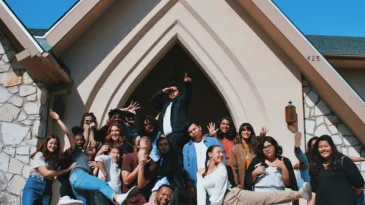
When it comes to Christian camping, Presbyterian style, there’s bad news, there’s good news and there’s really good news.
First, the really good news. Lives are being changed in camp and conference centers unlike anywhere else. Sure, local church engagement forms the rhythm of spiritual disciplines that grow strong Christians. But the heart transplants (replacing stone with flesh), the pouring forth of cleansing tears, the discovery of spiritual friendships and the creating of unforgettable memories just seem to keep coming in camp and conference centers.
Second the bad news. For most church camps, struggle has become the new normal. They have had to double down to keep operating through the recent recession that has hit the economy and the ecclesionomy. Specifically, sponsoring councils’ funds have been drying up, and the camps have had to search out new ways to pay their bills.
They have increased prices. They have launched fund raising campaigns. But, they’ve had some successes — some huge successes (see pp. 10-15) — some facilitated by following ELCA Lutherans and other denominations by strategically incorporating as independent 501(c)(3) corporations.
Not all of those incorporations are going smoothly, case in point being the Stony Point Center just northwest of New York City. SPC’s vision and plans continue to be scrutinized by the Presbyterian Mission Board, as policy would require, with the results still being unknown as this edition of the magazine goes to print. Check out the pres-outlook.org website to get the latest update.
And a few presbyteries’ coffers have suffered such huge losses, mostly due to unrelated legal fees or lawsuits, that they have contemplated liquidating their respective camps simply to dig out of the hole.
Third, the other good news. The reinvention of these centers is bearing fruit. For one thing, necessity being the mother of invention, our camps’ inability to survive by serving just one downsizing denomination has prompted the development of multidenominational outreaches and camper recruiting. Result: a greater breadth of diversity that is actually enhancing the experiences of those attending. It is helping us to overcome our own tendency to retreat into our own enclave with its familiar whinings and parochial inbreeding of ideology. That’s been good.
The cultivation of contributors to supplement campers’ registration fees has generated a much higher level of commitment and connectionalism in the centers’ respective regions of the country. The psychological distance between camp and congregation has been trimmed.
The increase in pricing has elevated the perception of value to campers and their families — and offering generous scholarships is still bringing campers of lesser means into the experience.
And about those reinventions?
Heartland Presbyterian Center near Kansas City determined to ask, “Why?” to everything they do. That prompted them to rework their vision and programming, and to develop new ways of communicating with constituents. Registrations and attendance have soared. Funding has, too.
Calvin Center, south of Atlanta, was recently incorporated, and at the same time determined to develop the very kinds of programs that the presbytery’s trimmed budget has been dropping — so that the real needs of the presbytery and its churches can be strengthened.
 The Compass Points Certification Program for camping leadership has just graduated its first class — five students have passed the required eight courses taught over two years’ time in the program created by the Presbyterian Church Camp and Conference Association (PCCCA) and Columbia Theological Seminary in Decatur, Georgia.
And one constant, the visionary leadership of the PCCCA, a separately incorporated entity that serves both the Presbyterian Church (U.S.A.) and the Presbyterian Church in Canada, gets to pop its buttons as it turns 50 years old this year. Hats off to Joel Winchip, PCCCA’s executive director/innovator-extraordinaire.
So, yes, these are camplicated times. Praise be to God.