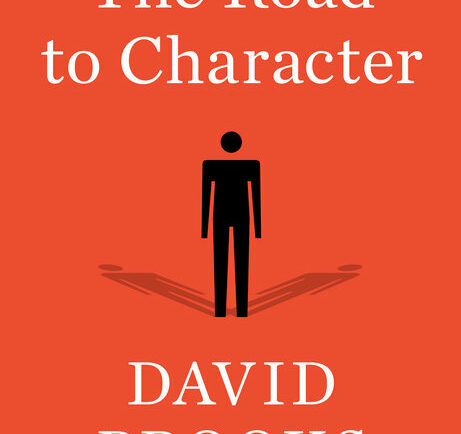
 by David Brooks
Random House, New York. 320 pages
David Brooks is a conservative op-ed columnist for the New York Times who appears every Friday evening with liberal pundit Mark Shields on the PBS News Hour to comment on the week’s events. After receiving a B.A. in history from the University of Chicago, he worked his way up in journalism, writing for the City News Bureau of Chicago, working as an intern for William Buckley’s National Review, reviewing movies for the Washington Times and books for the Wall Street Journal before reaching his current positions. He has also written several books, including “Bobos in Paradise: The New Upper Class and How they Got There.”
Given his background and profession, it seems odd that he would write a book about character that is so rich in insights about modern Americans and that seems so obviously informed by a Christian perspective, especially that of theologian Reinhold Niebuhr. Brooks, however, is of Jewish descent and is not a Christian.
Brooks begins by distinguishing between résumé virtues and eulogy virtues. The former are the skill-sets and aptitudes individuals bring to their professional lives. The latter are the deeper aspects of who they really are, character traits usually remembered in eulogies – honesty, kindness, love, courage and faithfulness. Following the thought of Rabbi Joseph Soloveitshik in “Lonely Man of Faith,” Brooks reframes the distinction between the two sets of virtues in terms of the two accounts of creation in the book of Genesis. Adam I, he explains, exhibits résumé virtues in that he is career-driven and task-oriented: one who would build, explore and multiply. Adam II, in contrast, is relationship-oriented and seeks to serve a higher purpose. Both Adam I and Adam II are important and positive aspects of human nature, but Brooks believes that modern American society has overemphasized the first and nearly ignored the second. Sadly, he laments, many young people don’t even have the moral vocabulary to understand the difference between the two.
Having explained the thesis of his homily in the first chapter, Brooks then illustrates his point with the stories of eight fascinating characters: Frances Perkins, Dwight Eisenhower, Dorothy Day, George Marshall, A. Philip Randolph, George Eliot, Augustine of Hippo and Samuel Johnson. Only two of these individuals were outstanding Christians. The others were nominally religious or not religious at all. What they have in common is that they began their lives in difficult circumstances or with unfortunate personal traits that they needed to overcome in order to become the remarkable individuals we know today. In other words, they were not born people of character, but they made themselves through developing character.
Brooks’ theme, of course, is not new. Others have long ago noted that the 19th century producer culture emphasized character formation, while the 20th century consumer culture emphasized personality. Brooks wisely does not present the past as a golden age to which we should return. Rather, he suggests the more modest goal of restoring the balance between Adam I and Adam II. This is a thoughtful book, a low-key and much needed jeremiad with occasional surprises – for example, a beautiful passage on love in the chapter about George Eliot – that will instruct as well as convict.
MICHAEL PARKER is a PC(USA) mission co-worker who serves as the director of graduate studies and professor of church history at the Evangelical Theological Seminary in Cairo, Egypt.