by Scott Parker
Hadara means “good culture;” it refers to something that’s a positive influence on the community. Education, for example, is hadara.

Last May I spent a week with my friends Georges and Rima (not their real names), a husband a wife who serve a church in southwest Syria in a village that is fairly safe from the violence. Because it is a safer region, hundreds of families forced out of their cities by ISIS have come to this area looking for help.
I quickly learned that every day, as soon as the sun rises, the front door begins sounding with the knocks of a steady stream of visitors who bring all manner of needs: food, rent money, help with doctor bills, medicine.

Nobody is turned away. Rima and Georges make sure that anyone who comes through their door, at the bare minimum, gets a food bag. These bags typically hold the essentials: grain for bread, lentils, cans of tuna for protein and olive oil — we’re in the Middle East, trust me, it’s an essential!
One morning, I helped put these bags together. A man named Dr. Bassam came to the church with a pick-up truck that we loaded with food bags for him to take to people who lived too far away to come themselves. It was quite a thing to watch the process set up in the church basement: boxes of food stacked against the wall, lines of bags in the process of being assembled, giant vats of oil to pour into recycled bottles, piles of children’s shoes donated from local stores.
“The first bag that someone gets is important because of the food. The second bag is important for the heart,” Bassam said.
Then, as we loaded these essentials into the truck, he said something else that really struck me: “There are other churches doing this kind of thing, but I only see them taking care of their own people. But this church takes care of everyone — Catholics, Protestants, Muslims, everyone. If someone can’t get help anywhere else, they know they can come here.”
And he was telling the truth.

The next day, there was another early morning knock. At the door were six Muslim widows, each dressed in black. Each had a husband in the Syrian Army who had been killed by ISIS. They are often called a “wives of heroes” or “martyrs’ widows.” I shared coffee, time and prayer with them, and before they left, Georges and Rima made sure that each one was carrying a bag stuffed with food and a little cash.
After they left, Georges explained to me that when a soldier in the Syrian Army is killed, the family receives a modest “martyr’s salary” to help with the family’s hardship and loss of income. However, in the Muslim culture, that inheritance doesn’t go to the widow or her children. Instead, it becomes the property of her father-in-law, who may (but typically does not) use any of the money to provide for the widow. So, when their relatives leave them high and dry, these widows know they can knock on the door of this Presbyterian church and Georges and Rima will give them something to keep going.
It is tough right now to be a Christian in the Middle East. Many Christians are leaving the homes where they were born — it has become too dangerous to raise their kids, too hard to make ends meet. And in this little village I visited in May, people are wondering: Will Georges and Rima leave? Will the people of their Presbyterian church continue to leave?
A Muslim woman approached Rima with that very question. She cried out, “You people cannot leave. You are hadara. You are good culture — you are the positive, the life, the hopefulness that keeps our community going.”
Syria is not the only place where the Christian minority is living in such a way. I have seen hadara up close in Iraq, as well. In October, I spent two weeks in northern Iraq where thousands of families were driven from their homes when ISIS took control of Mosul and the surrounding Nineveh Plain in August of 2014. In the midst of mass displacement and families desperate to flee this chaotic region, I discovered Christian communities intent to remain — congregations who believe their call is to be light in the darkness and help as many as they can regardless of their religion.

A Presbyterian church in a city about 100 miles from Mosul responded to the crisis by opening their doors to families with nowhere else to go. Sunday school rooms became bedrooms (six to eight members of a family lived in each classroom). The church parlor transformed into a kitchen to accommodate daily meals for the 16 families (about 70 people) who now call the Presbyterian church campus their home. None of these families have a Presbyterian background (most are Catholic and Orthodox). What they hold in common is that though they were strangers 18 months ago, now they are treated as family.
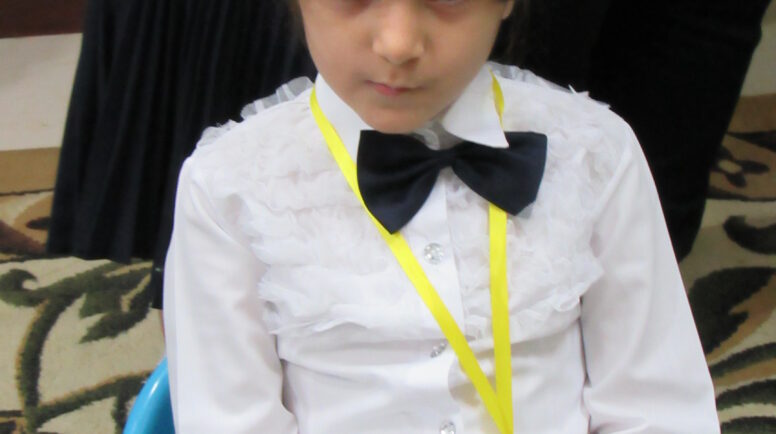
This particular Presbyterian church had a reputation for hadara long before these recent tragic events. In 2006, after assessing the needs of the community, the congregation began a kindergarten. Having started with 26 students, by 2014 the school enrolled over 400 children. Ninety-seven percent of these children are Muslim. Although the school does not teach Christian doctrine, they openly teach the values of Jesus, who is respected as a prophet in Islam.

Shortly after the school opened, some local imams began discouraging Muslim families from sending their children. This prompted a confrontation from a group of angry Muslim parents. The message from these families was this: “The Islamic schools are becoming more and more fundamentalist and teaching our children violence and hate. At the Christian school, they are learning a way of love and peace. We will send our children there.” A Muslim father testified that the Christian school is “teaching my son to become the kind of Muslim I would like to be.” A pregnant mother simply stated, “Not only will my child continue to attend the Christian school, but the child I am carrying will attend as well.”
This Iraqi congregation has also endeavored to be hadara to the most marginalized group in their society: imprisoned women. Women who have lost their husbands to war will sometimes resort to prostitution to provide for their children. If arrested, their situation becomes even more grim. The Iraqi prison system expects the relatives of the inmate to provide for basic needs, but women imprisoned for prostitution are typically shunned and abandoned by their family. It is the Presbyterian congregation that has chosen to come alongside these women.
Today, the congregation’s prison ministry regularly provides visits, personal care items, pastoral care and assistance for young children who are incarcerated along with their mothers. However, when this ministry began six years ago, this Christian group was prohibited from visiting the predominantly Muslim inmates. The congregation’s pastor responded to the prison officials by saying, “You must understand that God has instructed us to do this, and by preventing us to visit the inmates, you are preventing us from obeying God.” In Islam, it is unthinkable to prevent a person from obeying God, regardless of one’s religion, and the officials allowed the congregation to visit. Within a short period of time, the prison officials and guards became strong advocates of the ministry, encouraging regular visits.
Among the necessary items brought to the incarcerated women, the ministry team includes towels — crocheted with the words “God loves you” in Arabic. These women are almost entirely Muslim, and according the congregation’s pastor, “Islam has 99 different words to describe God, but none of these words describe God as love — personal, redemptive love.” The message of these towels, along with the compassion and kindness incarnated in these visits, convey a radical and previously unheard message to these inmates.

During one of these visits, a leader noticed a cross made from empty cigarette packets hanging on the wall on one of the cells. When asked about this, the woman responded, “You have told us about the crucified one, and that we can find hope in him, and I need all the hope I can get.”
Being hadara has been a way of life for Middle East Christians long before the current crises. Now, hadara is their reputation. In late July of 2014, as ISIS was forcing Iraqi Christians from their homes in Mosul and the surrounding Nineveh Plain, Nahi Mahdi, host for the Arabic talk show Asia TV, broke down on live television, weeping for his fellow-Iraqis: “These are our flesh and blood … who does (ISIS) think it is to drive out our fellow countrymen?” A guest on the show added, “The Christians have done nothing wrong. They haven’t hurt a soul. On the contrary, they are peaceful people, who love all sects. They are honorable people, with high moral standards.” Mahdi concluded by declaring, “We stand 100 percent in solidarity with them.”
This has happened time and time again over the past few years: Muslims pointing to the Christians in their community and declaring that they are the hadara — they are the good culture in the community; they are the ones who run the honest businesses; they are the ones whose doors will open if there is a need.
In Syria, over four years of war has taken its toll. The city of Aleppo, once boasting more than four million residents and growing industry, is a shell of its former self. Though some residents remain, the water and electrical infrastructures have been destroyed, which makes daily life an even greater ordeal.

It’s the Christian churches — the religious minority — who are addressing the water problem in Aleppo. Churches have taken it upon themselves to drill wells on their property and make the water available to the community. Yusef, the pastor of an Armenian church in Aleppo, tells that every day the water lines at his church begin around 4 a.m. and keep going until after 10 p.m.
Two years ago, while making his way to the pump one morning, Yusef was praying. He had no idea how he was going to run the pump that day. Everything in Aleppo runs on fuel generators because the city’s electrical grid was destroyed in the fighting, but fuel is expensive — if you can get it.
When Yusef checked the church’s generator, he discovered that the tank was full. A Muslim man who owns a fuel station across the street from the church had helped. This man kept his distance from the church, but Yusef learned that it was this man who filled the tank.
Later in the day, Yusef found the station owner, thanked him, and offered to pay for the fuel. But this man refused, saying, “No. I have been watching you. Every day you provide free water for anyone who needs it — whether they are Christian or Muslim, regardless of what political party they belong to. You have loved our community. This is my way of saying ‘Thank you.’”
This is how Christ’s church is fighting extremism, helping people endure and creating hope in the Middle East: by being hadara.
 SCOTT PARKER has been living in Beirut, Lebanon, with his wife, Elmarie, since 2013 as associates for ecumenical partnerships with the PC(USA). Elmarie is the PC(USA) Regional Liaison to Iraq, Syria and Lebanon. Scott serves as writer-in-residence for Iraq, Syria and Lebanon and as communications specialist with the Middle East Council of Churches.