 My friend, a retired Lutheran pastor, confessed in a sermon that he was a believer on Sunday, but by Thursday nearly an atheist. Yes, he was overstating the case — maybe. But he was also telling it like it is. Our society, which for generations offered at least tacit support and even approval of faith — and particularly Protestant Christian faith — has now withdrawn it. No, we are not being persecuted. There is no “war on Christmas.” Nevertheless, the general public finds itself somewhere between indifference and suspicion when it comes to faith of any kind, including Christianity. Members of churches are not exempt, either. Reasons for this are many, including recoiling from aggressive and triumphalist forms of fundamentalism (Christian and otherwise); headline stories about clergy sexual abuse; distrust of institutions; and widespread misconceptions of who we are and what we are about.
The elephant in the room is this: Our culture challenges faith every day, sometimes directly, more often indirectly. Most follow the lead of the dominant culture either all the time or some of the time. Faith unsupported can easily fade, and we end up running on fumes. No one is exempt from this relentless challenge, including the person in the pulpit.
Dare I speculate that the average church member is likely to feel unequipped to deal with the very real questions that arise when constantly exposed to the quiet but real skepticism that has displaced respect for religious faith? Literacy in matters of Christian faith, whether basic acquaintance with the Bible or doctrine, has not kept pace with the need for wrestling with popular and persistent objections, not to mention meeting more sophisticated questions with serious responses.
No doubt many of those whose responsibility it is to preach the gospel regularly are fully aware of the challenge, and do their best to meet it. Preachers are not preaching to the congregations of even 10 or 15 years ago, even when the same people are listening. When preachers don’t get it, seminaries and presbyteries and others providing continuing education would do well to help them get it. But my plea here is for the church to make a substantial recommitment to adult Christian education and formation in every congregation.
 Yes, of course, almost every congregation offers some sort of established class or Bible study, and many offer several, even many, options on Sunday or other times. My guess is that a relatively small percentage of members actually participate. Even if that is the case, there is no doubt that people who study together and people who don’t are struggling with theological questions whether they name them as such or not, and many would welcome a chance for serious conversational exploration if they were assured of a safe place to do it.
One way to broaden access to our own members might be to consider how to make use of life transitions to open a conversation. For example: leaving home; first job; marriage; pregnancy (a transitional moment for prospective grandparents, too); childbirth; moving from one community to another; losses of various kinds (broken relationships, death of a friend or family member, lost job); illness; children leaving home; changing churches; public service; new job; retirement; and various national or community crises big enough to arouse questions or anxiety. People in transition may welcome an invitation to sit down with others in similar transitions with the guidance of a leader who is both a sensitive listener and able to lead participants in thinking theologically as appropriate to the moment. Will this take a lot of time? No doubt. But I am beginning to think that pastoral job descriptions may need to be altered to allow for more face-to-face encounters that may develop slowly and require time to bear fruit. Such is the moment in which we find ourselves.
Of course, instruction that responds directly to popular misconceptions and widespread critiques of religious faith and its relation to public policy are useful, too. One pastor offered a class that reflected on letters to the editor of the local newspaper, in which there was no lack of “religious” opinion. Are members impatient with the long Great Thanksgiving at Communion? A class focused on that prayer can lead not only to deeper appreciation for it, but can open up a serious study of biblical themes and images. Similar engagement may also be found in a study of the Service for the Lord’s Day as a whole, or of the liturgy for baptism, or the theological themes exhibited in the organization and contents of the hymnal. Our many outreach ministries and service projects offer an opportunity to dig into the theological soil that grounds them.
One transitional moment that is often under-utilized is church officer training (or even training for officer nominating committees). In retrospect, I wish I had spent more pastoral time working on the first three constitutional questions than on polity. Those questions, focusing on Christ and the triune God, the authority of Scripture in the church and the essential tenets of the Reformed faith require more than a quick pass-by, as though they are too elementary to require much attention. They are foundational, profound and spiritually and intellectually demanding. It is important for elders and deacons to explore these questions deeply if they are expected to serve competently in a time of relentless challenges to Christian faith.
Augustine, Calvin and others have described the church, metaphorically, as a “mother.” The word “mentor” might work as well. The mentoring responsibility is indispensable for a confessional church like our own. It involves not only the furnishing of the mind (beliefs), but also formation — a kind of live apprenticeship in embracing faith with heart and soul.
Perhaps most mentoring energy will be devoted to our own members, but no matter how diminished our public influence, searching souls will continue to approach the church, however tentatively, looking for faith. For them we would do well to offer something like a “front porch,” as someone has suggested. The front porch image suggests a place for conversation that is deliberately open-ended, without the expectation that after three or four weeks the participants will be asked to decide whether they want to join next Sunday, and pledge cards handed out. The challenge of finding or devising a front porch that is neither intended or perceived to be a trap for the unwary is a huge one, but certainly not beyond our capacity to imagine.
A first step is probably to spend some time helping church officers and as many of the congregation as possible to understand that we have all crossed a frontier into a new era, in which “new occasions teach new duties,” and to explore their own experiences in relation to that thesis. My plea is not to add one more programmatic emphasis to calendars already loaded. It is to understand that we have emerged into a new era, in which catechesis (instruction and formation) rises to a position high on the list of priorities, with a target group that focuses more often than not on those already baptized and confirmed. Pastor, teaching elders — will you take the lead?
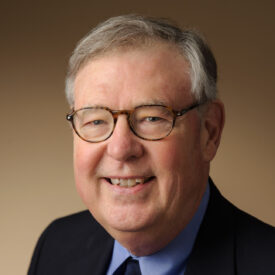
 Ronald Byars is professor emeritus of preaching at worship at Union Presbyterian Seminary. He lives in Lexington, Kentucky.