 John Brueggemann and Walter Brueggemann
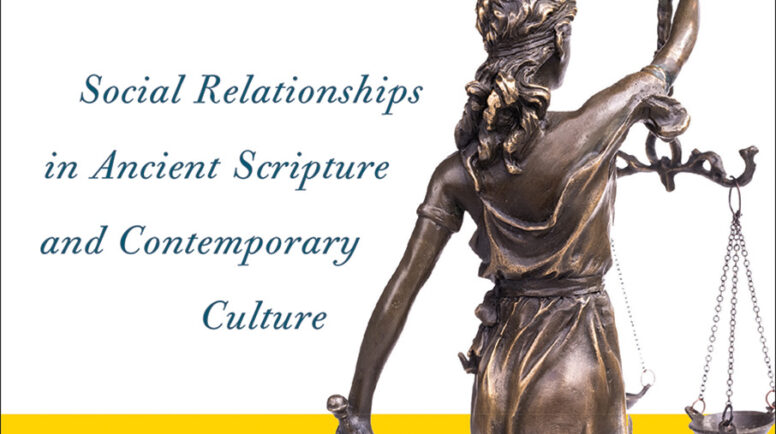
Westminster John Knox Press, 202 pages
“Something is torn in the fabric of American society,” the authors announce in the book’s first sentence. Then Walter (the biblical theologian) and his son John (the sociologist) have a conversation between father and son and between the epistemologies of science and faith. Walter asserts: “We do not need to choose between these two practices of speech and indeed we dare not choose between them. It is crucial to be bilingual. If we have only analytic speech, we will end in despair. If we have only imaginative, generative speech, we will end in illusion.”
Methodically these two explore the six moral foundations identified by Jonathan Haidt, a moral psychologist, in his book “The Righteous Mind: Why Good People are Divided by Politics and Religion,” which aptly describes the propensity of progressives to focus on two of these six foundations while conservatives tend to incorporate all six of these moral foundations in their moral frame. Our differing stances tend to be predispositions that a person’s “logical” energies then explain. Rarely, in the context of relational trust and private reflection, can we allow ourselves to be stretched in a new direction exhibiting a “reasoned judgment” that is at odds with our propensity. Most of the polarization we experience in our culture now is due to our unwillingness to engage the other’s perspective with any sort of relational openness. We readily self-isolate ourselves into cul-de-sacs of like-minded people who only reinforce our propensities rather than stretch them. We are invited to understand the moral foundations embraced by “the other” so that we might have a constructive exchange.
The book features conversations around these six moral foundations:
- Care vs. harm;
- Fairness vs. cheating;
- Liberty vs. oppression;
- Loyalty vs. betrayal;
- Authority vs. subversion; and
- Sanctity vs. degradation.
Using this frame, the authors aptly “illuminate the moral disorder of our time.” Much that is thrown about by the pundits (left and right) has no basis in sociological research. Much of what is asserted as biblical morality is contested in Walter’s exegetical insight. His contrast of Josiah and Jehoiakim is prescient. The critical perspective of the biblical writers to the leaders of their day (Solomon, David, Ahab, etc.) resonates with our current reality as described in John’s presentation of sociological research. The biblical analysis of Job and the “catalog of the ways of generative righteousness upon which society depends” expose a gaping vacuum. The hedonistic individual expression (“I’ve got to be me”) and the commodification of everything is the antithesis of sanctity.
Karl Barth proclaimed that a preacher should have a Bible in one hand and a newspaper in the other. Equally apt is that the preacher should have the Bible in one hand and good sociological research in the other. We are at a moment when the forces of empire are rising and shopping for spiritual imprimatur. Books like this one are essential reading for those pledged to the authoritative Word, insightful about the human condition and ready to be in conversation with those who falsely imagine a “truth” that is not filtered through the reality of pain.
 G. Wilson Gunn Jr. is the executive presbyter of National Capital Presbytery.