Afriyie Maxine Huie dances. Ashley Armistead runs. Carvel Bennett teaches.
This is how they spend much for their time. The wonder of movement and music together brings Huie joy. When life is stressful, Armistead puts on her running shoes. The physical activity helps clear the clutter of senseless noise so she can hear the work of the Holy Spirit. And Carvel Bennett loves to learn and to ask questions.
As it turns out, these are the very things that God uses within them to help them reach out to others. So instead of using words, they use these talents and gifts to preach their sermons to those they know day in and day out.
These are their stories.
The courage to dance
Most Sunday mornings, Afriyie Maxine Huie begins her worship of God by dancing into the sanctuary at First Afrikan Presbyterian Church in Lithonia, Georgia, outside of Atlanta.
She is the co-chair of the church’s worship dance team, Tamba Issa. She has been a member for 16 years, and is a ruling elder.
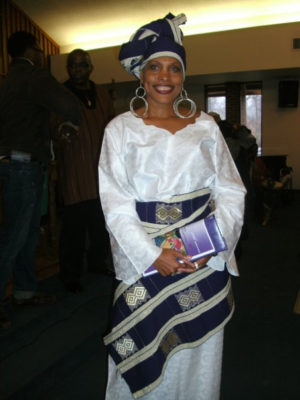
“The dance is purposeful,” Huie said. “We dance to help usher in the Spirit.”
But it has not always been this way for Huie.
For more than 20 years, Huie only went to church for special occasions with her family because she suffered some deep and painful wounds inflicted by fellow church members in her youth. A native of Jamaica, Huie said she witnessed hypocrisy in the leaders of the Methodist congregation where she was raised. And one of those leaders, who was also her elementary school principal, sexually assaulted her when she was just a child, still in grade school.
She remained a faithful churchgoer until she was a teenager, because her grandmother – who helped raise her – expected her to go to church. And she had been taught that to tell her grandmother the truth of her struggles and pain would kill her grandmother.
“I didn’t say anything, because I didn’t want my grandmother to die,” Huie said. “And then, as a teenager, I developed such a bond with my friends. We are still friends to this day. That is what kept me in the church in those years.”
But by the time she was 18, Huie was done with church.
“I think that pain and hypocrisy just built up within me,” Huie said. “And it was all just too much to bear.”
However, she still loved to dance. In her youth, she would go to the clubs to dance at least two or three times a week. Her love of dancing was always there, she said. And, in some ways, so was her love of the church.
It just took some time.
Then in 2001, when her mother died unexpectedly, Huie said she felt God calling her back to church.
She tried to listen to services online, but decided that nothing would substitute for actually attending worship. After attending her grandson’s baptism at First Afrikan Presbyterian Church, she knew she’d found her home.
The church’s African-centered theology and teaching helped Huie learn more about herself, to find her identity and to better understand her story.
“This was a place that helped me learn who I was,” Huie said. “I was blown away. I immediately joined the family. My hungry spirit started to get fed.”
Then, it became a place where she could dance. In the sanctuary, she learned to dance with courage. She said she wasn’t as self-conscious and worried about whether people were looking at her. She learned to move when the Spirit prompted her to do so.
 Now, she dances with a purpose — in the church and outside the church.
A physical therapist by trade, Huie said she finds herself singing hymns with some patients, giving them a rhythm to follow when they try to complete their exercises. The dance team from First Afrikan Presbyterian Church has even gone into nursing homes together to dance for patients.
And Huie joins in with the patients at nursing homes in their physical therapy classes, dancing with them to bring them joy.
One woman, whom Huie works with, struggles just to breathe every day. And it was dance that helped her to come to life, Huie said.
The woman was once a singer, performing for soldiers at Fort Gordon in Georgia. But severe respiratory therapy illnesses had robbed her body of its strength, and of her ability to move and breathe freely. Now, she needs three tanks of oxygen a day to help make it through basic tasks.
“I was able to find some 80s music on YouTube during one of our sessions, and she just started moving her legs,” Huie said. “She said, ‘Oh, I love this song.’ Suddenly, she was transformed.”
A place to be themselves
Ashley Armistead started Let Me Run, a nonprofit for young boys, because she was tired of hearing people excuse bad behavior by saying, “Boys will be boys.”
She knew better.
After all, she is the mother of two boys.
Selwyn Avenue Presbyterian Church in Charlotte, North Carolina, helped teach her a deeper truth: We are all God’s creation — called to be whole.
Armistead has been a part of the congregation at Selwyn Avenue Presbyterian Church for 21 years.
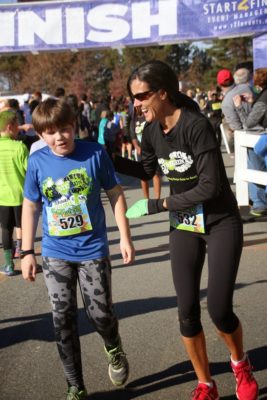
When she and her husband joined, they were expecting their first child, Grant. Armistead was shy and carried around the same stereotypes as everyone else, she said.
She said the church’s congregation was authentic, the sermons powerful and the Christian education director, Emily Phillips, made them, as new parents, see their children for who God created them to be instead of putting them in a box.
So, as a result, a lot has changed in those two decades.
Armistead’s boys are now 18 and 20 years old. Armistead has lost a lot of the worry, shame and fear that she had at first. And she is now a ruling elder there.
“The church gave me peace and confidence,” Armistead said. “And they did such a good job teaching us to look at everyone as God’s creation, and not to stereotype others. Boys and girls are both designed to think and feel. We shouldn’t gender those things.
“I saw that my sons could be empathetic and little boys full of justice,” Armistead. “But all day, I would hear people say, ‘Boys will be boys.’ I couldn’t shake that from my mind. It got to where I couldn’t sleep it bothered me so much. I began to ask God to use me.”
God has.
A mother of boys, she wanted to reach boys. And, because she loved to run herself, she thought that running would be the way she could reach them.
“Before we first started, I ordered every nonprofit management book I could find and started reading,” Armistead said.
 Armistead started Let Me Run in 2009 with 14 boys. Now, the organization is in 29 states, and it has served more than 20,000 boys, all between the 4th and 8th grades. Those boys all meet twice a week for seven weeks after school, and coaches help train the boys to run and they help them set goals for their running as well as for their life and their relationships.
“We are trying to teach our boys, ‘Be who God created you to be because we get into a lot of trouble when we try to be something else.’ We see that loneliness is killing our men. So we try to help them build relationships.”
The boys are encouraged to reach their full potential — physically and emotionally, Armistead said. And the training they undergo helps them prepare to run a 5k race at the end of the fall and spring terms of the program.
“One of our boys, he wanted to be invited to a party before he entered the 5th grade,” Armistead said. “That was his goal. We helped him, and he finally had the confidence he needed to make a friend. He finally had the confidence to talk to someone he wouldn’t normally talk to. And he was invited to a party.”
Always learning
It does not take long for Carvel Bennett to confess that he has always been a bookworm.
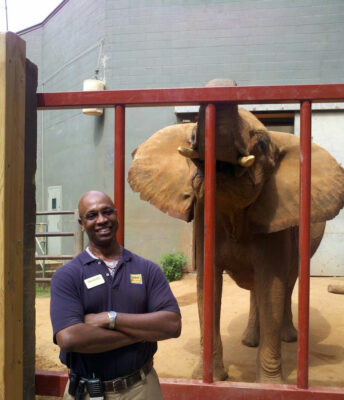 As a young boy, he loved reading “The Hardy Boys” series and anything about animals. He still reads – but focuses on books about Scripture a bit more.
“I read a lot,” Bennett said. “And even though I have not been to seminary, theology and religion has always fascinated me. In this community, in my church, it is encouraged. And I love the questions and the discussion.”
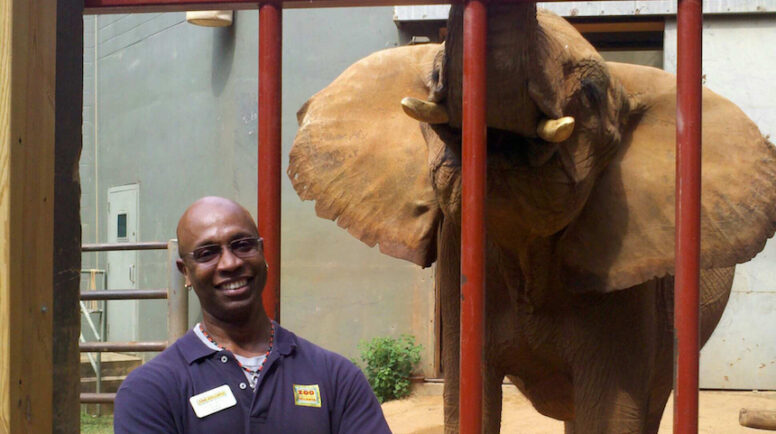
That love of reading and discussion has led him to become a teacher at Zoo Atlanta, a leader of professional development classes and the interim director for religious education at the First Afrikan Presbyterian Church in Lithonia.
A native of Jamaica, Bennett moved to New York City when he came to the United States. But then, in the 1980s, college brought him south — first to Tuskegee University in Alabama, and then to Atlanta where he studied at Clark-Atlanta University.
 He studied marketing at Tuskegee University, but not before he nearly obtained a degree in agri-business and pre-veterinary sciences. And at Clark-Atlanta University, Bennett earned his master’s degree in business administration.
All of those studies, he said, set him up to be able to work both as an associate dean of students at Morris Brown College and then as a part-time educator at Zoo Atlanta, where he teaches animal sciences and conservation.
So, some days, Bennett teaches professional development and team building classes for those in the corporate world. And on other days, he teaches grade-school kids about animals and the earth. And when he’s not teaching in those settings, he’s teaching Bible studies at church.
Bennett was raised in a Presbyterian church, and became a member of the First Afrikan Presbyterian Church in 1999. A year later, he became a Sunday school teacher. And now, he’s also served as a ruling elder on the church’s session.
He was just recently named the church’s interim director for religious education.
To him, all three of his roles are ways for him to minister to the community.
 In his professional development work, Bennett helps people search for their purpose in life rather than a job that’s just a paycheck. When he’s teaching about the earth and animal sciences, he feels as if he’s helping children better understand how they can be responsible caretakers of the planet.
“What I like about the Presbyterian church is that we are more liberal and less theologically dogmatic,” Bennett said. “We talk in Bible study about our ‘God-talk.’ Who are you on Monday through Saturday? What is that you do Monday through Saturday? It should be the same thing you do on Sunday.
“It is about how you live out your theology as opposed to following a whole bunch of rules.”
 Charmaine Smith-Miles is the pastor of Little Mountain Presbyterian Church in Abbeville, South Carolina.