LOUISVILLE (Outlook) — The Presbyterian Church (U.S.A.) has appealed a defamation case involving Eric Hoey, who was formerly the PC(USA)’s director of evangelism and church growth, to the United States Supreme Court.
Hoey was one of four men caught up in an ethics investigation involving the 1001 New Worshipping Communities program, and lost his job with the denomination in 2015. Not long after that, he filed a defamation case against the PC(USA).
The PC(USA) is now appealing a 2018 ruling of the Kentucky Supreme Court involving that case.
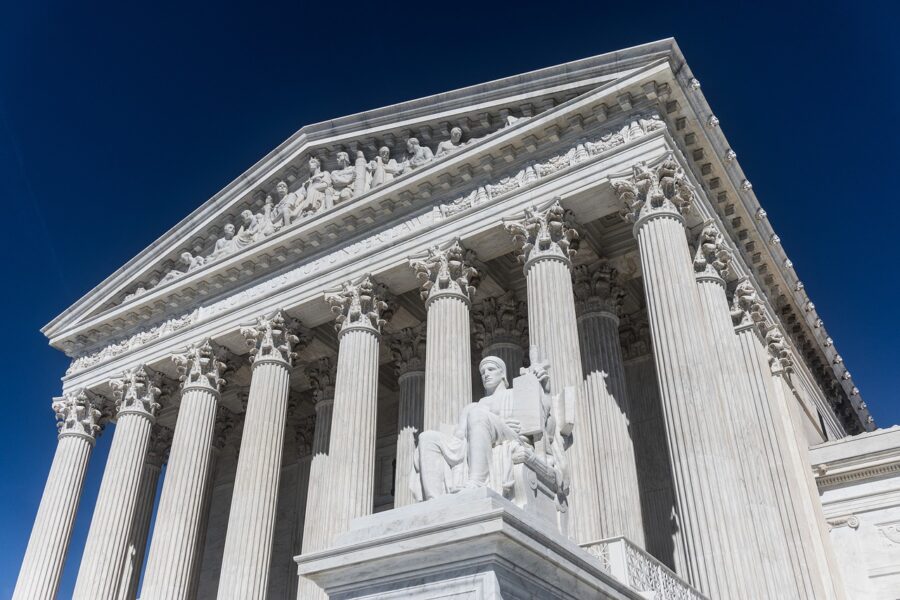
On April 30, John Sheller, an outside counsel representing the church, filed an application for a stay of that Kentucky Supreme Court decision with Justice Sonia Sotomayor.
On May 6, Sotomayor denied that application.
On May 8, Sheller filed an application again, this time with Justice Neil Gorsuch.
On May 14, that application was distributed for conference by the full Supreme Court, scheduled to be considered at conference on May 30.
“Distributed for conference” means the court will decide whether to grant a writ of certiorari – which takes the agreement of four of the nine justices – and agree to hear the case. Each year, the court receives thousands of petitions, but generally agrees to hear roughly 80 to 150 cases.
In the application, Sheller contends that the Kentucky Supreme Court ruling violates the First Amendment of the U.S. Constitution and that scrutiny of the denomination’s ethics policies “falls well beyond the purview of secular courts,” falling under what’s known as the ecclesiastical-abstention doctrine.
Sheller also argued in the filing that “improper governmental intrusion into religious affairs constitutes irreparable harm.”
Sheller’s filing states that “the Church adjudicated that Rev. Hoey committed a violation of the Church’s ethics policy by mishandling funds that were gifts from God. …Judicial assessment of whether Rev. Hoey did, in fact, commit an ethics violation requires a determination of what constitutes an ethics violation—a question that would necessarily entangle the courts in religious discipline, governance, and doctrine prohibited by the First Amendment.”
The Kentucky Supreme Court, in a 4-3 ruling issued in September 2018, had upheld a decision from the Kentucky Court of Appeals, sending the case back to state court in Kentucky so that Jefferson Circuit Judge Brian C. Edwards could allow some limited discovery in the case. The Supreme Court essentially determined that limited discovery – in which the attorneys for both sides provide documents and sworn statements about what happened – should be permitted in order for the trial court to rule on whether the PC(USA) should be entitled to ecclesiastical immunity.
On Feb. 14, 2019, the Kentucky Supreme Court denied a petition for rehearing in the case.
On April 12, 2019, the Kentucky Supreme Court denied a motion for a stay.
The church is now appealing the Kentucky Supreme Court’s 2018 ruling to the U.S. Supreme Court.
Policy changes
In a development that is perhaps not unrelated, there have been some policy changes this week within the PC(USA) regarding the use of outside lawyers — possibly an indication of internal discussion or debate at the top levels of the denomination about the course that’s being taken.
On May 14, the board of the PC(USA), A Corporation (which is the corporate entity for the Office of the General Assembly and the Presbyterian Mission Agency), met in closed session. The meeting was apparently quickly called, and no public announcement was given in advance of the meeting, although the PC(USA) Open Meetings Policy requires such notice.
The A Corporation board took action during that meeting (5-14-19 ACorp resolutions).
That action states, in part, that the stated clerk of the General Assembly has “authority with respect to certain litigation matters, including certain matters involving potential interpretation of the United States Constitution and its First Amendment or interpretation of the Constitution of the Presbyterian Church (U.S.A.). The Board of Directors will to the fullest extent possible respect, take action consistent with, and direct counsel to take action consistent with, that authority [of the stated clerk] in connection with litigation against the Corporation.”
The action also states that any directions from any prior board of directors of the A Corporation “with respect to instruction of, and reporting by, outside counsel in any litigation matter … have been rescinded.”
The members of the Presbyterian Mission Agency Board previously served as the A Corporation board members as well, until 2018 General Assembly changed that and reconfigured the A Corporation board, following recommendations from the Way Forward Commission.
The action taken May 14 outlines an approach by which, from now on, outside counsel would take direction from the acting general counsel of the A Corporation or the co-chairs of the A Corporation board.
Status hearing
The Hoey defamation case came up for a status hearing in Kentucky state court on May 16, before Judge Edwards. In that hearing, R. Dale Warren, a lawyer for Hoey, asked Edwards for permission to proceed with a request for discovery despite the petition pending before the U.S. Supreme Court.
“The likelihood of five justices granting a stay in a state court discovery matter … is very, very small,” Warren argued.
Sheller contended that permitting discovery could cause irreparable harm to the PC(USA), and said: “I think we should let the other 8 [U.S. Supreme Court] justices take a look at this. … It’s not a mere discovery dispute,” but a First Amendment issue that potentially could cause harm to the church.
Part of what discovery in Hoey’s case might potentially uncover, if it were allowed to proceed, is more about what happened during the ethics investigation of the 1001 New Worshipping Communities program. That investigation rocked the denomination when it came to light in the fall of 2014 and continued to play out publicly and painfully over the course of many months.
The 1001 program is the denomination’s effort, endorsed by the 2012 General Assembly, to create 1001 new worshipping communities in the PC(USA) from 2012 to 2022.
An internal PC(USA) ethics investigation found that four employees from the PC(USA)’s national staff were involved in an unauthorized plan in which funds were channeled from the PC(USA) to an independent nonprofit corporation set up in California.
All of the money was repaid, and Linda Valentine, former executive director of the Presbyterian Mission Agency, has said none of the four acted for personal gain.
Despite that, four men involved – Roger Dermody, the PC(USA)’s deputy executive director for mission; Hoey; Philip Lotspeich, coordinator of the 1001 program; and Craig S. Williams, mission catalyst for the West for Presbyinnovate – were found to have violated the denomination’s ethics policy, and lost their jobs with the church in June 2015.
Marilyn Gamm, chair of the Presbyterian Mission Agency Board at the time, refused to say whether the four men were resigned or were fired or whether something else had happened, describing that as a “private personnel matter.”
Valentine resigned in July 2015.
The men who lost their jobs as a result of the 1001 investigation have long contended they did nothing wrong – and both Hoey and Dermody sued the PC(USA) for defamation. Hoeyis now the pastor of the Presbyterian Church of Henderson, Kentucky.
As the matter was unfolding, Presbyterian Mission Agency Board hired an outside law firm, Alston and Bird from Charlotte, North Carolina, to investigate what had happened. Alston and Bird presented the report to the board in April 2015 – during what amounted to nearly 12 hours of closed-door meetings – but the board never publicly released that report, even though the PC(USA) paid nearly $700,000 for the work.
Lotspeich – now the general presbyter of the Presbytery of Transylvania – released a statement in June 2015 calling for the church to release the report, saying he’d not been allowed to see the Alston and Bird report even though he was one of the subjects of the investigation. Lotspeich said in that statement: “Let me be perfectly clear, I believe that the Alston and Bird report fully exonerates the four employees from any ‘ethical’ wrongdoing, and raises serious questions about the [Presbyterian Mission] Agency’s actions throughout this matter.”
Lotspeich said in the statement that he turned down settlement and severance offers “because they came with the stipulation that our voices would be silenced and the report would likely remain unseen.”
Potentially, the Alston and Bird report could be one of the documents requested in discovery as part of the Hoey defamation case.
Edwards, the judge in that case, said during the May 16 status hearing that he would allow Hoey’s lawyer to proceed with the discovery request, stating that “if May 30 comes and a stay is granted [by the U.S. Supreme Court], we’ll stop.”
The Kentucky Court of Appeals dismissed Dermody’s defamation case in 2017, rulingthat the trial court in that case was correct to apply the ecclesiastical abstention doctrine, and that not to do so would involve “excessive government entanglement into an ecclesiastical controversy.”
The appeals court ruling also stated that “we are not invoking the doctrine simply because this appeal involves a church. We have carefully examined the issue and have determined we cannot provide Dermody the relief he seeks without excessive government entanglement into an ecclesiastical controversy – that controversy is the disagreement between a minister and his church about what constitutes unethical conduct by one of that church’s ministers.”
Legal expenses
In 2018, the Outlook asked Kathy Francis, communications director for the Presbyterian Mission Agency, how much the PC(USA) had spent on investigating and litigating the 1001 controversy.
Francis responded in October 2018 by email: “We have incurred costs of $50,000 for the Dermody case and $50,000 for the Hoey case. Beyond that, our insurance carriers are paying directly the cost of defense with no additional cost to the A Corporation or the denomination.”
Francis also stated that “the amount paid to Alston and Bird was $696,000.”
The Outlook asked Francis how much Sheller’s law firm had billed the PC(USA) for his work. She responded by email: “Since there is no further financial impact to the church beyond the two $50,000 fees, that’s all the information we’re able to share.”
Gamm said in June 2015 that to date, the PC(USA) had spent about $850,000 in legal fees to pay for the investigation – and that figure did not include all the fees owed to Sheller. That estimate was made before the two defamation cases were even filed.
Next steps
The matter of hiring outside counsel – who has the authority to approve the hiring and oversee the work – also is expected to come up when the A Corporation board meets July 18-19.
The A Corporation board will consider a recommendation from its Audit, Legal and Risk Management Committee (Item A.103 Authorization to Engage and Hire Outside Counsel (00106648xBF0CD)) that the General Counsel (or that person’s designee) would be authorized to retain, oversee and arrange payment for any outside counsel. That action outlines details for how that would be handled, stating that the Legal Services Office “shall, in all instances, consult with the Stated Clerk of the General Assembly with respect to any selection of outside counsel” involving the stated clerk’s duties.
The rationale for that proposed action states that: “Over time as members and staff of various agencies, boards, committees, and other entities change, there may be a loss of institutional memory concerning the appropriate role and authority of the Legal Services Office of the A Corporation. This recommended action provides clarity to that role and authority with respect to the retention, oversight, and provision for payment of outside counsel. Absent such a role, there is an unacceptable risk of inconsistency and conflict developing in the legal positions of the A Corporation or developing in the legal positions of the PCUSA entities and persons served by the A Corporation.”
It also states that: “Because of the responsibilities of the A Corporation as the principal corporation of the General Assembly, it is an appropriate body with which the Stated Clerk should consult in seeking to institute or participate in legal proceedings in civil or criminal courts.”