The Moving Forward Implementation Commission – meeting in an unannounced closed session on a Sunday night – has acted to make it clear that the board of the Presbyterian Church (U.S.A.), A Corporation has the authority to manage secular litigation involving the Presbyterian Church (U.S.A.).
Although the action the commission took doesn’t say so, this meeting came on the heels of an action in May by John Sheller, an outside counsel in the case, to appeal to the U.S. Supreme Court a defamation case involving Eric Hoey, who was the PC(USA)’s former director of evangelism and church growth and one of four men who lost their jobs with the denomination following an ethics investigation involving the 1001 New Worshipping Communities program.
And it comes just before a called meeting June 27 of the Presbyterian Mission Agency Board – another closed meeting, according to the public notice of it.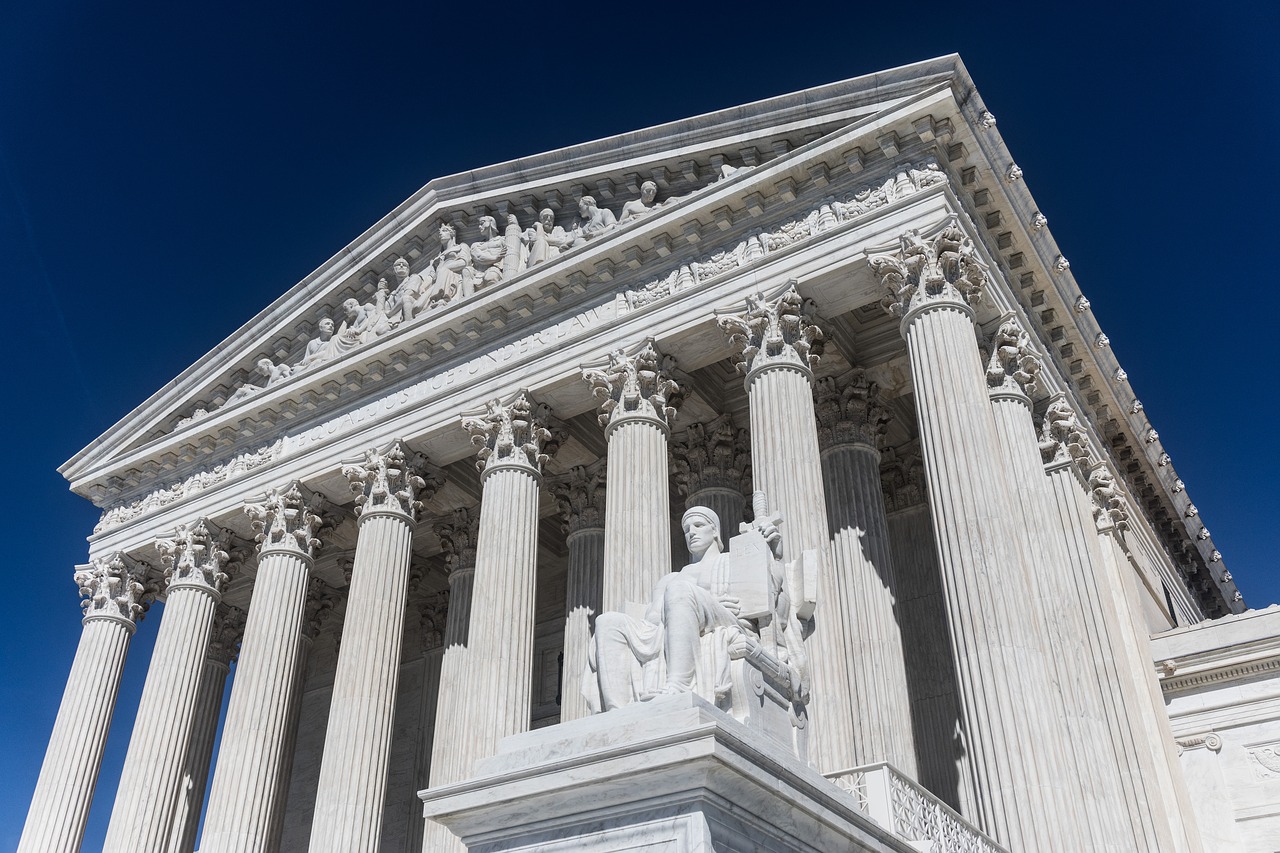
The U.S. Supreme Court considered Sheller’s petition for a stay on May 30 from a 2018 Kentucky Supreme Court ruling in Hoey’s case, and declined to grant a stay. It has not yet formally ruled on whether to grant a writ of certiorari to take up the Hoey case, although that’s unlikely – as doing so would take the agreement of four of the nine justices, and each year, the court receives thousands of petitions, but generally agrees to hear only about 80 to 150 cases.
The Moving Forward Implementation Commission’s action seems to address the question of who has the authority to direct the course of litigation involving the national church – and to clarify that that authority rests with the board of the A Corporation (the corporate entity for the Presbyterian Mission Agency and the Office of the General Assembly), an 11-member board with broad representation from five of the six PC(USA) agencies.
Previously, litigation involving the Hoey defamation case and one that Roger Dermody, formerly the PC(USA)’s deputy executive director for mission, also filed in 2015 was overseen by the board of the Presbyterian Mission Agency. The Kentucky Court of Appeals dismissed Dermody’s case in 2017.
The action the commission took during its closed conference call June 23 states that the commission immediately suspends the Manual of Operations of the Presbyterian Mission Agency Board where it contradicts the Articles of Incorporation, bylaws and other documents “to prevent immediate and future obstruction in the work and responsibilities” of the A Corporation board.

The commission also implemented an immediate amendment to the Manual of Operations of the Presbyterian Mission Agency – and will bring that proposed amendment to the Organization for Mission to the 2020 General Assembly in Baltimore. That amendment states that:
- When the PC(USA), A Corporation is a party in litigation, then the A Corporation Board “has sole responsibility to engage, instruct, and direct outside counsel and manage the litigation unless it delegate that responsibility by specific board action.”
- In any secular action or litigation in which the PC(USA), the General Assembly or the PC(USA)’s stated clerk is named as a defendant, the A Corporation is “the property party to respond to litigation and to seek to be substituted as the named party.” The A Corporation board “will in all such instances consult with the entity or officer incorrectly named before taking such action.”
The Hoey case now continues in Jefferson Circuit Court in Louisville.
The Kentucky Supreme Court, in a 4-3 ruling issued in September 2018, upheld a decision from the Kentucky Court of Appeals, sending the case back to state court in Kentucky, where it was first filed, so that Judge Brian C. Edwards could allow some limited discovery and rule on whether the PC(USA) should be entitled to ecclesiastical immunity in the Hoey case.
Lawyers for the PC(USA) have argued in their filings that Hoey is a minister, and that any determination of whether he committed an ethics violation would involve “improper governmental intrusion into religious affairs” and that such scrutiny “falls well beyond the purview of secular courts.”
Sheller contended to the U.S. Supreme Court that the Kentucky Supreme Court ruling violated the First Amendment of the U.S. Constitution.
In dismissing the Dermody defamation case in 2017, the Kentucky Court of Appeals ruled that a lower court was correct to apply the ecclesiastical abstention doctrine, saying that not to do so would involve “excessive government entanglement into an ecclesiastical controversy.”
The internal ethics investigation found that four employees from the PC(USA)’s national staff were involved in an unauthorized plan in which funds were channeled from the PC(USA) to an independent nonprofit corporation set up in California.
All of the money was repaid, and Linda Valentine, then the executive director of the Presbyterian Mission Agency, has said none of the four acted for personal gain. Valentine resigned in July 2015.
Exactly what the PC(USA) ethics investigation determined has never been made public, even though the four men involved have repeatedly claimed they did not nothing wrong. The denomination spent $696,000 to hire an outside law firm, Alston and Bird from Charlotte, to investigate what had happened.
Alston and Bird presented the report to the Presbyterian Mission Agency Board during long closed-door sessions in April 2015. But the Presbyterian Mission Agency board never publicly released that report, despite requests that it do so.
Kathy Francis, communications director for the Presbyterian Mission Agency, has declined to say how much Sheller has billed the PC(USA) for his work on the defamation cases over the past four years, saying in an October 2018 e-mail that the PC(USA) incurred a total of $100,000 in legal costs for the two defamation cases and the rest was covered by insurance.
Philip Lotspeich – who was then coordinator of the 1001 New Worshipping Communities program is is now the general presbyter of the Presbytery of Transylvania – released a statement in June 2015 calling for the church to release the Alston and Bird report and saying he’d never been allowed to see it, even though he was one of the subjects of the investigation. Lotspeich said in that statement: “Let me be perfectly clear, I believe that the Alston and Bird report fully exonerates the four employees from any ‘ethical’ wrongdoing, and raises serious questions about the [Presbyterian Mission] Agency’s actions throughout this matter.”
Lotspeich said in the statement that he turned down settlement and severance offers “because they came with the stipulation that our voices would be silenced and the report would likely remain unseen.”
A likely possibility: the Alston and Bird report might be one document Hoey’s lawyer would ask to see as part of the discovery in the ongoing defamation case.