Hosea 1:2-10
Ordinary 17C; Proper 12
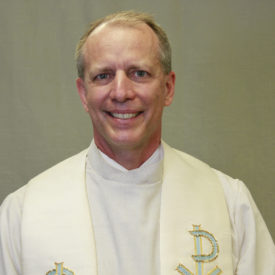
This week, we are grateful to guest contributor John Wurster for writing this week’s lectionary reflection.
The prophets regularly challenge us to face the truth about God’s identity and our own.
We may prefer a god who doesn’t care, who doesn’t get involved, who would just leave us alone. A god always above and beyond, out there, up there. A god who would just give the universe a spin and then go and do something else. A god who wouldn’t seek a relationship with us. A god unconcerned about what we do and how we do it. A god to whom it didn’t matter what we worshipped, what we pursued, what we gave ourselves to.
That may be the god of our preferences, but that’s not the God of the Bible, the God of the prophets, the God of Hosea: a God not only out there, but also down here, right here. Not only beyond us, but also within us, closer than our breath. Not only the sovereign creator of the universe, but also our lover, our mother, our father. A God who seeks us out. A God yearning for a relationship with us. A God who somehow needs us, who seems to require our company in order to be complete. A God who will not leave us alone, but who also doesn’t want to be left alone. A God who is interested in what we do and how we do it. A God to whom it does matter what we worship and what we follow and what we give ourselves to.
That’s the God who meets Hosea in this passage and commands him to marry a “wife of whoredom,” a prostitute named Gomer. Their relationship is presented as a sort of parable of the relationship between a loyal God and a disloyal people. Their children are given symbolic names to further characterize God’s response to human unfaithfulness.
This story is from such a long time ago. In many ways (even in most ways) it is from another time, another place and another people. Yet, we’ve seen leaders and institutions fail and people hurt because of it. We have observed personal promotion as the expense of others’ well-being. We have bowed before the altar of the market, endorsing whatever and whenever as long as it fattens our accounts. We have broken commitments and followed wayward paths, and prostituted ourselves in any number of ways to worship gods of our own making. We have been unfaithful with our time, our talent, our money. Optimal convenience and immediate satisfaction matter most to us, so we assume that’s what matters most to God. We have decided God’s will is whatever brings us pleasure or confirms our prejudices. Getting and gaining, having and holding are what count. Giving and losing, reaching out and letting go are simply not in fashion. We have tried to lock God in the basement, far away from the rooms where we live. We’ll take God out when we need something — whether it’s a warm feeling on Christmas Eve or a good-luck charm when we go under the surgeon’s knife. We want God to play on our terms and that usually means out of sight, out of mind. We want God to do what we want, when we want it.
But the locked up god, the god at our beck and call, the god formed in our own image does not exist. Ours is a time and place very different from ancient Israel. We are a people very different from those people. Yet we are the same in that God would be entirely justified in giving up on us, faithless as we are. Who among us could stand before God’s judgment? We are a people of whoredom, a people who have defiled ourselves and corrupted the life for which we have been created. Truly God could say of us, “They are not my people and I am not their God” (Hosea 1:9).
Our only hope is in the possibility that we might be changed, transformed, saved; that the God whose judgment is fierce is also abundant in mercy; and that the God whose anger we provoke is even more bountiful in redeeming love, life-changing love. That’s the same God who at the end of this passage, mysteriously contradicting the judgment that has been pronounced, almost in spite of Godself and certainly in spite of human behavior, speaks of this transformation, “Where it was said to them, ‘You are not my people,’ it shall be said to them, ‘Children of the living God’” (Hosea 1:10).
In spite of us, God wipes the slate clean and starts again. In spite of us, the relationship is renewed. In spite of us, we are restored in our identity as children of God — not as masters of God, but children of God; not as makers of God, but children of God. With a faithful love stronger than death, God has claimed us as children. In that relentless love, we find resources, strength and courage to give ourselves to people and things that really matter.
This week:
- God’s direction that Hosea take a “wife of whoredom” and have “children of whoredom” is severe and provocative. How does this scene expand your view of God’s relationship with God’s people?
- The marriage metaphor is developed even more extensively in the second chapter of Hosea. What are the similarities between the covenant of marriage and the covenant God seeks to establish with the people?
- The worship of other gods is at the center of Israel’s faithlessness. What are the idols that we give ourselves to individually and collectively?
- What compels God to mete out punishment and yet also offer fresh opportunities for relationship and righteousness? Why won’t God give up?
- Our worship regularly moves us through the cycle of acknowledging sin, receiving forgiveness and restoring our relationships with God and one another. What for you are the significant parts of this cycle?
- The psalm of the day, Psalm 85, envisions a time when “steadfast love and faithfulness will meet” and “righteousness and peace will kiss each other” (85:10). How do these words relate to the images and themes in Hosea?
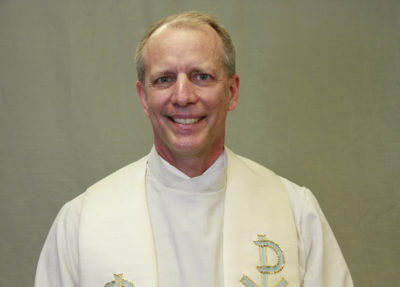 JOHN WURSTER is pastor of St. Philip Presbyterian Church in Houston.
Want to receive Looking into the Lectionary content in your inbox on Mondays? Click here to join our email list!