BALTIMORE – Closing worship – but not the final event – of the Big Tent conference held in Baltimore 1-3, focused on remembrance and celebration.
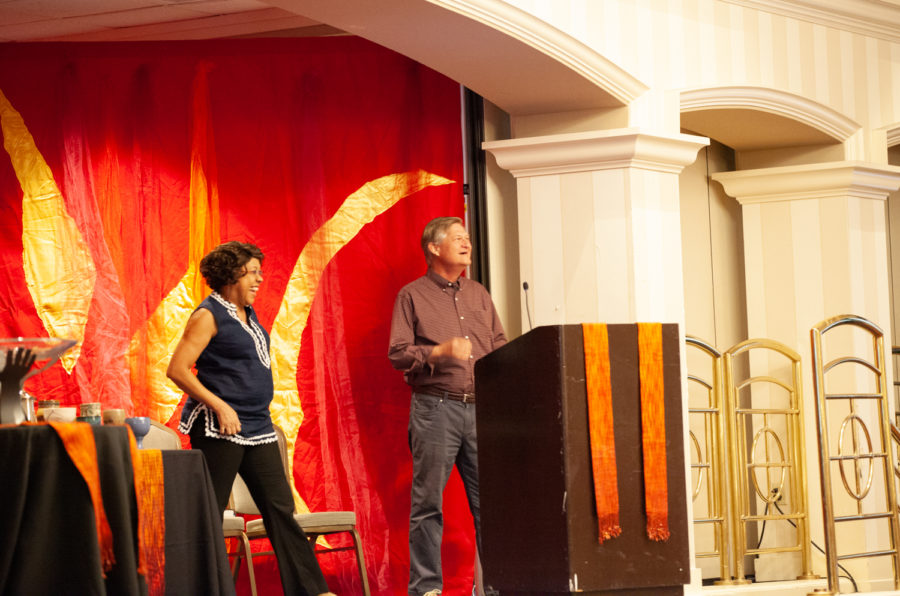
Rhashell Hunter, director of Racial Equity & Women’s Intercultural Ministries, invited Big Tent participants to give thanks for Tom Hay, director of assembly operations with the Office of the General Assembly, as he prepares to retire this fall.
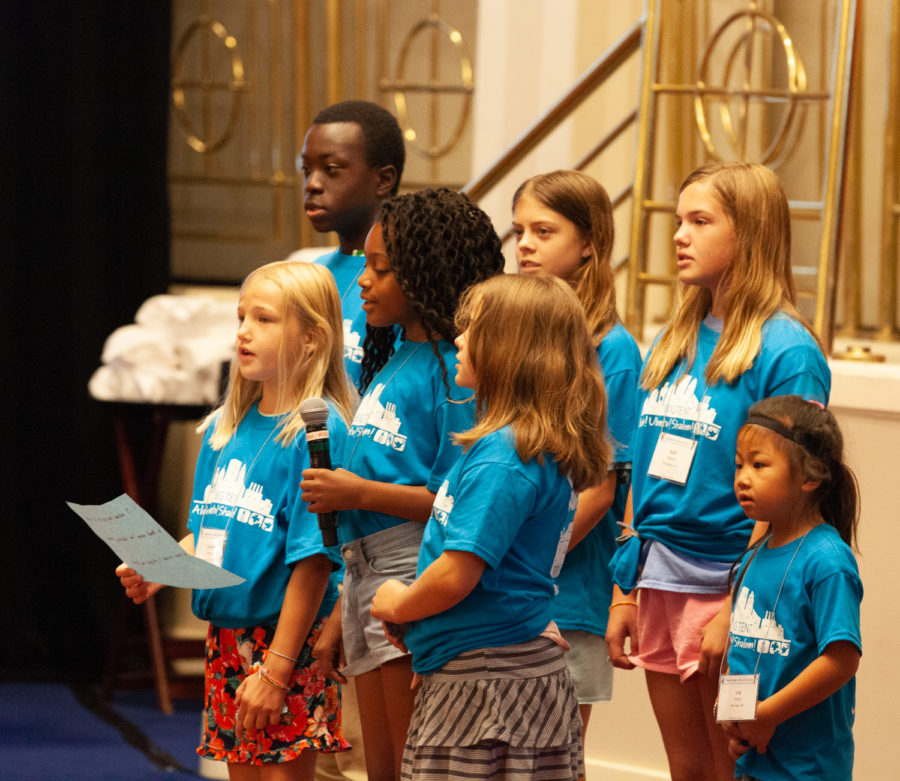
Youth participants sang “Over My Head” — Over my head, I hear music in the air; There must be a God somewhere.
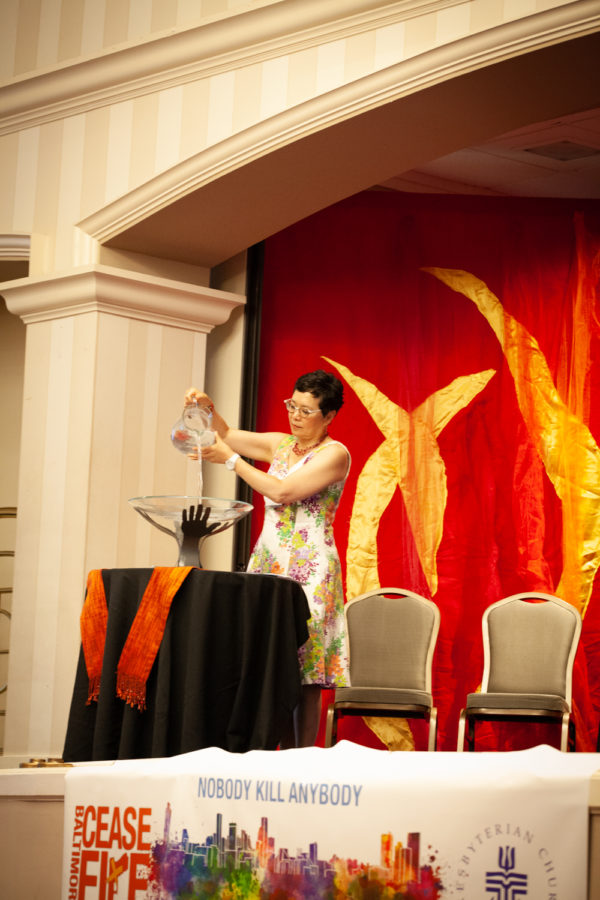
A prayer of confession (with the refrain: God of grace, forgive us) and declaration of forgiveness was shared from the baptismal font.
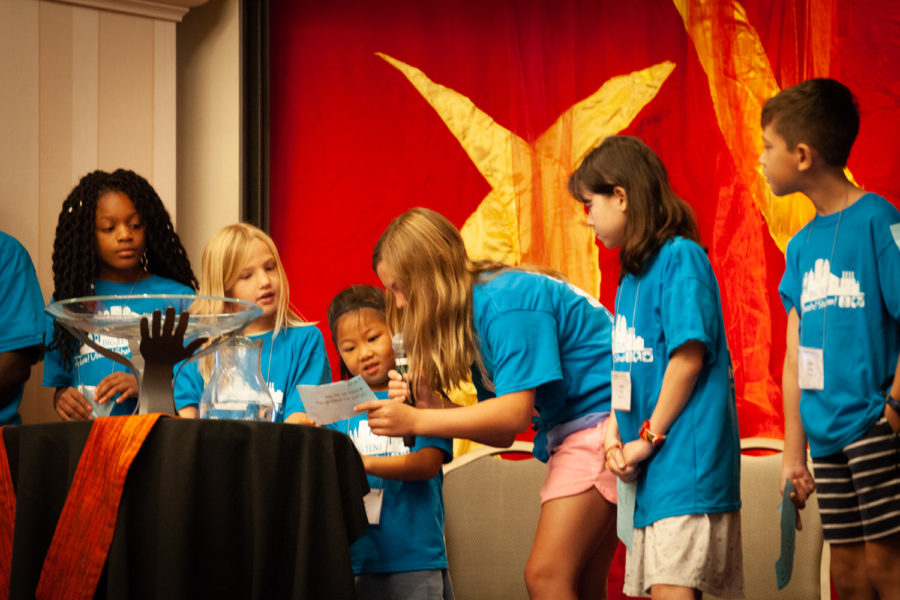
Youth lead the prayer for illumination and read the Beatitudes (from Matthew 5).
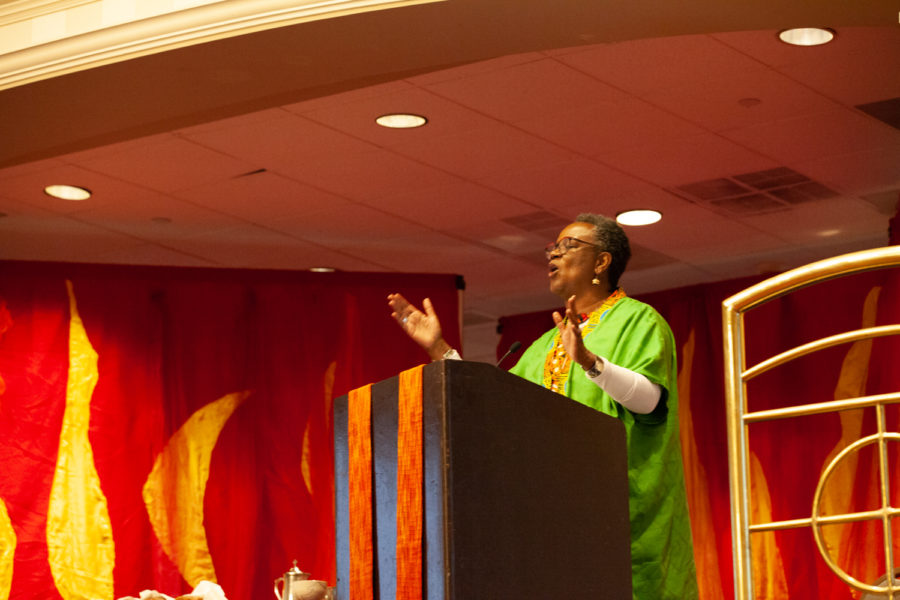
Renita J. Weems, co-pastor of Ray of Hope Community Church in Nashville and author of several books, including “Just a Sister Away: Understanding the Timeless Connection Between Women of Today and Women in the Bible,” gave the sermon in closing worship, drawing from Genesis 37:12-36, the story of Joseph’s brothers selling him into slavery
Genesis “is about God’s promises, God’s faithfulness and God’s plan of salvation” — and how God uses flawed human beings in fulfillment of that plan, she preached. “The story of the Bible is the story of God’s constant invitation to participate in God’s plan.”
When the church considers history, she said, they think they would have stood up to bullies, gas chambers, slave catchers. “Hindsight is always 20/20 isn’t it? But don’t be so sure you know what you would have done back then. … There is some Reuben in all of us.”
Weems said Reuben’s story displays cowardice, courage and calling because Reuben could have stopped Jospeh from being thrown into a cistern and sold into slavery, but he waited until it was too late.
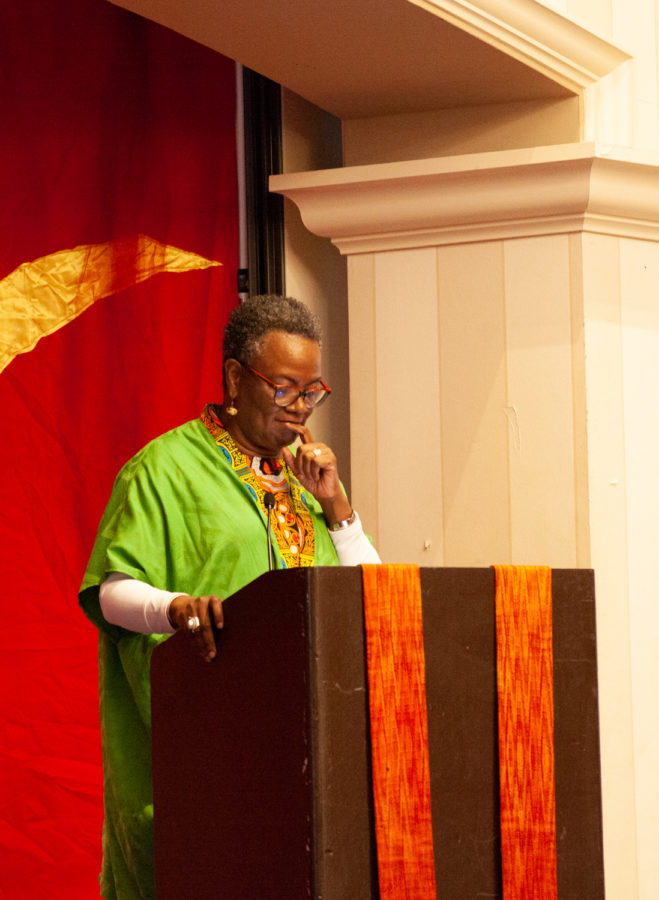
“Who is Reuben? We all are Reuben. We are all those who have opportunity and are invited by God to take a stand for what is right.”
“When I read Reuben’s story, I feel a little tenderness toward him – because I have some Reubenish tendencies in my own life” – because Weems remembers times she did not act righteously and faithfully because she didn’t know what others would think and didn’t want to “ruffle feathers.”
“Reuben knows what is right, but he can’t quite bring himself to do what is right.” She went on to say that Reuben prevents his brothers from killing Joseph, but doesn’t go out of his way to save his brother; he doesn’t lie to his father, but does not tell him the whole truth. Reuben “loves Joseph, but he loves himself even more. … It’s not that he doesn’t love Joseph, but he loves his own privilege more.”
Weems transferred this mentality to similar situations today, saying: “He doesn’t like what’s going on, but he doesn’t believe in getting involved. … He doesn’t like what’s going on on the streets with the killings of black and brown bodies, but he doesn’t care enough to get involved.” After several of these statements, she paused and asked: “Am I bothering you yet?”
History shows us the ease through which horrendous events can happen again, Weems said. “If we are not careful, Reuben, it is happening now.”
“No one can write a confession like the Presbyterian Church. … But the Scriptures say, “But if you have not love‘ — you can speak all of your wonderful confessions and liturgy, but where are you church?”
“We are all not called to be prophets, but we are all called to prophetic moments. … God invites each one of us to take a stand.”
“What does it mean to be the church? It means that we hope against hope. It means that we stand for what is right not knowing if we will ever see the goodness of the Lord in the land of the living, but because it is right.”
“Reuben is the church. Reuben is the Presbyterian Church. Reuben is the Methodist Church” – the Episcopal Church, the Lutheran Church – “any church that quotes Scripture to prevent themselves from acting.”
“We make our choices and our choices make us,” but “God gives all of us a chance to redeem our mistakes. … Reuben had a chance to redeem mistakes that he had made, but he would not take it.”
“We will be an uncompromised church. Come on, Reuben — you still have a chance! Lift Joseph out of the pit. Don’t wait. Don’t wait until Joseph has been stolen, or dies, and talk about what you coulda, shoulda, woulda done.”
“The invitation for each of us today is to take each other’s hand and say: ‘I will stand with you.’”
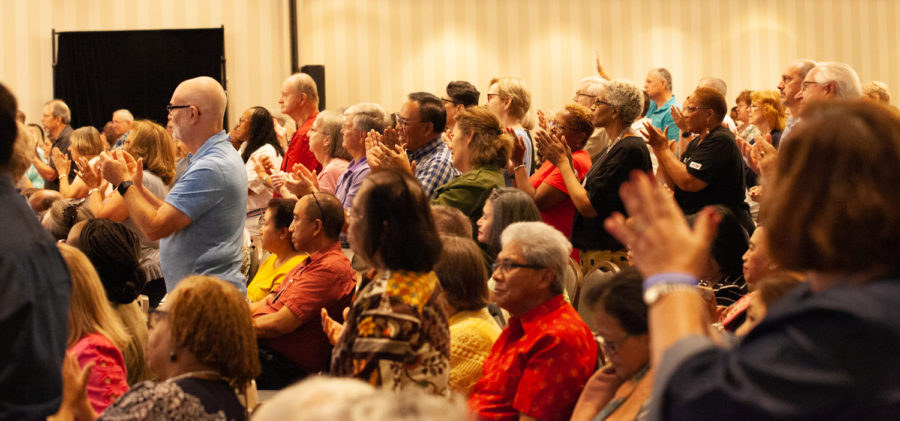
After the sermon, worshippers sang “Keep Your Eyes on the Prize.”
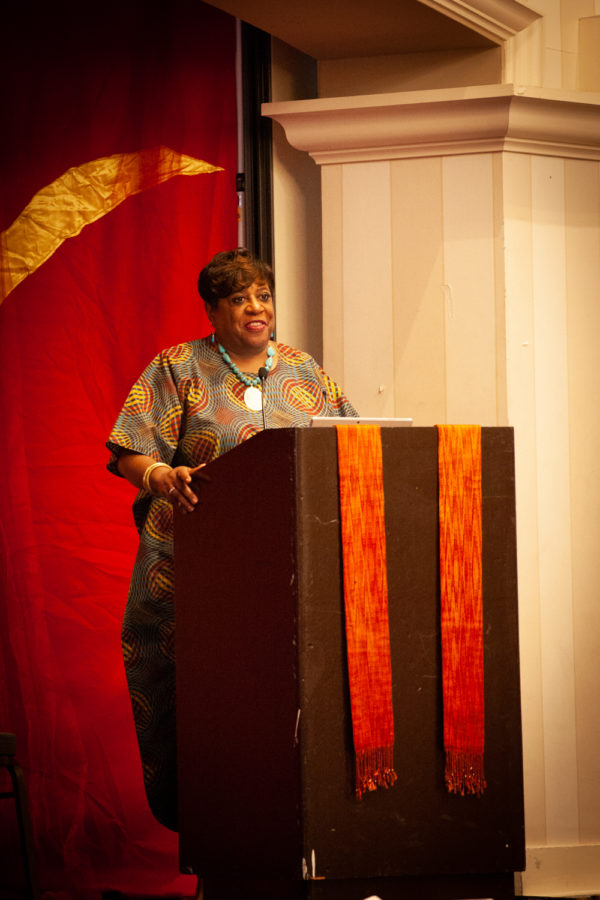
Diane Moffett, president of the Presbyterian Mission Agency, led a time to remember Katie Geneva Cannon – a Presbyterian leader and the first African American woman to be ordained in the Presbyterian Church (1974) – who passed August 8, 2018. She invited worshippers to remember and honor Cannon’s leadership, bravery and legacy and showed a portion of a video of her life produced by the Presbyterian Foundation.
“We remember that we have an opportunity to be Reuben.” Remembering Cannon’s leadership, bravery and legacy.
For the offering, worshippers were invited to give a gift in memory of Cannon to the Women’s Ministry Fund. The Katie Geneva Cannon Scholarship (run by the Presbyterian Mission Agency) supports Presbyterian women of color, female pastors, college woman and other women with opportunities for leadership, spiritual development and mission in the Presbyterian Church (U.S.A.).
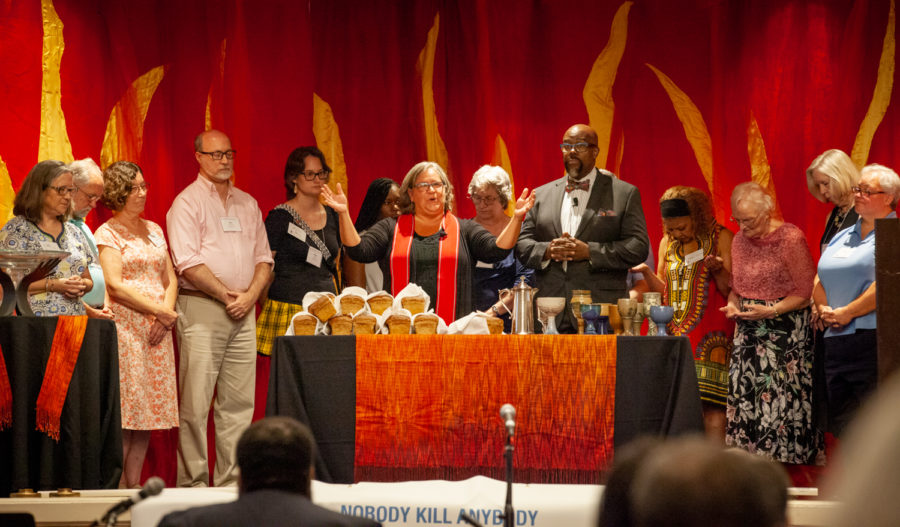
Worship included a celebration of the Lord’s Supper: “Blessed are we, for Christ calls us to his table – where there is room for everyone, and plenty for all.”
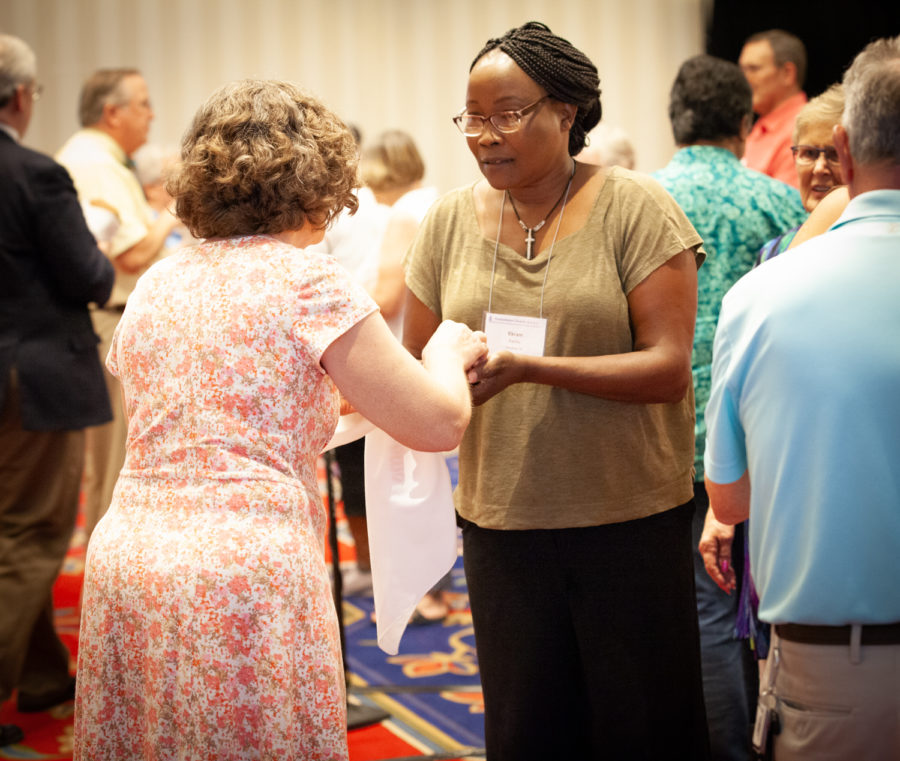
“Come with your hands outstretched,” so the server may give to each a giant hunk of bread, said celebrant Kim Long.
After communion, worshippers sang “Lift Every Voice and Sing,” – one of Cannon’s favorites.
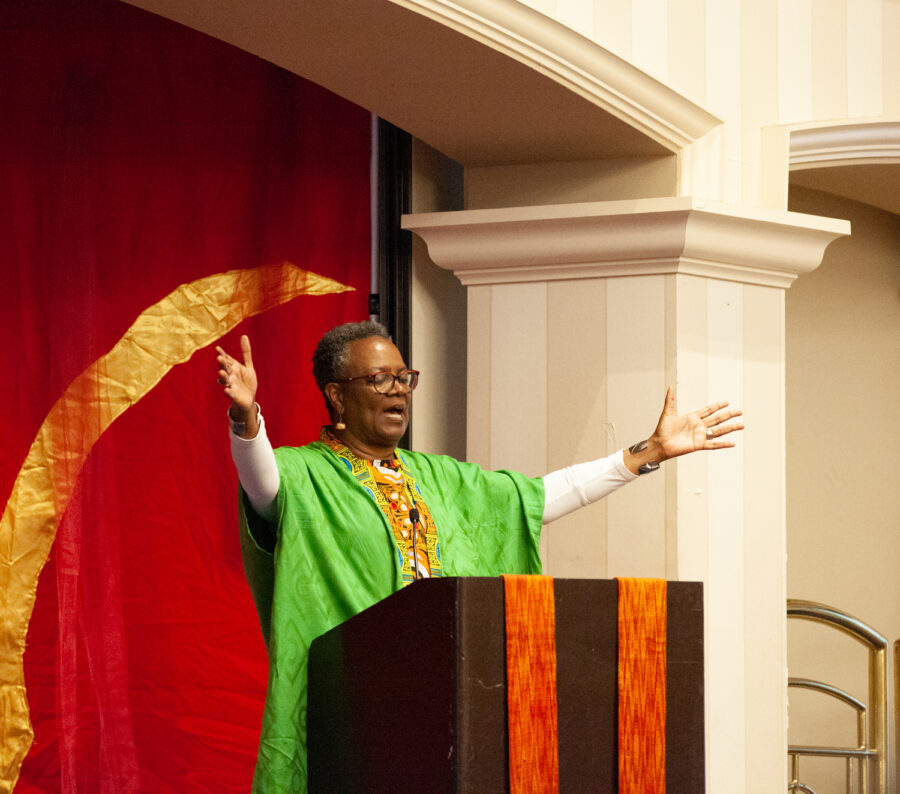
In the benediction, Weems sent worshippers out reminding them that they are surrounded by a great cloud of witnesses.