“The church cannot be silent.”
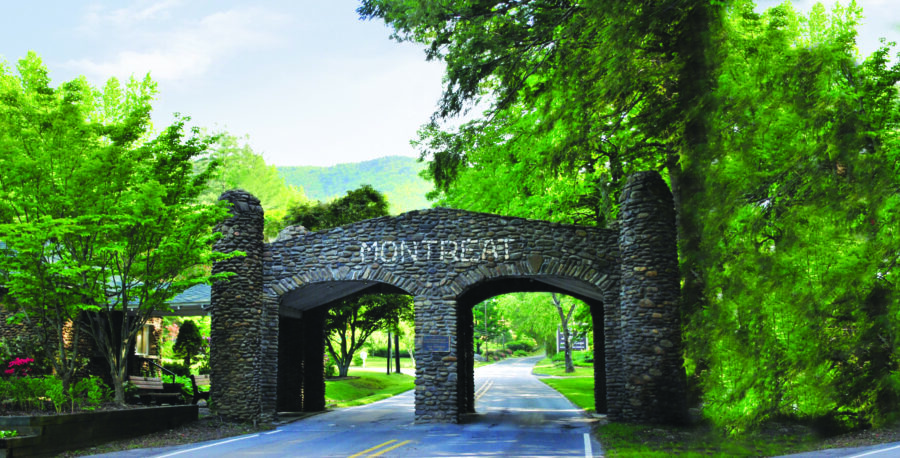
In a recent lecture at Montreat Conference Center, William Yoo, an author, church historian and professor, described the church as “the moral guardian of community,” and he explored the tension between faith and patriotism while urging Christians to speak out against White Christian nationalism.
During his talk, which was titled “The Church Cannot Be Silent, But What Should It Say?” Yoo drew on the work of sociologist Andrew Whitehead, who defines Christian nationalism as a political orientation draped in religious rhetoric that asserts civic life should be organized around conservative Christianity that idealizes the White, natural-born citizen.
Related reading: “The case for Black racial repair in the Presbyterian Church (U.S.A.)” by William Yoo
Grounding his argument in both history and theology, Yoo referenced the address that Martin Luther King Jr. gave at Montreat, noting that King insisted “the church must speak to the power structure of the nation,” while also affirming that he “still had faith in America.”
Even as he urged the church to have a stronger voice, Yoo cautioned against “political hobbyism,” a term coined by political scientist Eitan Hersh. On the website Boston 50 Review, Hersh describes political hobbyism as “consuming and participating in politics by obsessive news-following and online ‘slacktivism,’ by feeling the need to offer a hot take for each daily political flare-up, by emoting and arguing and debating, almost all of this from behind screens or with earphones on.”
Related reading: “The principles of Kingian Nonviolence” by Teri McDowell Ott
“Most of us are engaging with politics to satisfy our own emotional needs and intellectual curiosities. That’s political hobbyism,” Hersh wrote.
Yoo also warned against reactive political engagement. “We should not let our discernment be ruled by the social incident of the day,” he said, and he called for congregations to do the harder work of thinking about politics as a matter of morality.
“The Bible offers clear principles, but not specific policies,” Yoo said. “Churches should think about political solutions that celebrate the dignity of all humans.”
In a follow-up interview, Yoo, who has written several books on church history, African American Christianity and more, expanded on what it means for the church to act as a moral guardian.
“The Bible offers clear principles, but not specific policies … Churches should think about political solutions that celebrate the dignity of all humans.”— William Yoo
“The church as moral guardian can interpret policies based on biblical principles, allowing for humility and discernment,” Yoo said. “Christians should have faithful dialogue.”
For Presbyterians, Yoo suggested, this kind of faithful dialogue is both necessary and possible, given the denomination’s political diversity.
“Many of our churches are ideologically diverse, which does lead to some tension. But if we can show how to mutually discern the call of God in our lives and in our nation, that would be a positive and powerful witness.”
This, he said in the interview, is a distinctive opportunity for Presbyterian Church (U.S.A.) congregations.
“The church cannot be silent.” — William Yoo
Yoo also pointed to the denomination’s long-standing presence in many local communities as a source of renewed public witness.
“There is an opportunity to continue, renew and reimagine our civic presence. PC(USA) churches can be more intentional (with our mission budgets) and assess how we are contributing to the common good in our community,” Yoo said.
That witness, he said, extends beyond congregations to individual Christians.
“We need politically engaged Christians on both sides to speak strongly for the politicians they support. We need to advocate for the good.”
Presbyterians, he said, should ask themselves, “How do I politically engage while living out the fruit of the Spirit?
“We leave too much to ministers,” Yoo said. “Rather than asking what my pastor is doing, think ‘What is the church doing?’”
Book review: “What Kind of Christianity: A History of Slavery and Anti-Black Racism in the Presbyterian Church” by William Yoo, reviewed by John Wilkinson
Reflecting on the setting, Yoo said that Montreat itself, a national conference center in western North Carolina with roots in the PC(USA), shaped how he understood the moment.
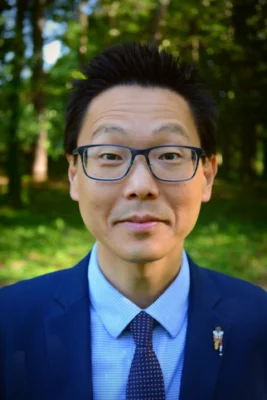
“Montreat has a long history of inviting prophetic speakers to share hard truths with Christians and Presbyterians who desire to wade into the most urgent challenges with faith.”
“I felt like I was carrying the torch from all the other Black, White, and other speakers of color who have long proclaimed God’s message of love and justice to people who want to hear the message.”
He framed the urgency of the moment as the convergence of multiple pressures.
Yoo pointed to unfolding current circumstances such as economic challenges, war, immigration issues, AI and its effect on the workforce, and ongoing political polarization and appeals to Christians.
“Even in the anger, there’s a lot of love,” he said.
“It is the combination of all these challenges that demands people of faith, and in our larger denomination, to respond and pray deeply to those matters so we can respond effectively.”
Still, Yoo ended on a note of hope.
“On one level, I acknowledge that many people are deeply concerned and deeply worried, but on another level, I recognize that that deep worry comes from a deep love of nation, a deep love of God, a deep love of our neighbor.”
Yoo said that the church can “bring hope and creativity into a messy, sinful world.”
“Even in the anger, there’s a lot of love,” he said.