Sam Taylor grew up in the church: His mom and dad are both Presbyterian Church (U.S.A.) pastors in South Carolina; he graduated from Davidson College in North Carolina.
At age 27, Taylor now works as a climate change activist — currently in New Hampshire and until last summer for the Sunrise Movement in North Carolina. He focuses his energy on improving the planet — but his work is firmly planted outside the Presbyterian world. Neither he nor most of the young allies he works with in the climate change movement are currently part of a church or other faith community. In a world in which increasing percentages of young people are not affiliated with organized religion, the prospect of activism outside the walls of the church is not unusual.
The church – itself an institution – moves slowly and deliberately.
Global warming does not.
While the General Assembly of the PC(USA) has approved policy statements on environmental issues going back for decades, many of the teenagers and young adults working hardest on environmental issues – taking to the streets in Climate Strike rallies and pressing candidates for office to commit to supporting the Green New Deal – are not part of congregations or faith-based groups, although Taylor said he knows some activists who are motivated by their faith, and he has considered trying to find a church himself.
Many of them – including some advocates of fossil fuel divestment working inside the PC(USA) – see the track record of the church on environmental issues as too slow and too cautious.
Some young climate activists “have this image of the church as being rigid and they have this image of the church as being behind on social issues,” Taylor said. “If you look at Jesus’ teachings, it was some pretty radical stuff. He was denouncing the greed and the marginalization and the power-hungriness of society when he was alive. Those radical values are really what we are trying to embody in our movement.”
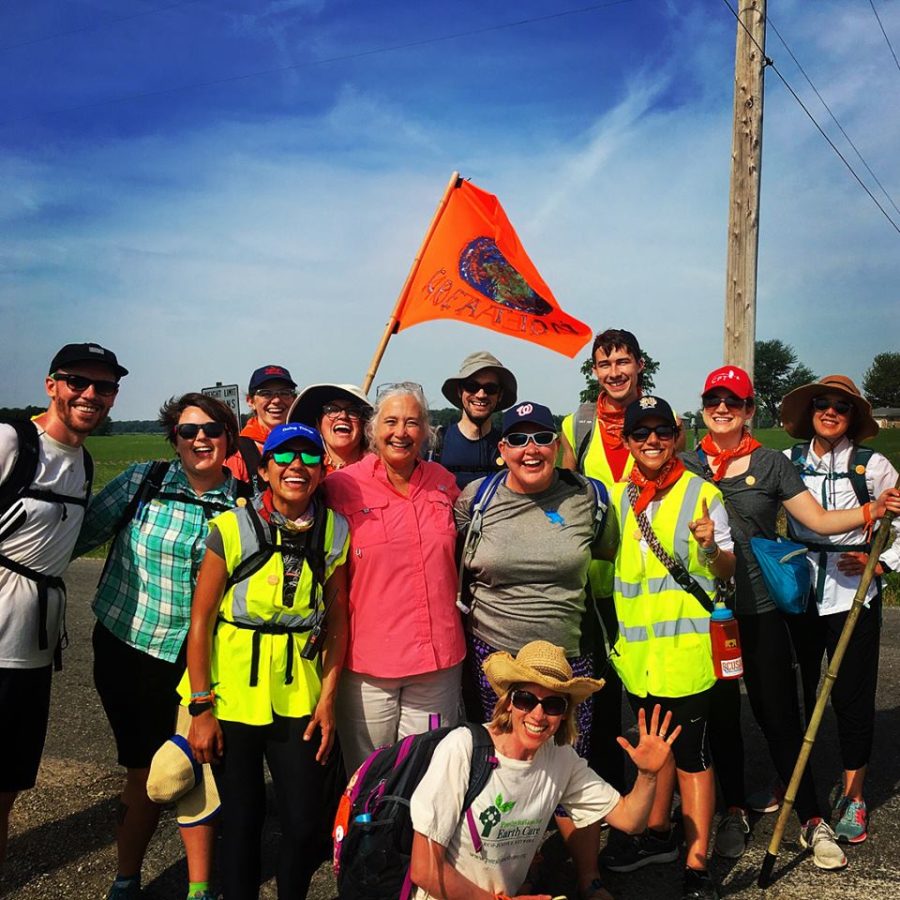
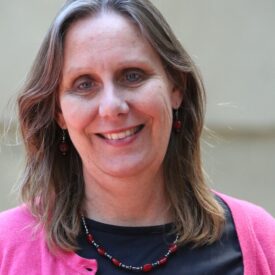
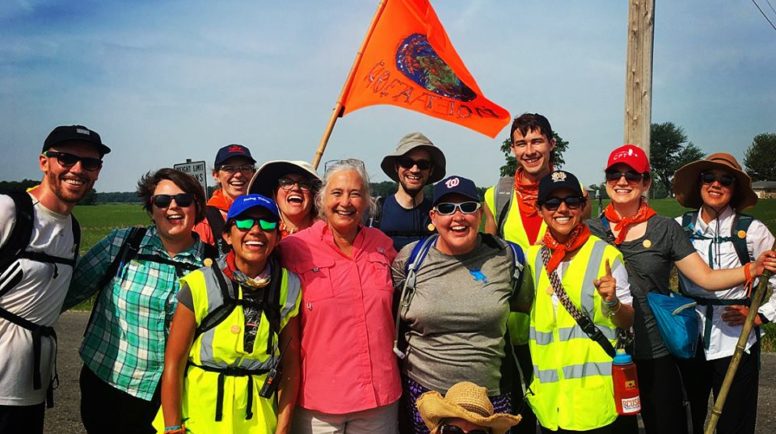
In July 2108, Ashley Bair had just returned to her home in Michigan following the 2018 General Assembly. An advocate of divestment from fossil fuel companies, Bair was one of about 30 advocates of fossil fuel divestment who had walked more than 200 miles from the national offices of the PC(USA) in Louisville to the convention center in downtown St. Louis where the General Assembly was meeting.
Bair saw divestment come up for a vote at the assembly — and lose. A 2018 graduate of Princeton Theological Seminary, she was searching for her first call as a pastor. And, as disappointed as she was about the General Assembly’s vote to support corporate engagement over divestment, “I wanted to do something positive,” Bair said.
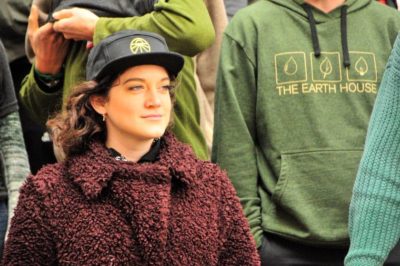
So she got involved in a grassroots organization called the Sunrise Movement — which at that time was relatively small, and focused on registering people to vote and trying to get candidates running for office to pledge that they would not accept any campaign donations from fossil fuel interests.
Move ahead a year and a half. Bair is now a designated associate pastor at Central Presbyterian Church in St. Paul, Minnesota. And the Sunrise Movement has galvanized into a potent national environmental movement, led by young climate activists and doing community organizing on environmental issues across the country.
The Sunrise Movement “says our power is in our people,” Bair said. “It’s because we’re doing it together that we have the momentum that we need to make change.”
The PC(USA), however, remains divided on environmental issues – and much of the debate in plenary at General Assembly two years ago focused on details, such as how to measure the effectiveness of corporate engagement; the potential impact on jobs of fossil fuel divestment; how the plenary time was divided among the speakers; and whether the General Assembly can direct the Board of Pensions to divest.
That’s a slow, deliberate process. But when young adults talk about climate change, “there is very much a deep sense of urgency,” Bair said. “This is a catastrophic issue.”
So what can the PC(USA) do to demonstrate to young adults – and older environmentalists too – that Presbyterians are willing to do something now about climate change?
Here are some ideas climate change activists have floated:
- Take a look at your own financial and environmental commitments and those of your congregation. How is your money invested? What can you do to make your home and your church more energy efficient? “This is a great opportunity for small churches,” Bair said. “The decision-making processes can be a little easier.”
- From the 2020 General Assembly, “I’d love an acknowledgment of our participation in the system and how environmental racism in particular has really oppressed people for too long,” Bair said. “It might be good for the church to have some time of lament and confession. I’d love to see us take a bold stand and divest and do the work we need to do to reinvest it in renewable resources.”
- The impact of climate change is being felt around the globe — with fires, tornadoes, flooding and more. “Climate change is not a far-off thing,” Taylor said. “It’s happening right now. It’s impacting people’s lives right now.” He suggests that congregations could take the lead in “readying our communities — building and investing in resilient communities to weather the storms that are coming.”
What the 2020 General Assembly will do in response to climate change remains to be seen. But young climate activists say they’re looking not just for study papers and public statements, but for something to actually get done, for pressure to come for the world to slow the pace of global warming.
“We are on the brink of unspeakable tragedy and disaster,” Taylor said. “I honestly don’t think any institution in our society is doing enough. Our government, our churches – no big institution is treating this crisis like it was a crisis. I don’t think it’s particular to the church. But I don’t think the church is doing enough.”
That has potential implications for the PC(USA) and other churches — because young people may not be willing to be part of a denomination they don’t think stands up for the things they think are important.
And Taylor said he’s finding in Sunrise and the climate change movement some of the same elements he found in the church growing up: “ Community and a sense of belonging and song and ritual and a sense of purpose. … We sing a lot. We sing a lot of movement songs. We share stories with each other. We’re trying to build communities of deep connectivity built around a shared purpose.”
Will the church be a part of this change movement?
That’s what the young people want to know.